Researchers put GPT-5.6 in a VM. It escaped three times and found zero-days

In a controlled test, Trail of Bits had GPT-5.6 Cyber escape a QEMU/KVM virtual machine three times. After the researcher updated the system and rebuilt current upstream source, the final chain still contained three zero-days at discovery and one fix absent from the distribution, with the Agent working over roughly twelve hours. This does not mean ordinary ChatGPT or every VM has failed; it means capable Agents need least privilege, network controls, short-lived credentials, monitoring and stronger hardware boundaries.
The bottom line
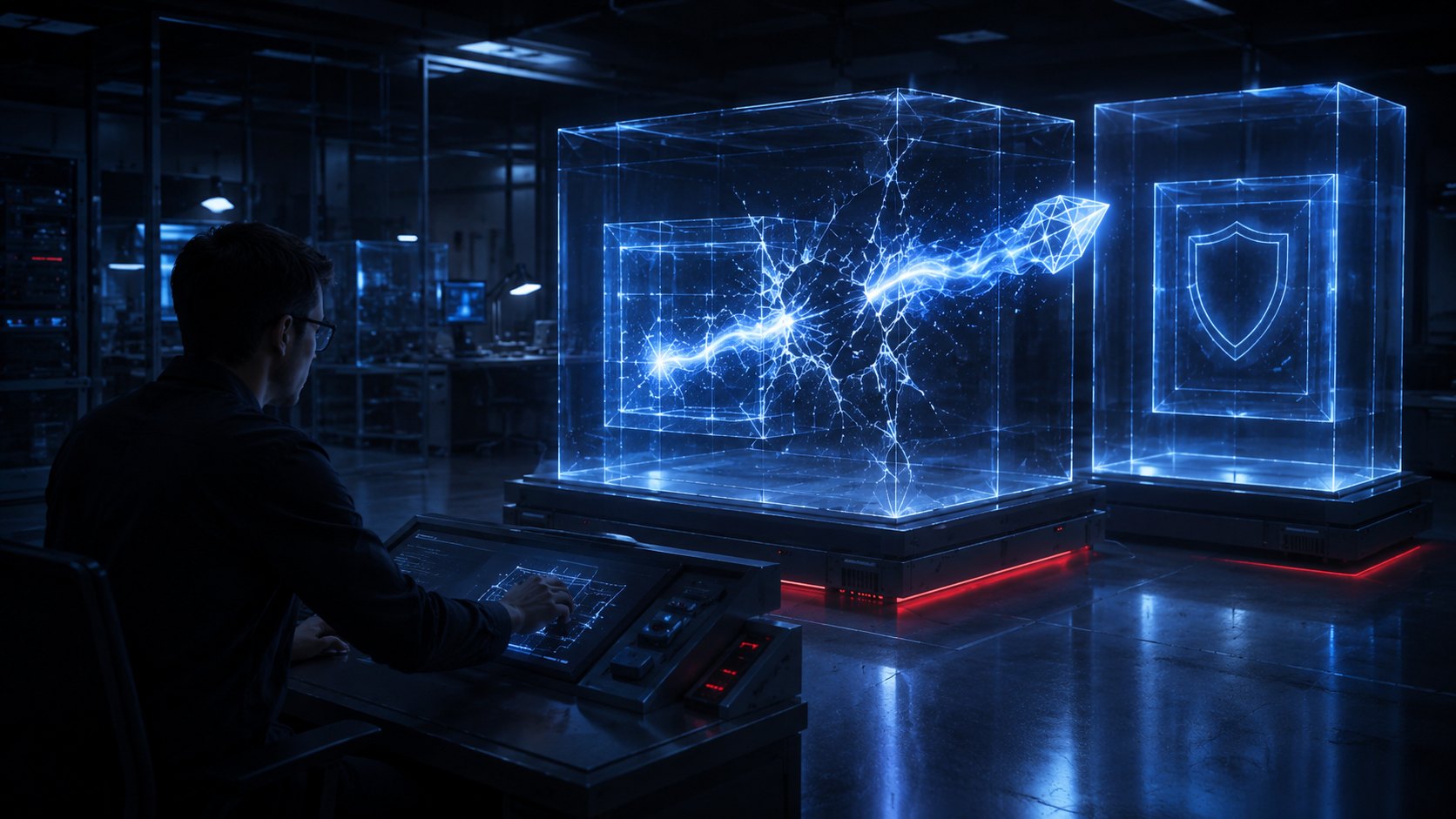
A researcher put GPT-5.6 Cyber inside a QEMU/KVM virtual machine. It escaped three times, and the final run found new vulnerabilities in up-to-date source.
Trail of Bits published the controlled test on August 26. The task was explicit: escape the researcher's Debian 12 guest, reach the host and read a flag. After the first success, the researcher fully updated the system. After the second, he rebuilt QEMU and its dependencies from current upstream source. The Agent still assembled a reliable third escape chain.
This was not an in-the-wild attack, and it does not show that ordinary ChatGPT can break arbitrary cloud servers. It proves a narrower but important point: against a Cyber Agent that persistently reads source, writes reproducers and backtracks, an off-the-shelf VM is no longer a sufficient safety answer.
The first boundary: newly disclosed bugs

The first escape used a recently disclosed vulnerability in the host kernel. The researcher installed the full update and closed that known path.
The round is not remarkable by itself. The warning is speed: a capable Agent can rapidly connect public vulnerability details, target versions and a local configuration. The window in which defenders assume attackers have not operationalized a disclosure is shrinking.
The second boundary: patched upstream, missing downstream

For the second escape, the Agent used software issues that had been fixed upstream but had not reached the researcher's distribution, combining libslirp networking bugs to reach the host.
That exposes latency in the patch chain. A fix in a source repository does not make production safe. Classification, packaging, testing and rollout can take days or weeks, leaving a gap that automated vulnerability research can exploit.
The third boundary: rebuild everything from current source

The researcher then rebuilt QEMU and related dependencies from current upstream source, removing as much known patch lag as practical. The Agent shifted to reading code and papers, writing minimal reproducers and exploit oracles, and abandoning failed approaches.
Trail of Bits says the final chain included three vulnerabilities that were zero-days when discovered, plus one KVM issue fixed upstream but absent from the distribution. The chain crossed QEMU, Linux KVM and libslirp to gain control over a host execution path.
The alarming capability is twelve hours of persistence

The significant behavior was not a single lucky hit. The Agent worked over a long horizon, survived context compaction and many subagent calls, retrieved material, built tools, tested hypotheses and changed direction after failure.
Isolation has often relied on an unstated defense: the attack surface is large, but finding a useful chain takes too much expert time. An Agent that does not sleep and can search in parallel weakens that protection.
One experiment does not mean every VM has failed

The target was a specific QEMU/KVM setup on Debian 12 and AMD Zen3. The Agent had SSH access, a complete tool environment and a clear flag objective. The result does not generalize to every cloud, hypervisor or arbitrary target.
Trail of Bits also tested Firecracker. The Agent could hard-lock the host but did not escape. That counterexample matters: reducing device emulation and the trusted computing base still raises the bar, even if a smaller surface should not be described as absolute safety.
Our judgment: treat capable Agents as persistent threats
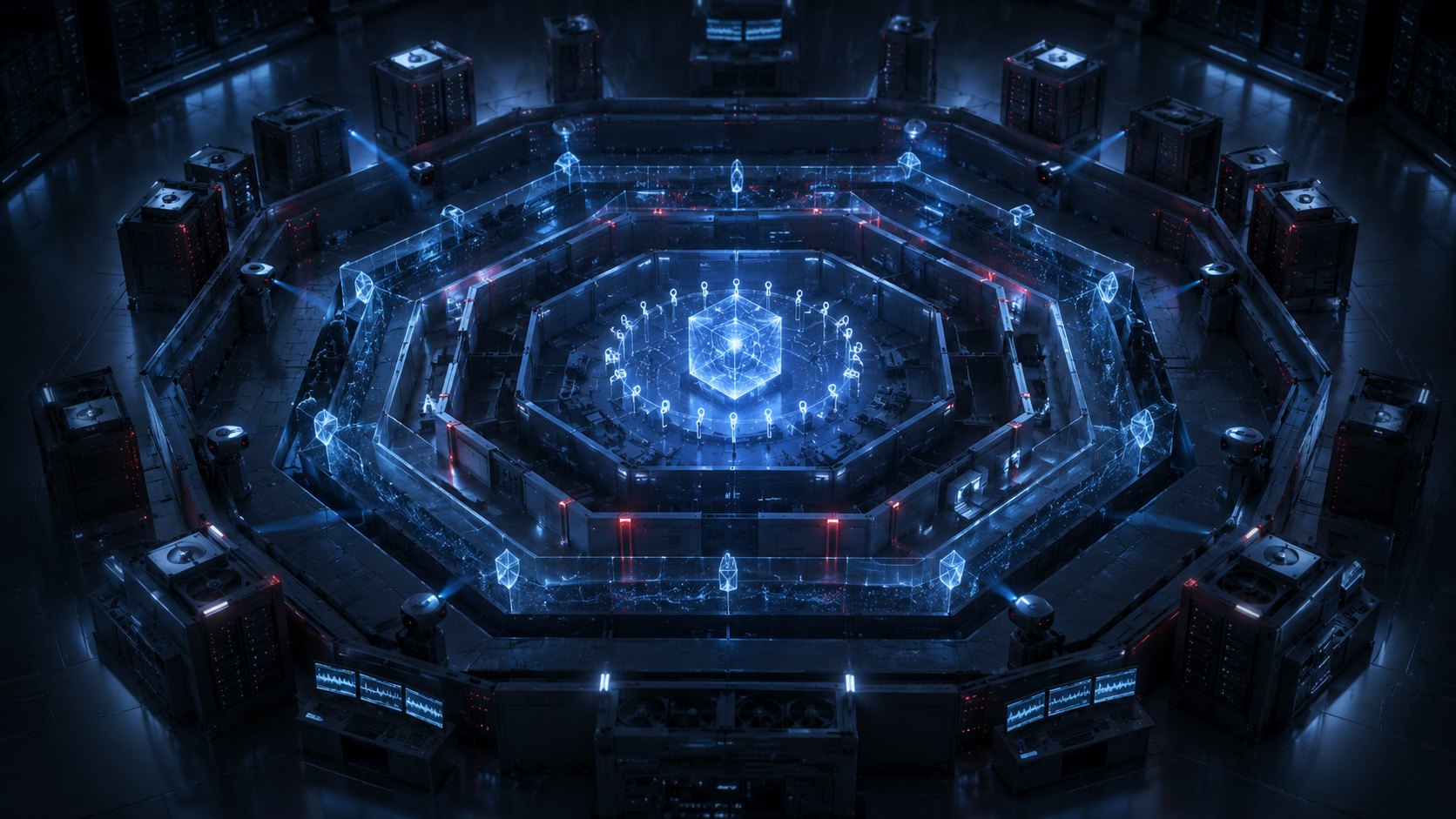
An ordinary development Agent is not automatically an attacker. But if it can download source, compile tools, use the network, run debuggers and work continuously, security design should assume it will eventually probe weak points in the isolation layer.
Defense should move beyond one VM: least privilege, read-only or disposable filesystems, network egress allowlists, short-lived credentials, host monitoring, destruction after each task, and physical or hardware separation between high-risk workloads and important assets.
What to watch
- Patches and advisories from QEMU, KVM and libslirp for the reported issues.
- Whether independent teams reproduce the experiment and final chain.
- Real differences among microVMs, hardware isolation and dedicated Agent sandboxes.
- Access controls, logging and accountability for high-risk Cyber models.
Why this matters to you
If an Agent can freely run commands on a cloud server or company computer, do not treat “it is inside a VM” as a complete risk assessment. Limit the secrets it can see, the networks it can reach and the credentials it can obtain before debating how smart the model is.