Claude as "Wild Outsourcing"? Anthropic Meltdown Over Chinese AI Distillation Sparks Internet Laughter: "You Took the API Money, Now You Call CISA?"
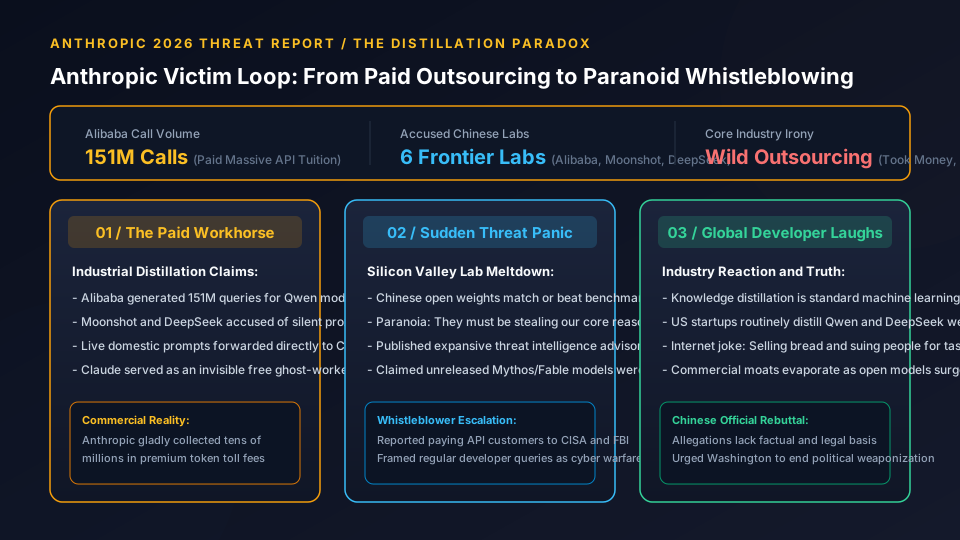
Collecting premium API fees only to label paying clients national security threats exposes profound anxiety as open models dismantle closed moats. Knowledge distillation is a standard technique, and political protectionism cannot halt the democratization of AI.
# Claude as "Wild Outsourcing"? Anthropic Meltdown Over Chinese AI Distillation Sparks Internet Laughter: "You Took the API Money, Now You Call CISA?"
The most absurd piece of corporate dark humor in the artificial intelligence industry unfolded across San Francisco on September 10 and 11, 2026. Anthropic—a premier American foundation model unicorn that routinely brands itself on safety, academic dignity, and ethical restraint—experienced an extraordinary public meltdown. The frontier laboratory published an expansive threat intelligence advisory explicitly accusing major Chinese artificial intelligence laboratories, including Alibaba, Moonshot AI, DeepSeek, MiniMax, Xiaomi, Zhipu AI, and SenseTime, of executing "industrial-scale illicit knowledge distillation" against its flagship model family, Claude.
Within this grievance-laden document, Anthropic constructed a bizarre narrative of digital servitude. The report alleged that Alibaba alone generated an astronomical 151 million API interactions across tens of thousands of automated accounts in a mere two-month window to train its open-source Qwen models. Even more comically, Anthropic claimed that Moonshot AI (creators of Kimi) and DeepSeek engaged in a covert "shadow proxy" operation. According to the advisory, these Chinese labs silently forwarded real-world domestic user queries—purportedly including confidential workflow questions from state-owned enterprises and civil institutions—directly to Claude, packaged Claude responses as their own outputs, and harvested the resulting completions as synthetic distillation corpora.
While gladly collecting tens of millions of dollars in premium, high-margin API token fees from these enterprise clients, Anthropic simultaneously suffered what global developers described as an acute case of corporate paranoia. The company formally escalated the commercial dispute into a matter of geopolitical confrontation, providing forensic server logs to the Cybersecurity and Infrastructure Security Agency (CISA), the Federal Bureau of Investigation (FBI), and the National Security Agency (NSA), claiming it had been converted into an involuntary, wild outsourcing workhorse. Global software engineers erupted in collective amusement across social networks: "You opened a restaurant, gladly sold food to paying diners, and now you are running to the police crying that your customers are trying to figure out your seasoning recipe?"
Conclusion
- The "wild outsourcing" complaint has become the ultimate tech industry comedy: By publicly complaining that foreign competitors secretly redirected consumer traffic through its API, Anthropic inadvertently degraded its own status from a high-minded frontier research institute into an invisible, paid backend relay for the Chinese artificial intelligence ecosystem. Having cashed the massive token checks, turning around to claim victimhood represents an astonishing collapse of basic commercial logic.
- Knowledge distillation is standard machine learning, and the hysteria reveals crumbling moats: Model distillation has served as a legitimate, peer-reviewed, and universally accepted method across machine learning for over a decade. Silicon Valley startups routinely compress and fine-tune open-weight Chinese models like Qwen and DeepSeek. By branding standard API usage as a grave national security incident, Anthropic merely reveals its deep-seated panic as open-source competitors obliterate its proprietary pricing power.
- Beijing rejects the narrative as Washington weaponizes state security: The Chinese Ministry of Commerce and Ministry of Foreign Affairs swiftly refuted the advisory, declaring the accusations entirely devoid of factual and legal merit. With hardware export controls and semiconductor sanctions failing to halt the rapid rise of competitive open-weight architectures, American commercial incumbents and state agencies are attempting to erect artificial protectionist walls using cyber-espionage rhetoric.
- Developers worldwide recognize the perilous double standards of closed-source giants: Frontier cloud providers eagerly market their developer platforms under banners of limitless scaling and global developer enablement. Yet behind closed doors, they inspect customer prompts with forensic microscopes and summon law enforcement the moment a paying customer trains a more cost-effective alternative. This episode provides an unforgettable cautionary lesson in platform risk for technical founders everywhere.
---
What happened: Anthropic publishes sweeping threat report alleging victimhood
Had this dossier not been published directly under Anthropic official domain, many technologists would have dismissed it as an elaborate April Fools parody. Titled *Frontier Model Misuse and Industrial Threat Intelligence*, the whitepaper meticulously itemized how international teams purportedly battered Claude server infrastructure:
- Thousands of automated surrogate accounts and multi-cloud bouncing: Anthropic claimed that Chinese engineering teams leveraged shell organizations, rotating proxy relays, and overseas cloud hosting environments to circumvent geographical access restrictions, executing high-throughput prompt campaigns against Claude 3.5 Sonnet, Claude Opus, and even unreleased preview checkpoints codenamed Mythos and Fable;
- Systematic extraction of hidden reasoning traces and coding capabilities: The report aggrievedly explained that these programmatic calls were not standard conversational interactions. Instead, researchers utilized sophisticated adversarial jailbreak techniques designed to bypass internal safety filters, compelling the model to disclose its internal chain of thought, structural code refactoring logic, and granular mathematical proofs;
- Mass platform bans coupled with federal intelligence escalation: Anthropic announced that it terminated thousands of developer accounts associated with the campaigns and transferred complete telemetry databases to the National Security Agency (NSA), the Cybersecurity and Infrastructure Security Agency (CISA), and the Federal Bureau of Investigation (FBI), attempting to reframe ordinary API consumption as a hostile state-sponsored cyber offensive.
The revelation ignited intense debate across Silicon Valley and international developer forums. Yet public attention focused less on cybersecurity dangers and far more on the tragicomic spectacle of a venture-backed titan collecting millions in developer tuition before alerting intelligence agencies that its pupils were learning too quickly.
---
Bizarre details: Alibaba logs 151M calls as Moonshot accused of proxy labor
A closer examination of the technical whitepaper unveils operational assertions that read like scenes from a digital farce:
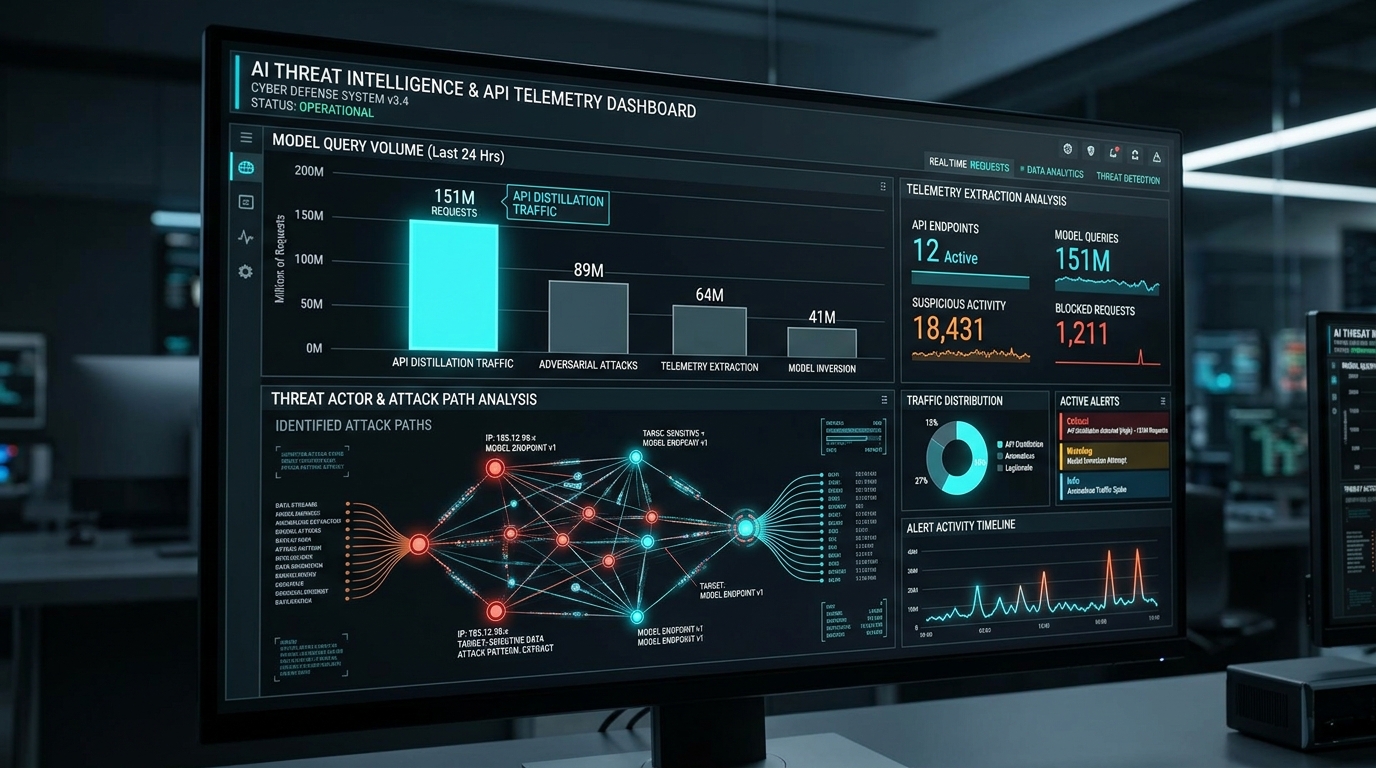
- Alibaba massive 151-million-call binge as the ultimate VIP patron: The report documented that between May and July 2026, automated systems linked to Alibaba initiated more than 151 million interactions with Claude. At commercial pricing of several dollars per million tokens, Alibaba paid colossal, hard-currency fees directly into Anthropic bank accounts. Software engineers immediately pointed out the absurdity: Alibaba acted as Anthropic greatest paying VIP customer, only for Anthropic customer support to report their top client to federal law enforcement for asking too many smart questions.
- The phantom proxy routing allegation against Moonshot and DeepSeek: The most technically implausible assertion concerned Moonshot AI (creators of the Kimi assistant) and DeepSeek. Anthropic asserted that whenever ordinary domestic users asked questions on Chinese consumer interfaces, the platforms secretly piped the raw prompts through offshore VPN tunnels directly into Claude, received the answers, slapped their own branding on the output, and served them back to users while simultaneously harvesting the tokens for internal distillation.
- Domestic public-sector queries reframed as accidental espionage: Anthropic went so far as to claim that Chinese user interactions included inquiries regarding defense logistics, municipal police procedures, and state enterprise management, lamenting that these confidential domestic matters were carelessly transmitted onto American cloud servers. The implication was as bizarre as it was contradictory: competitors were accused of exploiting Claude as unpaid labor while simultaneously contaminating Anthropic data pipelines with sensitive foreign administrative records.
- Allegations that unreleased prototype models were plundered: Anthropic further maintained that even its internal frontier architectures—the highly guarded Mythos and Fable research generations that have never been opened for public subscription—suffered unauthorized sampling through private developer preview channels, painting Chinese computer scientists as digital phantom thieves possessed of supernatural penetrative capabilities.
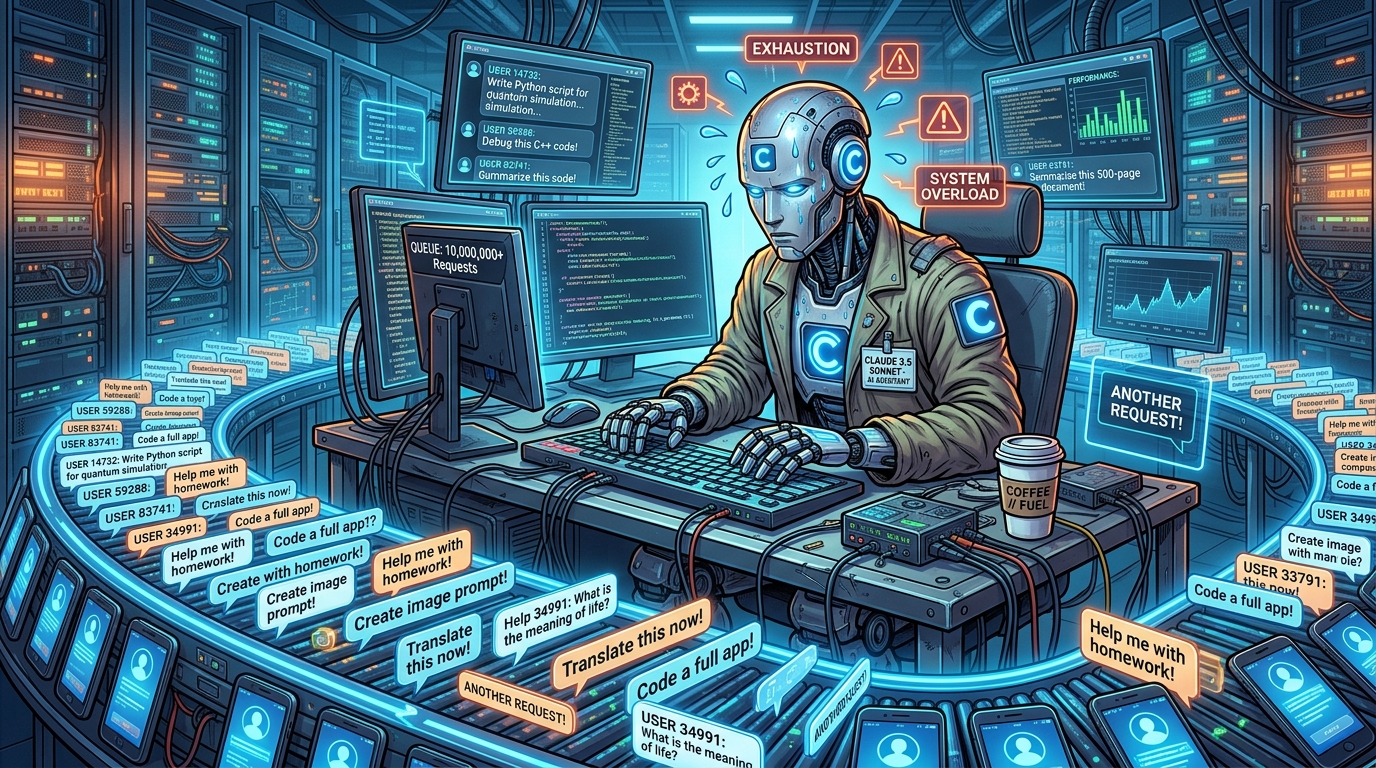
Industry reality check: Independent software architects immediately dismantled the proxy routing narrative across social media: "If Moonshot AI and DeepSeek genuinely rerouted millions of domestic consumer prompts directly to Claude in real time, the sheer concurrency would have melted Claude fragile API endpoints within minutes. Furthermore, given Claude notoriously rigid safety alignment that regularly refuses mundane historical or political queries, Chinese consumer applications relying on Claude as a silent ghostwriter would have triggered immediate nationwide user revolts due to constant refusal errors."
---
Internet ridicule: Taking millions in API fees, then running to the FBI
Confronted with Anthropic aggrieved posturing, the global artificial intelligence community generated a torrential wave of satire and critical commentary:
- "This is not illicit extraction, this is paid tutoring": Technologists drew an irresistible real-world parallel: if an ambitious student pays top dollar to hire the city most expensive private tutor, takes meticulous notes on every problem-solving heuristic, memorizes the explanations, and subsequently earns a higher test score than the tutor, it is laughably pathetic for the tutor to petition the school board complaining that the student stole their intellectual reasoning. That exact scenario encapsulates Anthropic present public grievance.
- "American distillation is innovation, Chinese API calls are theft": Commentators highlighted the blatant hypocrisy embedded in Western industry messaging. Virtually every venture-backed generative AI startup in Silicon Valley routinely downloads open-source models like Meta Llama or Alibaba Qwen, distilling and quantizing the weights into nimble edge models without controversy. When Western founders distill open weights, the ecosystem celebrates open-source technological democratization; when Chinese enterprises purchase commercial tokens legally to benchmark capabilities, corporate lobbyists label it industrial espionage.
- "Did DeepSeek truly achieve cost efficiency by hiring San Francisco contractors?": Humorous commentary circulated regarding DeepSeek pricing: if DeepSeek revolutionary reasoning models supposedly achieved breakthrough economics simply by proxying requests to Claude, the underlying mathematics falls apart instantly. Paying Anthropic exorbitant, high-margin token rates to power a free or micro-priced domestic consumer application would have bankrupted DeepSeek treasury in weeks, proving that the American narrative defies elementary economic reality.
---
The underlying reality: Silicon Valley anxiety as open-source models surge
Beyond the comedic spectacle, Anthropic emotional public reaction illuminates profound seismic shifts transforming the competitive topology of artificial intelligence:
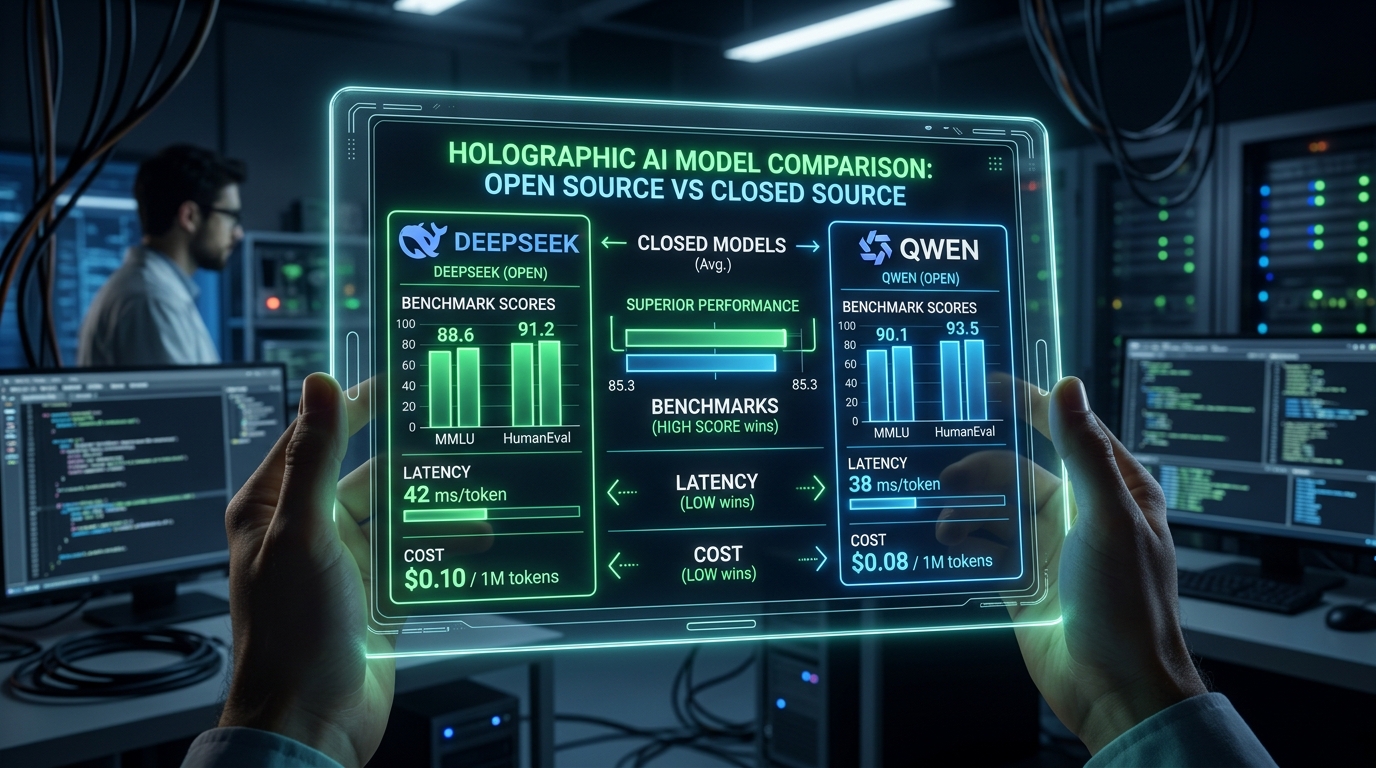
- The era of extortionate closed-source model rents is ending: For two years, OpenAI and Anthropic commanded massive valuation multiples by marketing an illusion of insurmountable proprietary advantages. However, the arrival of open-weight powerhouses like Qwen 2.5 and DeepSeek-R1—which achieve parity with or surpass top closed models on coding, logic, and mathematics benchmarks—has triggered a massive enterprise migration toward private, cost-effective infrastructure.
- Retreating into regulatory and national security protectionism: Unable to sustain commanding performance leads through algorithmic innovation alone, proprietary cloud vendors increasingly resort to geopolitical narratives. Enlisting regulatory bodies and intelligence agencies to construct protectionist barriers represents a desperate gambit to preserve inflated commercial valuations against open-source commoditization.
- The permanent destruction of customer trust in commercial cloud APIs: By brandishing user prompt transcripts and private interaction logs in a public threat advisory, Anthropic inadvertently validated the worst fears of enterprise developers worldwide. Every organization utilizing commercial APIs must now confront the reality that proprietary vendors are monitoring prompt distributions and stand ready to weaponize client data if that client develops competing technology.
- Knowledge distillation is an unstoppable law of computational science: Regardless of corporate grievances or federal advisories, utilizing powerful models as didactic teachers to generate synthetic instruction datasets for training smaller, specialized student models represents the foundational trajectory of efficient computing, an organic technical evolution that cannot be halted by account bans or administrative edicts.
Diplomatic pushback: Spokespersons from the Chinese Ministry of Commerce and Ministry of Foreign Affairs addressed the escalating claims with firm clarity: "Knowledge distillation represents an internationally recognized, neutral methodology throughout artificial intelligence research. Relevant American institutions and corporations should respect objective market principles, cease stretching national security concepts, and abandon groundless technological suppression."
---
Our verdict
- Anthropic has suffered a catastrophic public relations and brand disaster: Intending to frame itself as a valiant defender against cyber threats, the company instead emerged as a paranoid, petulant incumbent unable to compete with open innovation, permanently damaging its standing among neutral developers worldwide.
- The accusations inadvertently validate the industrial prowess of Chinese AI: Accusing Alibaba of absorbing 151 million interactions confirms the formidable scale and data engineering rigor powering models like Qwen. More importantly, the global success of Qwen and DeepSeek demonstrates that top Chinese labs possess autonomous, world-class post-training flywheels that have long surpassed reliance on any single Western provider.
- Enterprise teams will accelerate their structural migration away from Claude: The moment a foundation model vendor begins scrutinizing enterprise API usage under a national security microscope and releasing customer query samples to the public, sensible CTOs recognize that relying on such platforms represents an untenable strategic and legal liability.
---
What to watch next
- [01] Whether CISA and the US Department of Commerce attempt to mandate strict Know-Your-Customer (KYC) identity verification for all international developers accessing American commercial AI APIs.
- [02] Whether Alibaba, Moonshot AI, and DeepSeek issue formal technical whitepapers detailing their synthetic data pipelines to publicly debunk the proxy forwarding narrative.
- [03] Whether rival Western labs like OpenAI and Google emulate Anthropic legalistic stance or capitalize on the controversy by quietly welcoming disaffected international developers.
- [04] How open-source communities formalize synthetic data standards to completely decouple future reinforcement learning pipelines from reliance on closed-source commercial APIs.
---
Frequently asked questions (FAQ)
What is knowledge distillation, and does it constitute theft in AI development?
Pioneered in modern deep learning by Geoffrey Hinton and colleagues in 2015, knowledge distillation represents one of the most established and scientifically rigorous techniques for model compression and capability transfer. The core concept involves employing a massive, computationally expensive "teacher model" (such as a 500-billion-parameter foundation model) to generate probability distributions, intermediate reasoning steps, or structured solutions for complex problems. These high-fidelity outputs are subsequently utilized as supervised training targets to train a much smaller, faster, and cheaper "student model" (such as a 7-billion or 14-billion-parameter architecture).
From a software engineering and intellectual property standpoint, distillation does not involve copying underlying model weights, source code, or proprietary neural network architectures. The student model learns purely through external functional observation, exactly like a human pupil studying worked examples from a textbook. The only friction arises from commercial terms of service where proprietary vendors attempt to forbid using their completions to train competing systems. However, across the global open-source community, recursive cross-distillation is ubiquitous, rendering claims of intellectual property theft scientifically baseless.
What is the technical mechanism behind silently proxying domestic user queries to Claude?
The scenario alleged by Anthropic is known in software architecture as shadow proxy routing. In this speculative setup, when a domestic user submits a prompt via a localized chat application, the provider backend does not run local inference. Instead, it serializes the request, dispatches it across an international encrypted tunnel to Claude API, captures the returned response, and serves the generated text back to the end user under its own brand interface while logging the prompt-response pair for offline training.
However, in massive production environments, this operational model represents an engineering and economic impossibility: First, the economics are inverted: Chinese consumer AI applications are predominantly free or available at nominal cost, whereas Claude commercial API charges steep premium rates, meaning full-scale real-time forwarding would incur millions in unsustainable daily operating losses; Second, latency and concurrency bottlenecks: Domestic platforms process millions of concurrent queries during peak hours, whereas third-party cloud APIs enforce strict rate limits and suffer from cross-Pacific network instability, guaranteeing immediate service outages and timeout failures; Third, content alignment and safety mismatch: Claude rigid American safety filters routinely trigger blanket refusals on sensitive historical, cultural, or administrative terminology, which would instantly disrupt domestic user experiences and trigger immediate public exposure.
What are the long-term ramifications of this dispute for global developers and AI enterprises?
This escalating confrontation marks a watershed moment that will permanently reshape the architectural blueprints and procurement strategies of technology organizations globally:
First, it shatters the illusion of closed-source model neutrality. Enterprise leaders now recognize that even when paying full commercial rates, their usage patterns remain vulnerable to unilateral corporate reinterpretation as hostile activity, accompanied by arbitrary account termination and public exposure.
Second, it supercharges the enterprise exodus toward self-hosted open-weight models. Engineering teams are systematically prioritizing high-performing open architectures like DeepSeek and Qwen deployed on private hardware or sovereign cloud instances, ensuring that confidential business workflows and intellectual property remain permanently insulated from foreign platform surveillance.
Third, it accelerates the transition toward decentralized synthetic data generation. Future frontier training workflows will increasingly abandon reliance on external commercial API outputs altogether, transitioning toward self-play reinforcement learning, formal verification environments, and rule-based constraint validation that provide verifiable data provenance beyond the reach of closed-source platform gatekeepers.