DeepSeek officially shows you how to put V4 inside OpenAI Codex
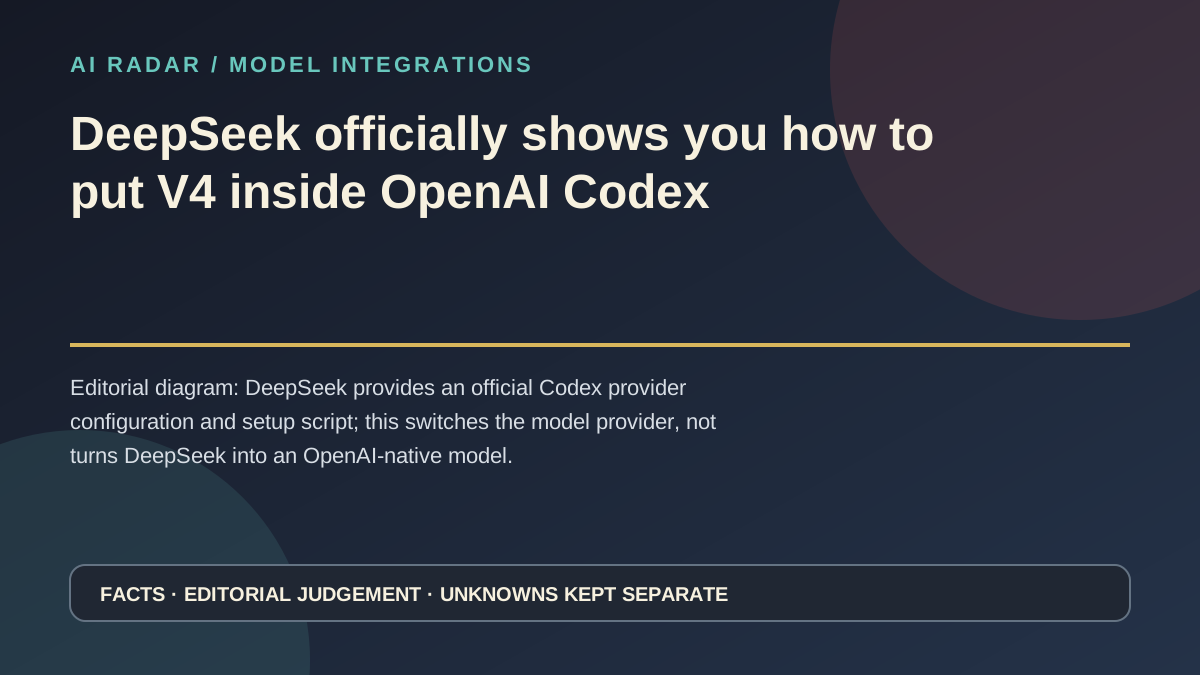
DeepSeek now provides one-click and manual Codex setup: keep the Codex CLI, desktop app, or VS Code entry point while switching the model provider to DeepSeek V4; quality, billing, and session grouping remain separate concerns.
The bottom line
DeepSeek officially teaches you: directly replace the model inside with DeepSeek V4 without changing the Codex shell.
The DeepSeek documentation has added a dedicated "Integrate with Codex" page, which clearly states: Codex communicates with the model through the OpenAI Responses API, and the DeepSeek API natively supports the Responses API, so the Codex CLI, ChatGPT desktop application and VS Code's Codex extension can all access the DeepSeek model.
This is not a partial configuration developed by community contributors, but DeepSeek officially provides a one-click script and manual configuration solution. Therefore, the most embarrassing combination emerged: OpenAI made the coding interface, and DeepSeek provided the "brain".
The official one-click script does more than change one configuration line
DeepSeek offers one-click setup scripts for macOS/Linux and Windows. The script will first back up ~/.codex/config.toml, then write to the model directory models.json, add DeepSeek provider, verify TOML and JSON, and finally retain the existing MCP server and project trust level settings.
This means that it does not simply replace the API address, but also transfers metadata such as the model context window, inference gear, and tool calling format to Codex.
The core fields for manual configuration include: model name, model_provider, wire_api = "responses", base_url of DeepSeek API, and API Key. DeepSeek documentation states that both V4 Flash and V4 Pro are in the model directory.
But it’s not “get OpenAI Codex for free”
Codex is still the client and agent workflow of Codex, DeepSeek just replaces the model provider. Model quality, speed, context, tool call boundaries, and billing are all determined by the DeepSeek API; do not interpret this as "DeepSeek backdoored is equal to native GPT".
There is another detail that is easy to get into trouble: after switching to a third-party API, Codex will save session records grouped by login method. The original ChatGPT subscription session has not been deleted, but will not be displayed temporarily; it will come back after restoring the original configuration.
The API Key will also be written to the configuration file. At least file permissions must be restricted on personal computers. config.toml must not be submitted to the team repository, let alone paste the Key into screenshots, logs or public tutorials.
Why this combination makes OpenAI uncomfortable
In the past, model providers competed over "whose model is stronger." Now the developer portal has become a layer of independent assets: terminal, IDE, MCP, permissions, sessions and project context are all in the portal.
DeepSeek did not create a new Codex this time, but first sent its own model into the existing workflow. It bypasses the cost of users migrating editors and habits and directly competes for every Agent call.
This is why V4 Pro also emphasized Responses API, Codex one-click setting and adjustable reasoning effort when it was released: model capabilities can only be used continuously if they are connected to the tool chain.
Our judgment: This is a "reverse opening of the entry point"
DeepSeek does not take away the entire OpenAI product, but proves that the entrance to AI programming may gradually become a "pluggable shell." Whoever masters the model can enter the workflow that others have developed; whoever masters the shell can collect and distribute value between models.
Whether it is worth switching for ordinary users, don’t read the title, and test yourself on three types of tasks: code modification, long context understanding, and tasks that require multiple tool calls. The cheapest model is not necessarily the most economical, there are costs for rework and failed calls.
What to watch
- Whether OpenAI will continue to support third-party provider configuration paths.
- DeepSeek V4 stability in real Codex toolchains, not just API compatibility.
- Whether Codex's permissions, data processing, and session grouping for third-party models continue to change.