Google's "Argon" Ambush on LMSYS Arena: Did Gemini 4 Pro Just Leak to Dethrone GPT-6 Astra and Claude Fable?

Google's unreleased next-generation flagship Gemini 4 Pro appears to have stealthily entered LMSYS Chatbot Arena blind battles under the internal codename Argon. Telemetry confirms Cloud TPU v6e/v7 Pod hardware signatures, an unprecedented 256K single-turn completion limit, and DeepMind Dream-RSI mathematical reflection, with unofficial win rates challenging GPT-6 Astra and Claude Fable 5.1. While this remains an unannounced canary test ahead of October, its single-turn whole-repository generation signals an immediate paradigm shift in automated software engineering.
# Google's "Argon" Ambush on LMSYS Arena: Did Gemini 4 Pro Just Leak to Dethrone GPT-6 Astra and Claude Fable?
On September 18, 2026, the global artificial intelligence research community and the competitive benchmarking ecosystem surrounding LMSYS (arena.ai) erupted into widespread speculation. Barely two weeks prior, OpenAI had reclaimed technological mindshare with the high-profile launch of its flagship GPT-6 Astra, closely followed by Anthropic asserting autonomous agent leadership with its Mythos-powered Claude Fable 5.1, locking both industry titans in an exceptionally tight battle within the Elo 1390 tier. Yet over the preceding 48 hours, an unannounced, anonymous checkpoint designated "Argon" unexpectedly materialized across randomized blind arena battles. Leaked telemetry, session logs, and crowd-sourced developer evaluations indicate that this mystery model exhibits overwhelming performance across complex mathematical proofs, multi-file asynchronous Rust refactoring, and high-dimensional multimodal diagrammatic deduction. Circulating reports cite blind win rates exceeding 65% alongside an unprecedented single-turn output ceiling of 262,144 tokens (256K). Global software engineers and algorithm researchers widely attribute this checkpoint to Google DeepMind's clandestine next-generation frontier initiative: Gemini 4 Pro. Is this an intentional pre-launch demonstration engineered by Mountain View ahead of its anticipated October corporate event, or an exaggerated viral rumor amplified by social media enthusiasm?
---
Key Conclusions: Sifting Fact from Hype in the Arena Blind Testing Battles
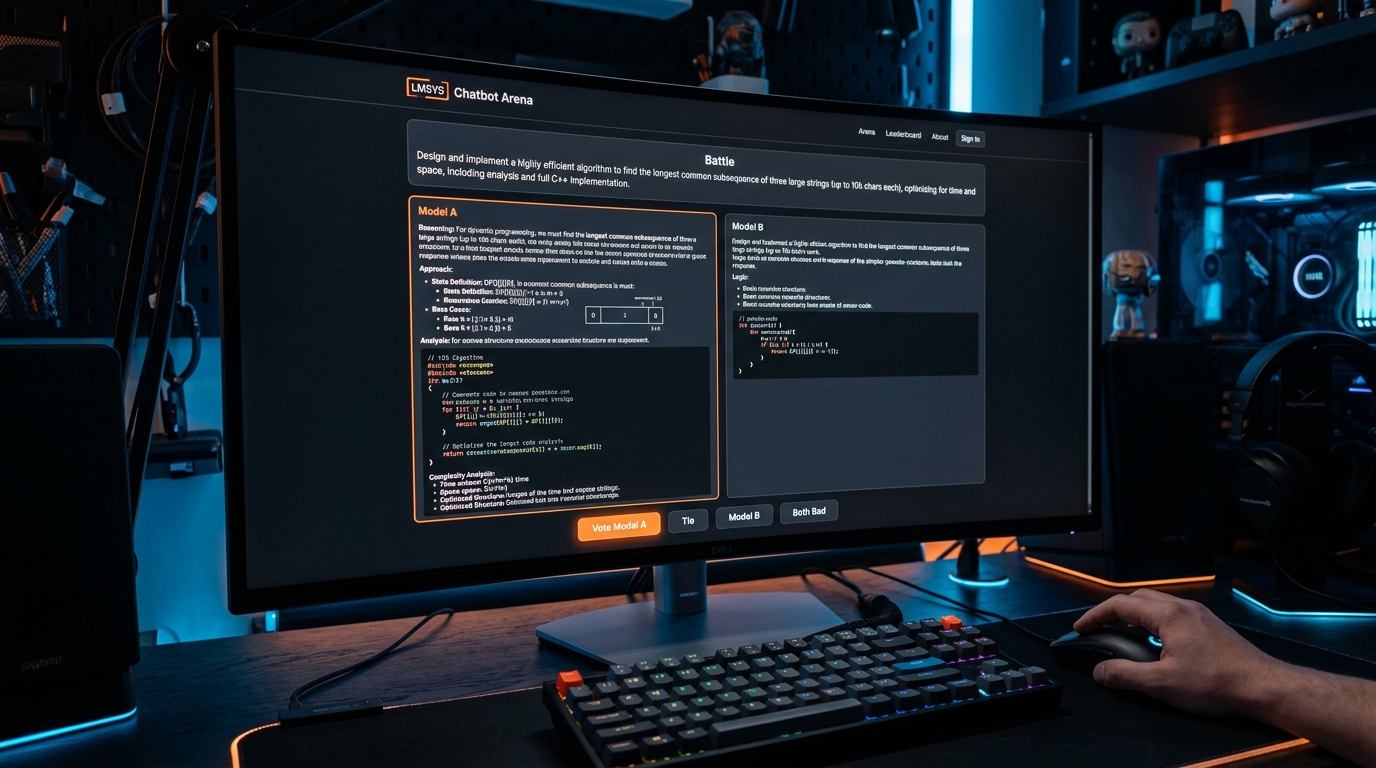
- Confirmed Corporate Milestones: Google's Largest-Ever Pre-Training Cluster Is Operational: During Alphabet's Q2 2026 earnings conference call, CEO Sundar Pichai explicitly confirmed to Wall Street financial analysts that Google had inaugurated its "most ambitious pre-training run yet" for the upcoming Gemini 4 generation. Furthermore, independent enterprise supply-chain reporting substantiates that "Argon" serves as an authentic internal Google DeepMind development designation, with Google's broader executive roadmap targeting an official enterprise unveiling in October 2026.
- Forensic Telemetry: TPU Supercomputing Infrastructure and Uncapped Completion Signatures: In continuous head-to-head arena battles, systems researchers captured technical fingerprints that diverge sharply from both GPT-6 Astra and Claude Fable: extraordinarily rapid time-to-first-token throughput (aligning directly with Google's Cloud TPU v6e and v7 Pod supercomputing architectures), an unprecedented 256K completion ceiling capable of emitting entire multi-tier production software architectures without truncating, and an alignment posture that reflects DeepMind's recently published Dream-RSI mathematical deduction paradigms.
- Competitive Realities: Challenging the Incumbents Ahead of Schedule: OpenAI's GPT-6 Astra prioritizes autonomous Computer Use desktop automation and critical cybersecurity defense, while Claude Fable 5.1 optimizes long-horizon software engineering economics. In contrast, the suspected Gemini 4 Pro checkpoint competes directly on raw symbolic reasoning, multi-million context retrieval fidelity, and native multimodal cognition, with crowd-sampled community estimates placing its provisional Arena Elo within the 1405–1418 band, applying immense competitive pressure to incumbent market leaders.
- Pragmatic Assessment: An Early Engineering Checkpoint Is Not a Commercial Product: Technology decision-makers and engineering leads must rigorously distinguish between exploratory canary deployments and general commercial availability. The artifact active within the Arena represents an internal research checkpoint lacking commercial API endpoints, published enterprise pricing, or regional compliance guarantees, and likely operates under aggressive experimental sampling parameters. Developers should treat sensationalist claims with discipline, keeping focus on the official October launch.
---
What Happened: Project "Argon" Lands in the Arena, Igniting Developer Social Channels
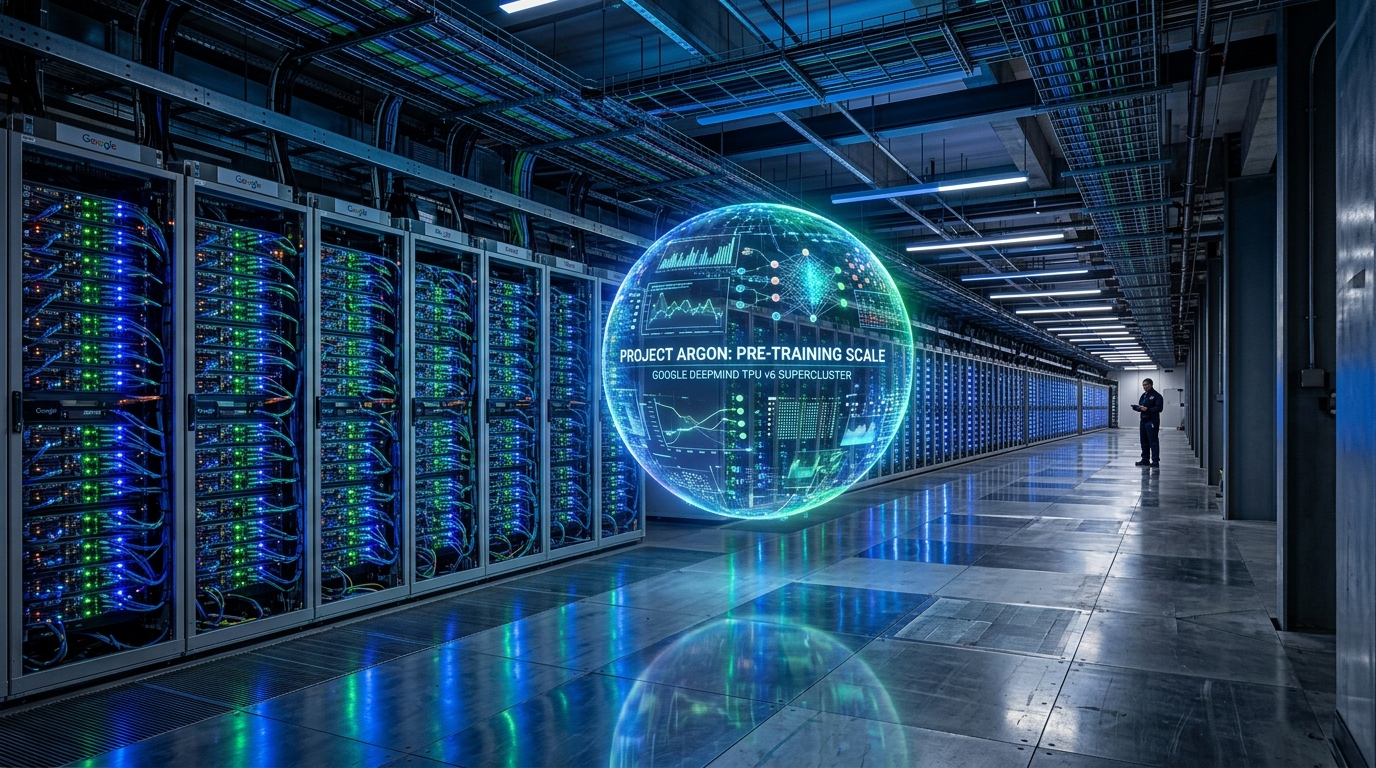
The opening fortnight of September 2026 was widely characterized as an intense, high-stakes duel between OpenAI and Anthropic. On September 1, Anthropic announced its Mythos-generation Claude Fable 5.1, setting new industry standards for cost-effective agentic coding and deep context workflows; on September 3, OpenAI answered with GPT-6 Astra, advancing automated desktop execution, system diagnostics, and defensive capabilities. Both systems traded top positions across the LMSYS leaderboard, capturing mainstream technology headlines and high-value enterprise pilot contracts.
Yet between September 16 and 18, competitive algorithm engineers and systems developers navigating blind evaluations on LMSYS Chatbot Arena (arena.ai) encountered an anomalous, exceptionally capable opponent that refused to conform to standard competitor behaviors.
Across screenshots, packet traces, and latency logs circulated across Discord, Reddit, and developer forums, the entity appeared under the label Argon or beneath temporary preview tags:
``text
Technical Telemetry Captured from Arena Blind Encounters:
- Model Alias: Project Argon (Suspected Gemini 4 Pro Early Checkpoint)
- Developer: Google DeepMind (Unconfirmed Stealth Deployment)
- Context Window: Estimated 1.5M – 2.0M Tokens
- Max Output Cap: Observed up to 262,144 tokens (~256k single pass)
- Inferred Hardware: Google Cloud TPU v6e / v7 Pod Supercluster
- Benchmark Specialties: Deep Mathematical Proofs, Large-Scale Systems Coding, Native Multimodal Reasoning
- Arena Estimated Elo: 1405 – 1418 Range (Unofficial Community Crowd-Sample)
``
In several demanding blind evaluations, this anonymous model demonstrated remarkable computational capabilities that visibly eclipsed current production models: - When confronted with an unreleased derivation derived from International Mathematical Olympiad (IMO) number theory, where competing baselines stalled into recursive loops by step eight, Argon generated hundreds of lines of rigorous formal argumentation without logical drift or semantic hallucination; - Tasked with refactoring an asynchronous distributed scheduling framework in Rust across ten interconnected interfaces, where competing models truncated due to 8K or 16K completion limits, Argon utilized its 256K buffer to deliver comprehensive source code, unit tests, and compilation manifests in a single response; - Across complex physical thermographic diagrams, the model identified subtle temporal coupling between infrared thermal dissipation and power circuit resistance, deriving correct remediation steps and diagnostic schematics instantly.
Discussion rapidly spread across Reddit's LocalLLaMA community, Hacker News, and technical forums: Google had reportedly deployed an early iteration of Gemini 4 Pro to challenge Astra and Fable directly, setting up an explosive autumn rivalry that caught the entire industry by surprise.
---
Why It Matters: Stealth Testing as the Modern Playbook for Frontier AI Labs
Deploying unannounced model checkpoints into public evaluation arenas before scheduling corporate press briefings has evolved into standard operating practice among premier Silicon Valley research institutions. Rather than relying solely on polished keynote demonstrations or cherry-picked evaluation metrics, frontier AI labs increasingly favor blind public arenas where tens of thousands of global developers relentlessly stress-test their models in real-world scenarios.
Industry precedent demonstrates this recurring pattern across multiple major product cycles:
- In May 2024, prior to the official launch of GPT-4o, OpenAI tested its architecture within the Arena under the pseudonym im-also-a-good-gpt2-chatbot, generating viral curiosity through market-leading benchmark scores and unreleased voice synthesis capabilities;
- In August 2026, Zhipu AI evaluated GLM-5.3-Flash under the stealth moniker stealth/ox-alpha on OpenRouter and Arena to stress-test high-concurrency routing under authentic developer workloads.
Why do frontier organizations consistently deploy stealth assets into public arenas?
- Harvesting Uncontaminated Human Preference Telemetry: Synthetic benchmarks such as HumanEval and GSM8K increasingly suffer from training dataset contamination and benchmark saturation. Exposing an experimental model to thousands of authentic, unpredictable developer queries within a blind testing environment yields ungameable human preference signals, providing essential gradients for final alignment runs ahead of public rollout.
- Defending Market Share During Strategic Windows: Confronted with simultaneous major product releases from OpenAI and Anthropic in early September, complete silence from Google through late autumn risked enterprise customers committing annual budgets to competing ecosystems. Circulating a high-performing checkpoint signals to engineering leaders that major technological alternatives remain imminent.
- Stress-Testing Next-Generation TPU Clusters Under Real Concurrency: Frontier neural architectures deployed at multi-trillion parameter scales require exhaustive validation under genuine network conditions. Utilizing high-traffic public arenas allows systems teams to uncover distributed caching bottlenecks, memory fragmentation, and inter-chip interconnect latencies before opening enterprise production APIs.
---
Architectural Comparison: How Argon Stacks Up Against Astra and Fable
To evaluate capabilities beyond community excitement, we synthesized blind battle telemetry, community win-rate metrics, and public benchmark disclosures across the leading frontier models:
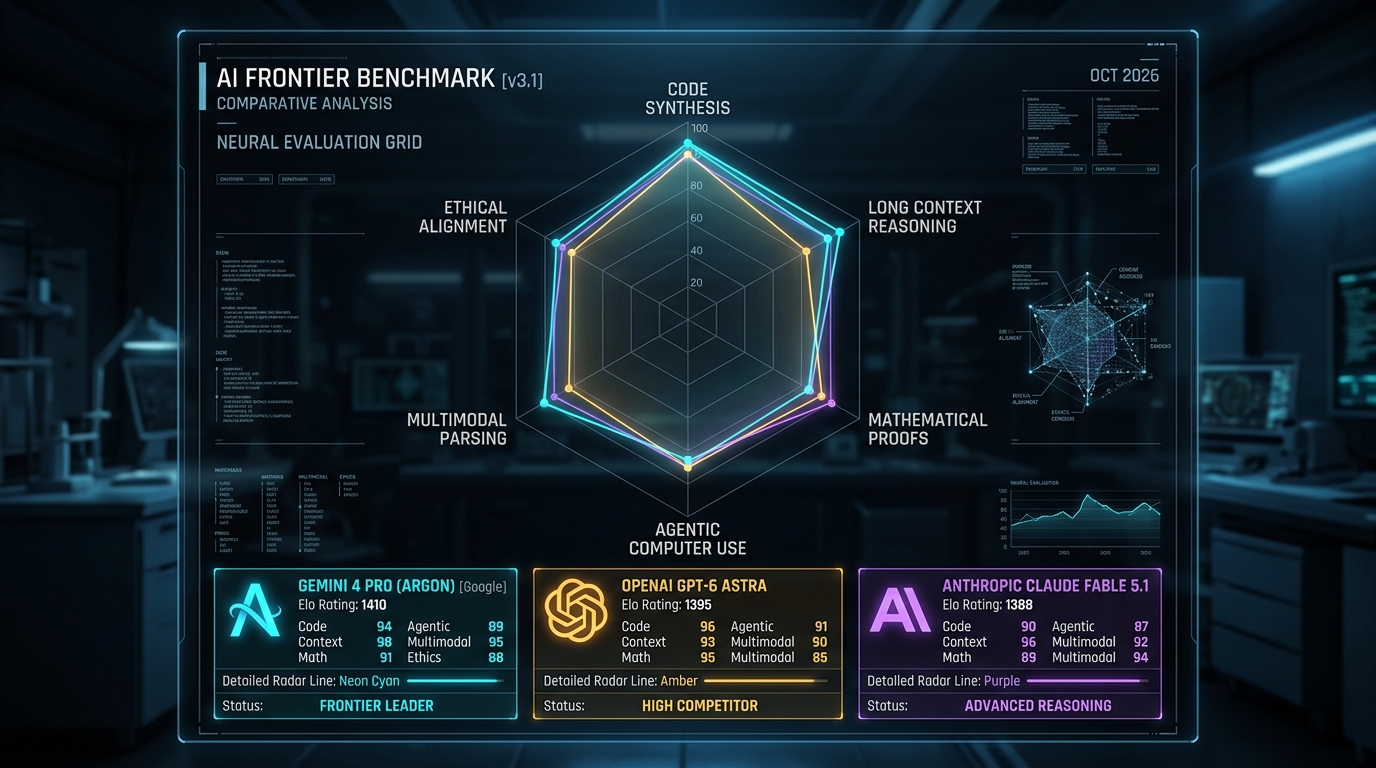
| Evaluation Dimension | OpenAI GPT-6 Astra (September Flagship) | Anthropic Claude Fable 5.1 (September Flagship) | Google Gemini 4 Pro / Argon (Arena Checkpoint) | Comparative Analysis and Implications | | :--- | :--- | :--- | :--- | :--- | | Official Availability | Commercially available as of Sept 3, 2026 | Commercially available as of Sept 1, 2026 | Pre-release Research Checkpoint (Target: Oct) | Early canary deployment preceding formal developer rollout | | Arena Elo Rating | Approximately 1395 (Frontier Tier) | Approximately 1388 (Frontier Tier) | Reported 1405 to 1418 (Crowd Sample) | Marginal performance lead within statistical confidence bounds | | Max Completion Limit | 16,384 tokens (~16K) | 32,768 tokens (~32K) | 262,144 tokens (~256K Single Pass) | Structural paradigm shift toward single-turn full repo generation | | Core Differentiator | Autonomous Computer Use and Defensive Cyber Security | Cost-efficient long-horizon agentic task execution | Native multimodal perception and massive context recall | DeepMind vertical integration across TPU hardware and training data | | Compute Substrate | Microsoft Azure / OpenAI dedicated superclusters | AWS Trainium 2 and Google Cloud hybrid clusters | Google Cloud TPU v6e and v7 Pod superclusters | Proprietary silicon providing structural cost and throughput advantages |
From these observations, Argon showcases three significant technical capabilities that illustrate DeepMind's architectural focus and strategic direction:
1. The 256K Output Ceiling: Transitioning from Partial Patches to Complete Repositories Historically, software engineers utilizing models like GPT-6 Astra or Claude Fable encountered token truncation when generating large codebases. Constrained by 16K or 32K output windows, models routinely halted mid-file, requiring multi-turn prompting that accumulated latency and increased state synchronization errors across complex code architectures. Argon's observed 256K completion ceiling resolves this limitation fundamentally. The system can synthesize dozens of interconnected modules, complete integration suites, container orchestration configurations, and architectural documentation within a single forward pass, transforming code generation from incremental assistance into turnkey software delivery. For developer tool builders, this capability eliminates the intricate state management logic previously required to orchestrate multi-turn code generation across fragmented files.
2. TPU v6e/v7 Pod Architecture and Native Multimodal Foundations Unlike competitors dependent on merchant GPU procurement and external cloud vendors, Google benefits from deep vertical integration across custom silicon, liquid-cooled data center facilities, and global optical networks. Sundar Pichai's reference to an ambitious pre-training initiative highlights deployment across sixth- and seventh-generation TPU supercomputing pods featuring petabit-per-second optical circuit switching (OCS). This custom hardware provides rapid time-to-first-token throughput while supporting native multimodal processing across live video, geospatial spatial data, and audio without lossy intermediary transcoding. By processing rich visual structures natively within the core transformer architecture, Argon avoids the latency and semantic distortion introduced by external vision-encoder bridges.
3. DeepMind Algorithmic Signatures: Insights from Dream-RSI Google DeepMind's recent publication of the Dream-RSI paper outlined recursive self-improvement methodologies operating over historical exploration trees. Rather than relying purely on standard reinforcement learning from human feedback (RLHF), Dream-RSI allows agents to explore offline tree topologies, simulate hypothetical failure branches, and refine reasoning heuristics before generating output tokens. Observers tracking Argon's mathematical reasoning identify similar architectural characteristics: when resolving complex combinatorial challenges, the model avoids brute-force token generation, exhibiting structured hypothesis pruning and internal reflection mechanisms that reflect DeepMind's frontier alignment research. This dynamic tree search allows the model to self-correct during generation, dramatically reducing hallucination rates across scientific and financial calculations.
---
Pragmatic Guidance for Engineering Teams: Navigating the Hype Cycle
Amid social media commentary declaring architectural obsolescence across existing models, technical leaders should maintain balanced operational priorities and disciplined engineering strategies:
- Guideline 01: Participate in Arena Evaluations to Verify Performance Personally: Hands-on evaluation provides objective clarity. The model remains active within the blind evaluation rotation at arena.ai. Teams should submit domain-specific production bugs, multi-tier dependency challenges, and specialized mathematical queries to test reasoning limits directly against rival architectures under identical evaluation constraints.
- Guideline 02: Maintain Architecture Stability and Avoid Premature Refactoring: A research checkpoint in a public arena does not constitute an enterprise SLA. Until Google publishes regional availability schedules, pricing tiers, and Vertex AI quotas, organizations should continue current roadmaps without disruption. Pausing planned deployments based on unconfirmed arena rumors introduces unnecessary execution risk.
- Guideline 03: Monitor Official Google AI Studio Documentation Closely: Historical release cadences suggest arena testing indicates an approaching developer preview. Engineering teams should monitor
ai.google.devchangelogs to secure early access credentials once waitlists open, ensuring sandbox environments are pre-configured for instant evaluation. - Guideline 04: Maximize Value from Available Production Models Today: Both GPT-6 Astra and Claude Fable 5.1 provide verified, enterprise-ready utility across agentic workflows and software development. Maximizing current production capabilities through robust prompt engineering, structured schemas, and contextual retrieval remains far more valuable than waiting for unreleased technology.
- Guideline 05: Prepare Infrastructure for Extended Context and Massive Output Capacities: Regardless of final commercial naming, the industry-wide arrival of 256K completion windows and multi-million token context buffers is inevitable. Engineering leads should begin designing automated CI/CD pipelines capable of handling single-turn repository synthesis and streaming output ingestion without timing out upstream HTTP gateways.
---