LinkedIn's AI slop button hit one million clicks as users push back on machine-like writing
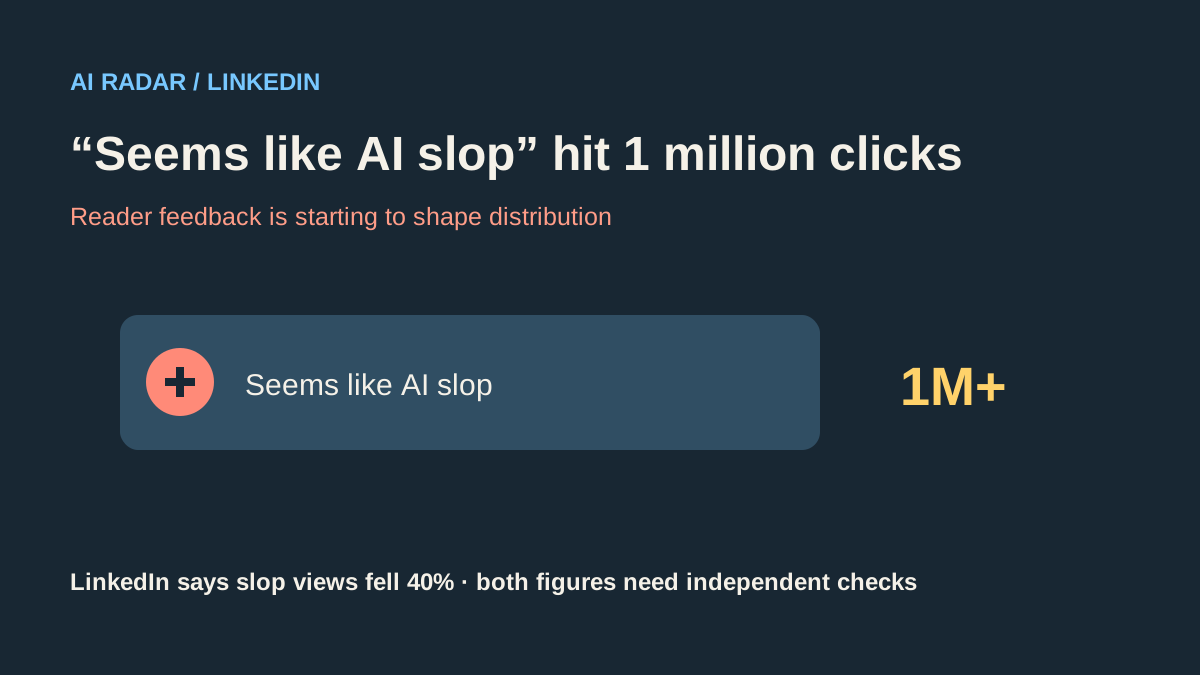
LinkedIn's product chief says its “Seems like AI slop” button received over one million clicks within weeks, while posts classified as AI slop received 40% fewer views. Both figures come from LinkedIn's own system rather than an independent audit, but they show users actively punishing machine-like writing.
The bottom line
LinkedIn's “Seems like AI slop” button received more than one million clicks within weeks. The platform also says posts it classifies as AI slop are receiving 40% fewer views. Both figures come from LinkedIn's own classification system, but they show users actively rejecting machine-like writing.
The Verge reported on August 22 that LinkedIn product chief Hari Srinivasan said users had clicked the button over one million times. It lives in a post's three-dot menu, and authors may then see a message saying that some members thought the post seemed like AI.
The platform is turning “looks like AI” into feedback
LinkedIn also improved its AI-content classifiers and removed an earlier “enhance your post” AI feature. Pangram previously reported that 41% of LinkedIn long-form posts were flagged as fully AI-generated.
This is not a ban on AI. It makes the reader's feeling that a post sounds machine-written part of the public feedback loop. In hiring, sales and personal branding, tone is part of the product.
One million clicks do not mean one million confirmed slop posts
A click is a user judgement, not a human moderation verdict. People may click because a post is vague, too long or simply expresses a view they dislike. A classifier may also mislabel carefully edited human writing.
LinkedIn's reported 40% drop in views is internal classification data. Public details are not enough to establish the sample, time window or causation.
Our judgement: platforms are rewarding recognizable human texture
LinkedIn is not the first platform to fight AI slop, but its move is revealing. A social network does not need to prove who wrote every post; it can simply distribute less of what users do not want to read.
That pushes creators toward concrete experience, clear positions, real numbers and sentences with an accountable subject. AI can help organize material, but readers now have a faster way to punish writing with no personal judgement.
What to watch
- Whether LinkedIn publishes false-positive rates, samples and the method behind its view metric;
- Whether the feedback button is abused by rivals or coordinated users;
- Whether other platforms add similar controls;
- Whether AI-assisted writing that is genuinely edited by a person can consistently avoid the machine tone.
One million clicks do not prove that AI content is dead. They do show that users are starting to downvote machine-like writing themselves.