OpenAI Exec Pledges 28-Day Ship Streak or Reset All Quotas: Why Devs Are Begging Them Not to Update Today
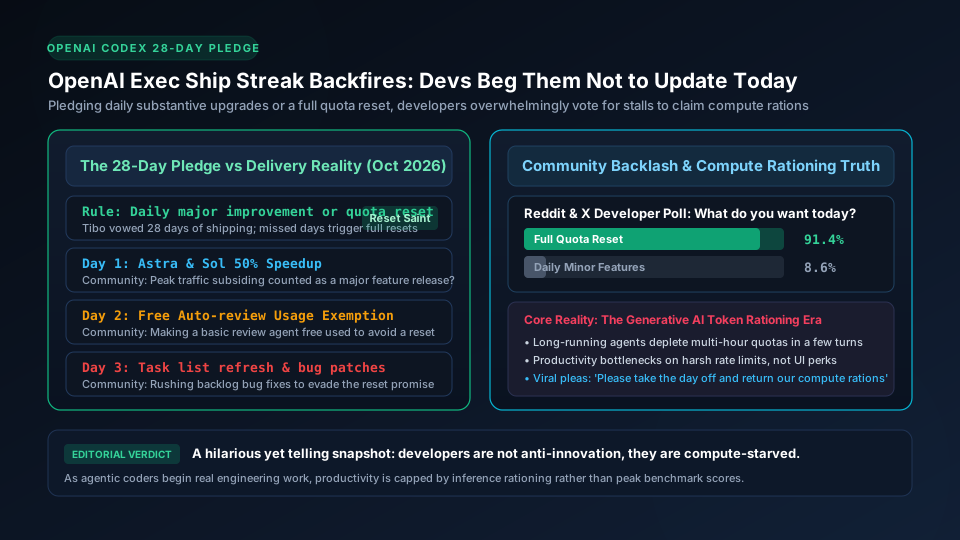
OpenAI's 28-day gauntlet promising daily major improvements or a full quota reset backfired as 91% of developers voted begging the team not to ship; when the lab credited routine speedups and bug fixes as daily releases, the community cried foul, exposing acute compute starvation in the agentic era.
# OpenAI Exec Pledges 28-Day Ship Streak or Reset All Quotas: Why Devs Are Begging Them Not to Update Today
If a big-tech product lead stood on stage and declared: "For the next 28 days, our engineering team will ship a tangible, substantive new improvement every single day. If we miss even one day, I will personally penalize ourselves by refilling every user's gas tank for free!"—traditional business logic suggests the audience would give a standing ovation.
Yet in the real-world developer circles of early October 2026, the script has flipped completely upside down.
The moment Thibault "Tibo" Sottiaux, head of OpenAI's core product and platform organization overseeing ChatGPT, Codex, and Dots, posted this gauntlet on social media, the comment section did not fill with cheers. Instead, thousands of working developers immediately pleaded with him:
"Please, we beg you, do not ship anything today!"
"If the code is not finished, clock out early and go grab a beer, do not push yourselves."
"Stop patching things. We genuinely do not want new features right now—we just want our usage quotas reset!"
Across multiple community polls drawing tens of thousands of responses across X and Reddit, more than 90% of developers voted without hesitation for OpenAI to simply drop the ball and trigger an immediate global quota reset. Fewer than 10% held any lingering curiosity for daily micro-features. When the team subsequently announced backend speedups, minor agent exemption tweaks, and UI error polish as "major deliverables" just to keep their streak alive, community frustration boiled over: "We are getting played! Did you really stay up all night fixing a button just to dodge our quota reset?!"
This seemingly absurd slice of Silicon Valley satire exposes the most authentic and awkward reality of generative artificial intelligence in late 2026.
Conclusion: How an internal ship streak turned into a viral petition for failure

What drove this bizarre controversy into tech headlines was a classic display of Silicon Valley engineer heroics.
Within developer communities, Tibo Sottiaux has long carried an affectionate nickname: the "Reset Saint." In past milestones, major platform outages, or moments when power users drained their Pro limits to absolute zero, Tibo frequently logged onto X and executed manual global quota resets for affected developers, winning deep grassroots popularity among hackers.
On October 4, responding to persistent frustration regarding depleted quotas and erratic platform throttling, Tibo decided to launch an aggressive 28-day challenge. Starting October 5, for twenty-eight consecutive days, the Codex and ChatGPT Work product teams committed to shipping a clear, relevant, and substantive improvement for the majority of users every single day. If the team failed to ship meaningful progress on any given day, OpenAI would trigger a full usage quota reset across all active user accounts.
To Tibo and OpenAI leadership, this appeared to be an immaculate strategy: pushing internal engineering teams into a disciplined shipping sprint while publicly displaying OpenAI's relentless delivery muscle.
However, they drastically underestimated just how starved working developers and bootstrapped engineers are for compute rations.
Users quickly did the cold math: under high-tier subscriptions, running complex autonomous coding agents like Codex through two or three multi-file architectural refactors drains rate-limit buckets completely, leaving engineers stranded for hours. If OpenAI simply took an unscheduled nap or missed a deadline, every developer across the globe would receive an entire unbilled round of raw compute capacity for free.
Consequently, what was intended as a celebratory engineering sprint instantly morphed into a viral petition for failure. Independent developers rapidly spun up tracking dashboards like "Codex Reset Tracker," streaming live countdown timers watching OpenAI's deployment endpoints, with thousands of onlookers actively rooting for OpenAI to stumble before midnight.
What happened: From the 'Reset Saint' pledge to a 90% vote demanding quota over features
From the very moment the challenge officially kicked off on October 5, the dramatic tension never subsided.
Across Reddit's r/codex community and X, multiple high-traffic polls gauged sentiment on the challenge. One survey surveying over 8,000 active software engineers yielded a staggering disparity:
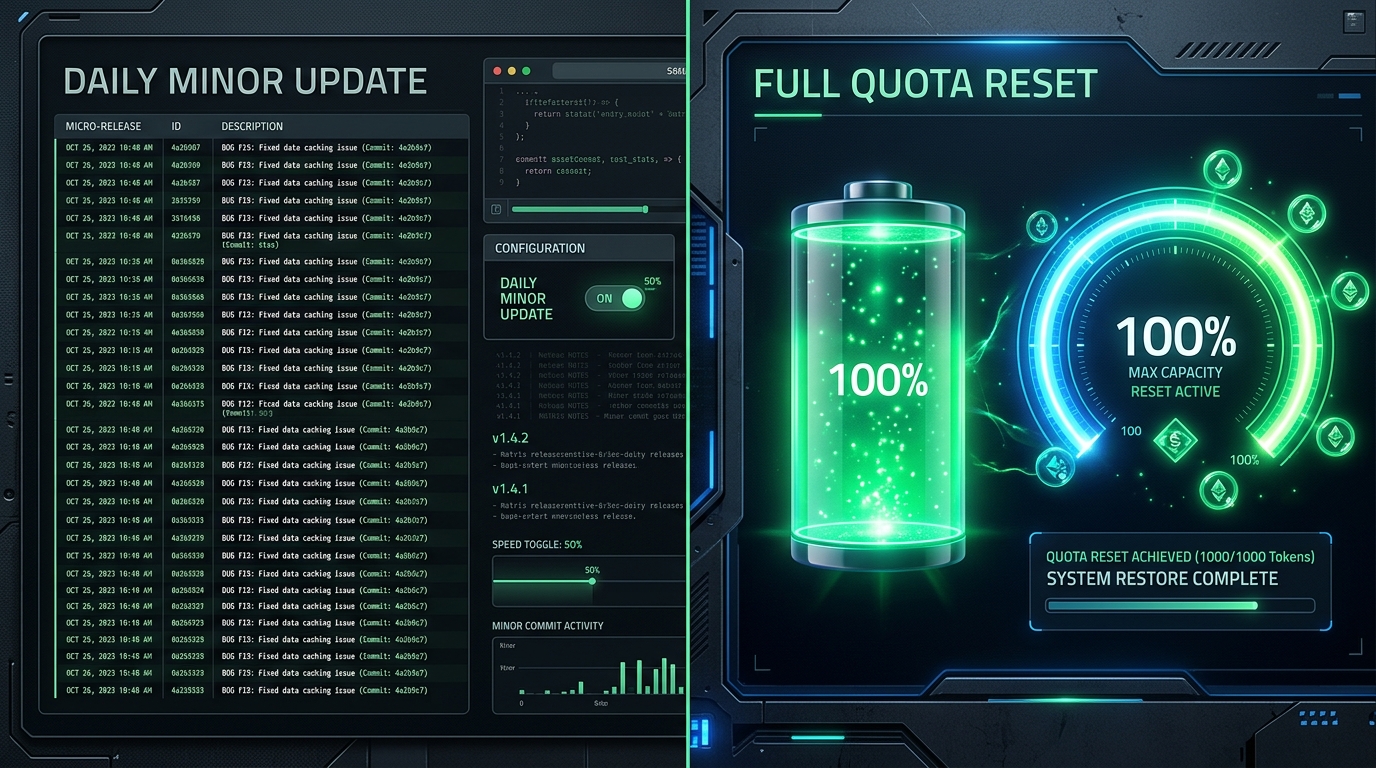
- Option A (Reset quota, claim free compute immediately): Won an overwhelming 91.4% majority;
- Option B (Keep updating, look forward to new team features): Scraped together a lonely 8.6% of votes.
Scores of full-time software engineers shared workspace screenshots in response threads: on one monitor sat half-finished application code waiting for unit tests to pass; on the other sat the dreaded modal dialogue: "You have reached your usage limit. Please try again in 3 hours and 42 minutes."
In practical development environments, developers do not care if a model writes poetry, generates desktop animations, or rearranges sidebar icons. What infuriates them is watching an autonomous agent methodically rewrite fifteen repository files, execute shell tests, resolve compile errors—only to crash face-first into an artificial rate limit halfway through the job.
"We do not need you to invent a brand new decorative toggle every single morning," one full-stack engineer posted on X. "We are starving construction workers on a work site. You keep walking over asking if we want a shovel with custom engravings. We just want a plate of rice!"
Enterprising developers took to social media to offer humorous advice to OpenAI staff: "The weather in San Francisco is lovely today; the entire Codex team should take a mandatory offsite retreat," "If the server plug feels loose, take your time plugging it back in," and "Anyone who commits code before 11:59 PM is an enemy of working software engineers."
Why the community cried foul: Micro-patches used to dodge a global reset?

The humor shifted into genuine annoyance as the substance of the daily deliveries came under intense scrutiny.
Faced with an entire internet hungry for a reset, the OpenAI engineering team exhibited remarkable survival instincts, but quickly ran into accusations of shipping vanity patches just to check a box:
- Day 1 (October 5): The team claimed an approximate 50% inference speedup for GPT-6 Astra and Sol models. The community scoffed: "Traffic naturally dying down after launch week, or switching routing nodes, counts as today's groundbreaking feature release?"
- Day 2 (October 6): OpenAI announced that "Auto-review"—allowing a secondary agent to oversee and approve code changes—would become completely free of quota deductions for signed-in accounts. Critics pushed back: "This should have been part of the base tier all along. Using an overdue freebie to cancel out a company-wide quota reset is pure accounting gymnastics."
- Day 3 (October 7): The team pushed task list auto-refresh polish and patched several intermittent backend drops. Comment sections exploded: "We are getting completely played! Are you dusting off two-year-old Jira bug tickets as lifelines? Changing frontend UI polling passes as a major upgrade for most users?"
A heated technical debate broke out across community forums: what genuinely constitutes a "clear, relevant improvement"?
If rewording button labels, catching rare exceptions, and tweaking network timeouts qualify as valid deliveries, the entire 28-day challenge devolves into semantic theater. As one developer bluntly observed: "To OpenAI management, as long as the data center does not physically catch fire, updating the copyright year on the footer probably counts as a flagship release to avoid resetting our tokens."
Why it matters: LLMs enter the rationing era, and compute starvation punctures feature hype
Beyond the viral memes and Twitter banter, this episode resonated deeply across the tech industry because it exposed the defining bottleneck of the current AI transition: the stark mismatch between compute rationing and the voracious demands of autonomous agents.
For the past two years, frontier AI labs competed primarily on headline benchmarks and marketing spectacles. Labs announced million-token context windows on Tuesday and celebrated math contest breakthroughs on Thursday, accompanied by splashy keynote presentations.
However, in late 2026, as autonomous coding agents like Codex, Claude Code, and Antigravity integrated directly into engineering pipelines, the rules changed fundamentally:
- Token consumption explodes exponentially: A genuine coding agent does not operate through simple query-response pairs. It inspects directory structures, checks dependencies, runs command-line tests, parses terminal stack traces, refactors modules, and validates its own diffs. Resolving even a moderately complex bug requires dozens of chained reasoning calls, burning through hundreds of thousands or even millions of tokens within minutes.
- The psychological cliff of subscriptions versus rate limits: Even after paying substantial monthly enterprise or Pro subscriptions, developers hit hard rate-limit ceilings multiple times during an ordinary workday. When an urgent deployment is on the line, having an agent forcibly shut down is far more disruptive than encountering a software bug.
- Acute fatigue toward cosmetic micro-innovations: Engineers have grown weary of rebranded chat interfaces and cosmetic model variants. When an AI tool becomes central to daily productivity, reliable, abundant, and accessible inference compute is the only currency that matters.
The overwhelming vote demanding a quota reset was not an endorsement of stagnation; it was a humorous but emphatic protest vote against feature superficiality. Users want compute returned to the hands of working builders.
Our verdict: Working AI grows smarter, but inference rations dictate how far you get
Whether Tibo's 28-day gauntlet concludes with a flawless 28-day delivery streak or ends in a high-profile stumble, it has already established itself as a telling historical milestone for the technology landscape of 2026.
It signals that generative AI has decisively exited its honeymoon curiosity phase and entered the gritty phase of industrial production.
During the exploratory phase, audiences applauded every incremental improvement in conversational intelligence. In the production phase, as models become capable of sustained labor, developers delegate broad engineering workloads to them—and every autonomous workflow rapidly exhausts expensive server infrastructure. Compute is no longer an invisible operational metric; it is the concrete physical ceiling capping engineering output.
This dynamic offers an uncomfortable reality check to every foundation model laboratory:
In the era of agentic software engineering, the company that wins the developer ecosystem will not be the one that ships the highest volume of surface-level toggles. The ultimate winner will be the provider that drives per-task inference costs down aggressively, granting engineers unthrottled access to continuous autonomous execution. Otherwise, no matter how many daily updates an executive touts on social media, nothing resonates with late-night software engineers quite like seeing their compute buckets replenished to 100%.
What to watch: How OpenAI navigates the remaining 25 days of the gauntlet
With only three days behind them, the Codex team faces twenty-five grueling days ahead before this public challenge concludes.
Three developments warrant close observation as the streak unfolds:
- Whether the engineering team can withstand sustained delivery pressure: Having exhausted low-hanging fruit like routing speedups, policy waivers, and bug backlogs in week one, will the product team manage to deliver genuine architectural enhancements as the deadline pressure mounts?
- Whether the Reset Saint will willingly admit defeat just once: If the team inevitably faces a day with no major release ready, will Tibo honor his original pledge and trigger the long-awaited global quota reset, sparking an authentic celebration across developer channels?
- Whether rivals will exploit the backlash to ambush market share: With Anthropic recently slashing Opus 5.5 prices by 40% and Google preparing Gemini 4 Argon for broad release, will competing ecosystems seize upon OpenAI's rate-limit controversies to introduce more aggressive developer quotas of their own?
For now, thousands of engineers will continue to refresh the unofficial reset countdown tracker each afternoon, watching the clock tick down with a mixture of humor and earnest hope: please, OpenAI, do not pass today's test.