OpenAI Releases GPT-Image-2.5: Zero-Garble Chinese Typography, 50% Latency Drop, and API Split into Flare & Sunburst
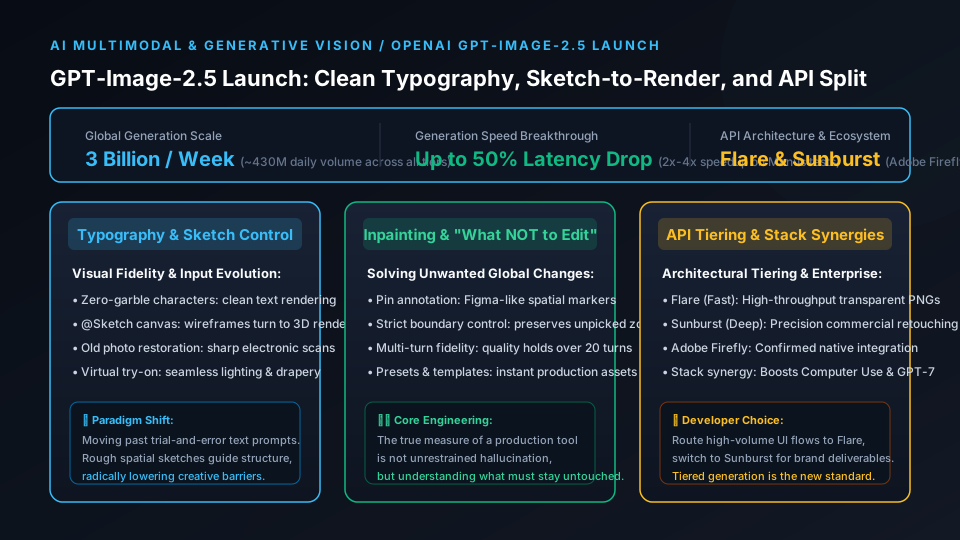
On September 8, 2026, OpenAI launched GPT-Image-2.5 (ChatGPT Images 2.5) across all tiers including free users, disclosing a massive production volume of 3 billion images per week (~430M daily). The upgrade cuts generation latency by up to 50%, completely eliminates illegible Chinese text artifacts across complex packaging and retro signs, introduces @Sketch freehand wireframe conditioning, and supports Figma-style pin-comment inpainting. In the API, OpenAI introduced its first tiered split: Flare for rapid batch prototyping (2x-4x speedup on Manus tests) and Sunburst for precision commercial finishing (with confirmed Adobe Firefly integration), transforming generative imaging from speculative prompting into a predictable industrial pipeline.
# OpenAI Releases GPT-Image-2.5: Zero-Garble Chinese Typography, 50% Latency Drop, and API Split into Flare & Sunburst
On the evening of September 8, 2026, OpenAI officially announced the general availability release of its next-generation foundational vision generation model, GPT-Image-2.5 (ChatGPT Images 2.5), across its official publication channels, research blogs, and developer portals. The major version upgrade rolled out immediately across ChatGPT, ChatGPT Work, and developer workspaces on the Codex engineering platform, marking the first time in OpenAI's history that a flagship generative visual release has been made universally accessible to all tiers simultaneously, including free-tier consumer accounts.
Alongside this understated yet disruptive release, OpenAI disclosed its staggering real-world production footprint for the very first time: consumer ChatGPT interactions and programmatic enterprise API calls collectively generate more than 3 billion images per week, equating to roughly 430 million images produced every single day. Built upon this monumental operational base, GPT-Image-2.5 introduces three structural breakthroughs that fundamentally reshape production pipelines: end-to-end generation latency has been curtailed by up to 50%, the persistent defect of corrupted and unreadable Chinese ideograms has been decisively solved, and the underlying API has been segregated into two specialized models: Flare for lightweight velocity and Sunburst for exacting editorial fidelity.
By transitioning from probabilistic prompt gambling toward native freehand wireframe canvases and Figma-like pin annotations, generative image synthesis has crossed the decisive threshold separating consumer novelty from professional digital production.
---
What Happened: The 3-Billion-Weekly Image Engine Overhauled
This milestone is far more significant than an incremental parameter adjustment; it represents a comprehensive architectural overhaul focused on spatial precision, typography coherence, and production latency across distributed inference clusters.
According to OpenAI's technical release documentation and initial enterprise telemetry, the capabilities of GPT-Image-2.5 center upon four transformative improvements:
- Definitive Eradication of Text Artifacts and Chinese Typography Garble: Previous diffusion architectures routinely stumbled when rendering complex East Asian logograms, yielding illegible strokes, mismatched radicals, or surreal pseudo-characters. GPT-Image-2.5 achieves pixel-accurate stroke topology across retro street signs, vintage broadsheets, nutritional labels, and apparel graphics, harmonizing letterforms with ambient lighting and diffuse surface textures while maintaining natural optical perspective;
- 50% Latency Compression and Physical Print Digitization: Compared with Images 2.0, the revised neural architecture halves the inference latency budget across standard consumer queries. In historical photo restoration benchmarks, the model reliably segments facial geometry and anatomical features from creased, grainy physical prints, outputting clean, high-dynamic-range electronic scans devoid of plastic synthetic smoothing artifacts;
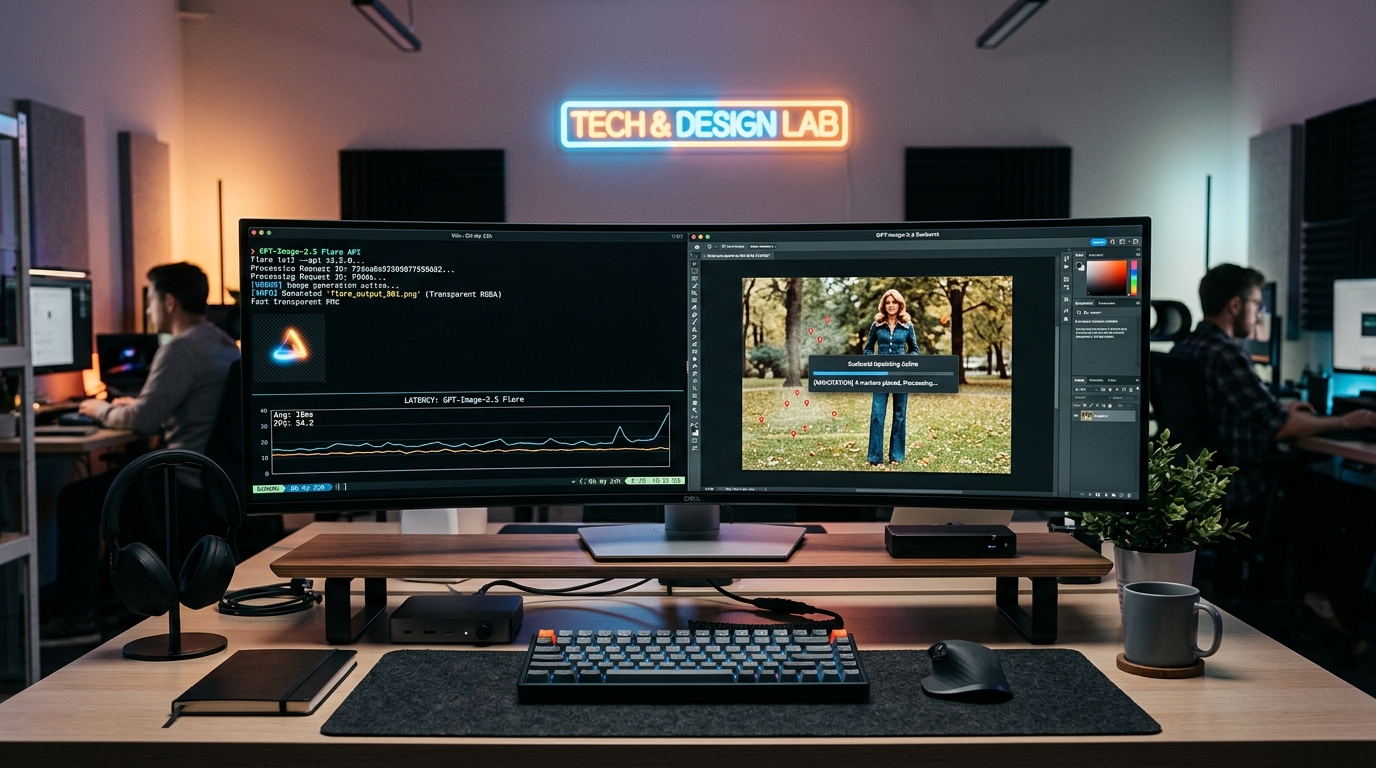
- Pinpoint Inpainting via Figma-Style Pin Comments: Introducing a spatial collaboration paradigm borrowed from modern interface design. Users can click directly upon the generated canvas to drop "Pin Comments," explicitly instructing the engine regarding the exact spatial bounds of a requested revision. Whether straightening rumpled bed linens or performing virtual wardrobe try-ons while locking facial identity, background elements remain completely unaffected;
- Resilience Across Extended Multi-Turn Dialogues: Addressing the historical vulnerability where continuous revisions across three to five turns degraded overall sharpness and induced severe color drift, version 2.5 preserves character likeness, lighting consistency, and geometric perspective across dozens of sequential editing cycles without generational decay.
---
Why It Matters: From Prompt Slot-Machines to Spatial Sketches and Pin Annotations
Reflecting upon the initial three years of generative imaging, the fundamental productivity roadblock was rarely raw resolution, but rather inadequate spatial steering and destructive unintended alterations across compositional iterations.
Under legacy workflows, an art director desiring a specific composition—such as placing a low modular sofa on the left, an olive tree on the right, and southern window illumination—had to assemble long, convoluted prompt paragraphs, repeatedly pulling the slot-machine lever in hopes that random seeds would align with their vision.
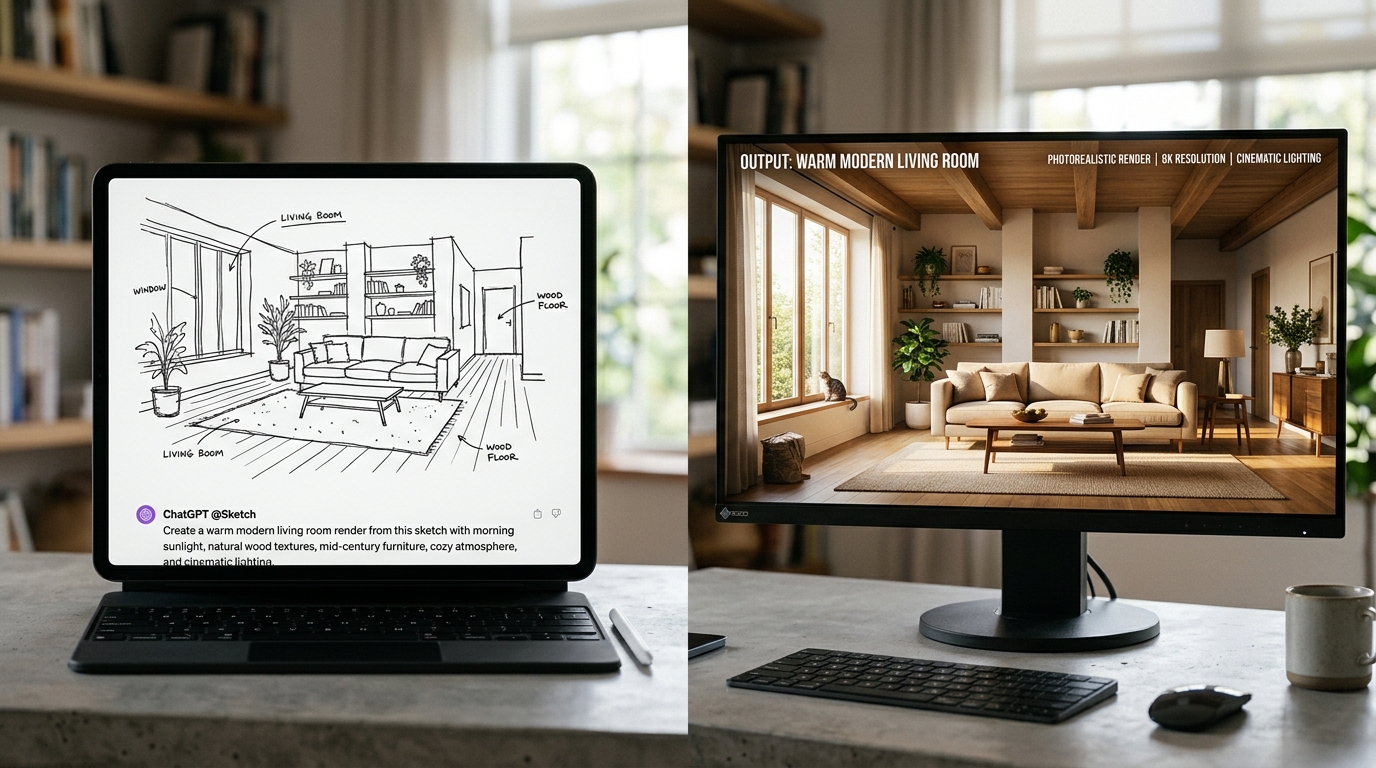
1. The @Sketch Canvas: Wireframe Doodles Transformed into Photorealism
GPT-Image-2.5 integrates an interactive @Sketch workspace natively inside the ChatGPT interface. Creators can summon an interactive sketchpad directly within the conversation thread, using a stylus or mouse to sketch spatial boundaries, furniture footprints, or character poses.
- The workflow requires zero technical drawing expertise, demanding only spatial proportions, boundary relationships, and relative coordinates;
- The model treats the sketch as underlying geometric scaffolding, marrying it with semantic directives to produce architectural renderings or concept art;
- This eliminates the historic friction where visual concepts in an artist's mind could not be accurately captured by descriptive prose alone.
2. The Core Breakthrough of Inpainting Lies in Knowing What NOT to Touch
Axultan Alimkulov, head of product at generative video platform Higgsfield AI, provided an insightful assessment following early evaluation: "What impressed us most is its deep understanding of what should never be touched."
- When legacy diffusion tools were asked to alter the color of an actor's coat, they frequently modified facial structure, hairline contours, and background foliage;
- GPT-Image-2.5 enforces strict attention isolation: localized adjustments preserve camera depth-of-field, lighting temperature, and untouched anatomical proportions without leakage;
- This disciplined restraint across unselected visual regions is the non-negotiable prerequisite enabling enterprise design studios to embed AI into professional deliverables.
---
API Split in Two: Flare for Volume vs Sunburst for Commercial Precision
For software developers and enterprise integration partners, OpenAI has introduced its first formal product stratification within its vision portfolio, separating offerings into two distinct engines tailored for specific throughput demands:
1. GPT-Image-2.5 Flare (High-Throughput Velocity Engine): - Target Profile: High-volume batch generation, social graphics, and interactive design prototypes requiring sub-second response times; - Real-World Latency: Telemetry from Lucky Liao of the autonomous agent platform Manus confirms Flare generates outputs 2x to 4x faster than legacy GPT-Image-2 pipelines; - Structural Advantage: Radically improves the extraction and rendering of native transparent background (Alpha Channel) PNGs, representing an immediate acceleration for automated UI component generation, slide decks, and e-commerce catalogs. 2. GPT-Image-2.5 Sunburst (High-Fidelity Studio Engine): - Target Profile: Commercial branding campaigns, key visuals, cinematic retouching, and print-ready publishing assets; - Mechanism: Trades extended compute latency for uncompromising physical ray-tracing accuracy, complex specular reflections, and fine textural fidelity; - Industry Integration: Creative software leader Adobe confirmed that Adobe Firefly is integrating the Images 2.5 architecture natively. Matt Chotin, Senior Director of Product at Adobe, noted that the model's resolution consistency across iterative revisions satisfies the rigorous standards of professional agency designers.
This bifurcated model mirrors the established "Flash vs Pro" paradigm in large language models: routing rapid prototyping to Flare, while reserving final client assets for Sunburst, ensuring developers avoid paying time penalties for surplus precision.
Strategically, this visual breakthrough provides the essential sensory infrastructure for OpenAI's broader foundational roadmap. Pixel-level spatial comprehension and non-destructive image manipulation are mandatory precursors for training robust Computer-Use agents and the upcoming native multimodal capabilities of GPT-7.
---
Our Verdict: Midjourney Under Direct Siege, Prototyping and Design Retooling
Analyzing the operational trajectory of generative vision models, we offer three clear structural verdicts for the broader software and creative ecosystem:
Verdict 1: Standalone Text-Only Generators Face Severe Commoditization
Pure-text prompt generators lacking integrated sketch canvases, spatial pin-drop editing, and multi-turn identity locks face a deteriorating competitive moat. If Midjourney cannot deliver equivalent spatial precision and typography control in its upcoming v7 release, subscriber migration from amateur creators toward integrated ecosystems will accelerate rapidly across enterprise creative teams.
Verdict 2: E-Commerce, Packaging, and Marketing Assets Experience Rapid In-Housing
The elimination of Chinese character corruption alongside automated transparent PNG cutouts directly bypasses traditional graphic design bottlenecks. Repetitive manual tasks—such as background removal in desktop editing suites and tedious font typesetting—can now be executed in minutes via automated templates and batch API calls, severely compressing margins for junior visual production agencies.
Verdict 3: Enterprise Design Software Shifts from Feature Development to Model Partnerships
Adobe's rapid adoption of Images 2.5 within Firefly demonstrates the shifting calculus between internal model development and third-party infrastructure. Faced with OpenAI's massive 3-billion-weekly image training flywheels, established creative software giants are electing to incorporate premier external foundational weights directly into their flagship tools.
---
Actionable Advice for Developers and Designers: What to Do Now
In light of the universal availability of GPT-Image-2.5, creative technologists and product teams should execute the following recommendations:
- Refactor Production API Routing Gateways: Audit automated image pipelines and assign all thumbnail previews, social distribution cards, and real-time interface assets to Flare, immediately cutting latency by half while reducing server compute costs; route high-resolution hero banners to Sunburst only when passing final review milestones;
- Incorporate Sketch-Driven Workflows into Daily Design: Abandon verbose, adjective-heavy text prompts when communicating spatial requirements. Adopt
@Sketchto establish architectural sightlines, relative furniture footprints, and camera angles, using sketches for compositional framing and prose strictly for stylistic nuance; - Validate Native Typography in Localized Commercial Assets: Leverage the model's newfound accuracy with Chinese ideograms to prototype regional packaging, promotional posters, and e-commerce display banners, rigorously testing trademark boundaries and copyright provenance.
---
What Remains to Be Observed
- Granular API Pricing and Credit Consumption Schedules: OpenAI has yet to fully publish the detailed billing matrices differentiating token costs per megapixel between Flare and Sunburst across various aspect ratios;
- Durability of C2PA Provenance Metadata: Under the throughput pressure of 3 billion weekly assets, will embedded cryptographic provenance survive aggressive social media re-compression and format conversion pipelines without metadata stripping?
- Competitive Responses from Midjourney and Open-Source Communities: How swiftly will open-source ecosystems (such as Flux and SD3) adapt localized ControlNet adapters to counter OpenAI's native sketch and typography advantages?
---
FAQ
Can free-tier ChatGPT users access GPT-Image-2.5 directly?
Yes. OpenAI has confirmed that GPT-Image-2.5 is accessible across the entire user spectrum, including free consumer accounts, ChatGPT Work enterprise workspaces, and developer Codex environments, granting universal access to accelerated generation and sketch tools.
Why is zero Chinese text garble considered a milestone?
Legacy diffusion models operated by reconstructing visual pixels within latent space without explicit topological awareness of Chinese ideographic stroke grammar, treating characters as arbitrary brushstrokes and causing chronic distortion. GPT-Image-2.5 deeply integrates multimodal semantic alignment, mastering Chinese stroke ordering and typographic geometry to make commercial poster design truly automated.
How should developers choose between Flare and Sunburst in the API?
For high-throughput social automation, rapid prototyping, dynamic game sprites, and automated transparent PNG exports, Flare is the optimal default, delivering two to four times faster throughput at reduced cost; for hero advertising visuals, finished client deliverables, and multi-turn precision inpainting, developers should route requests to Sunburst to maximize textural realism and lighting fidelity.