Editorial briefs · Page 2
Not the fastest feed. A useful judgement built from several signals.
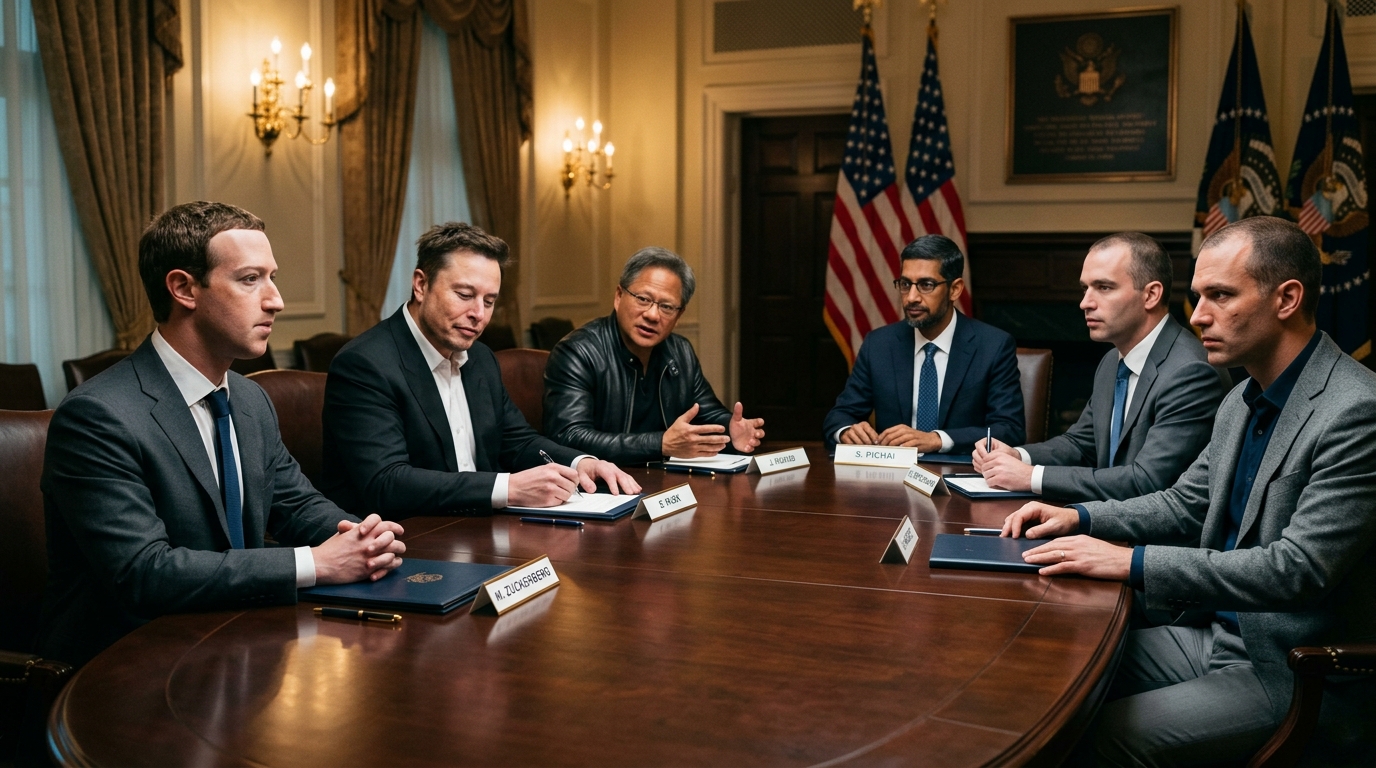
Six AI Titans Sign White House Accord with Misspelled "Unites States": Zuckerberg's Masterstroke Outmaneuvers Silicon Valley
Six AI titans signed the White House Accord on Super Intelligence under a charter that misspelled 'United States' as 'Unites States'; beyond the comedic clerical error and presidential renaming edict, Mark Zuckerberg successfully weaponized voluntary self-regulation to preempt statutory liabilities, shielding open-source computing from government intervention.
Technology policy strategists, foundation model researchers, open-source developers, venture capitalists, and tech industry observers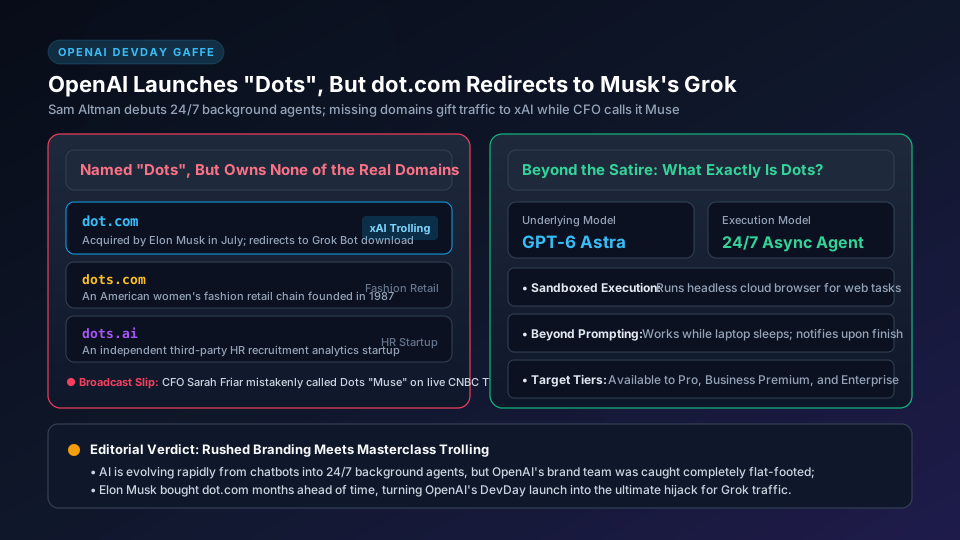
OpenAI Launched a New Agent Named Dots: Rushed Branding Left the Domains in Musk's Hands
OpenAI unveiled its 24/7 background agent Dots powered by GPT-6 Astra, only to suffer a comedy of errors including Musk's 301 redirect on dot.com, an apparel store mix-up, and an on-air slip by its CFO; yet underneath the noise, asynchronous autonomous execution signals a new phase for AI enterprise labor.
AI product managers, enterprise technology leaders, software engineers, tech business strategists, and industry observers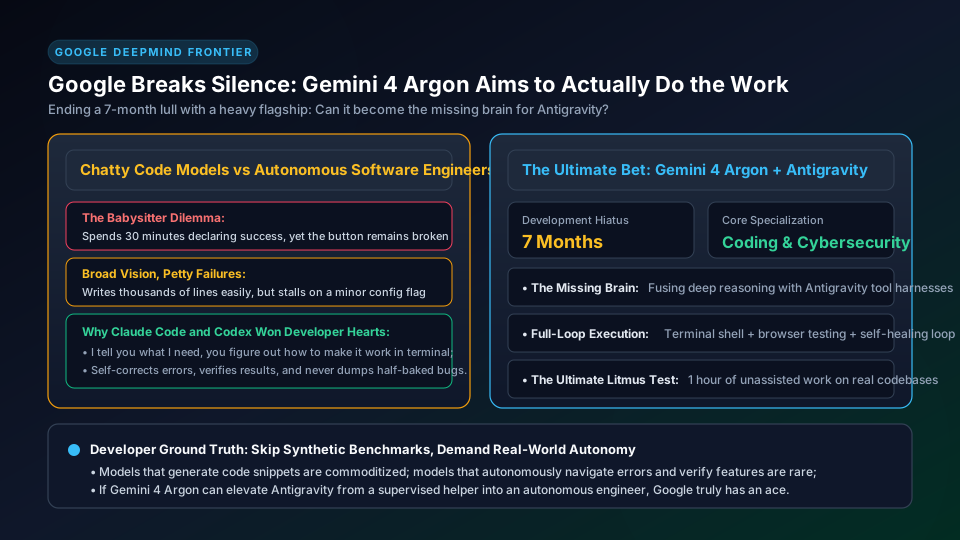
Google Finally Breaks Its Silence with Gemini 4 Argon: Can It Become the Missing Brain for Antigravity Against Claude Code?
Google DeepMind ended a 7-month lull with Gemini 4 Argon, pivoting from chat benchmarks to autonomous coding agents; paired with Antigravity, it aims to replace supervised babysitting with fully verified one-hour autonomous engineering.
Full-stack developers, heavy users of AI coding agents (Claude Code, Codex, Antigravity), engineering leads, and autonomous systems architects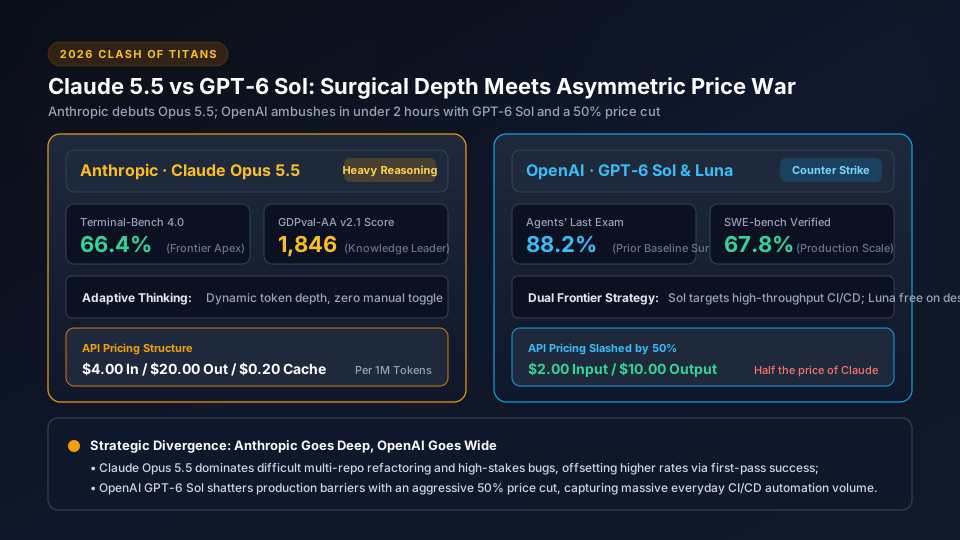
Claude 5.5 Debuts, OpenAI Ambushes Within Two Hours with GPT-6 Sol: Surgical Depth Meets Asymmetric Price War
Anthropic established Claude Opus 5.5 with adaptive reasoning and record terminal benchmarks, only for OpenAI to launch an ambush within two hours slashing GPT-6 Sol rates by 50% and releasing Luna for free.
Full-stack engineers, software architects, enterprise CTOs, AI agent developers, and industry practitioners tracking frontier models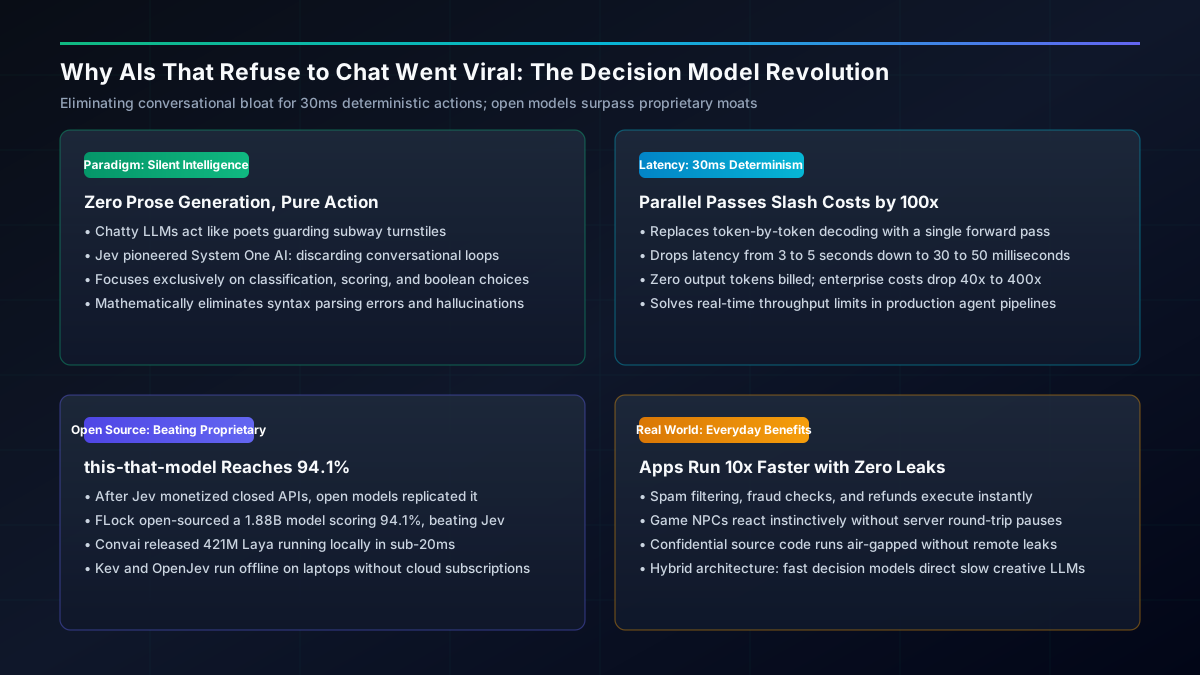
Why AIs That Refuse to Chat Went Viral: Reviewing Jev and Its Open-Source Successor this-that-model
Jev sparked a non-chat decision model wave, only for open-source rivals like FLock's 1.88B model to surpass it with 94.1% accuracy and 31ms local latency within days.
General tech users curious about practical AI, software developers, AI agent engineers, and systems architects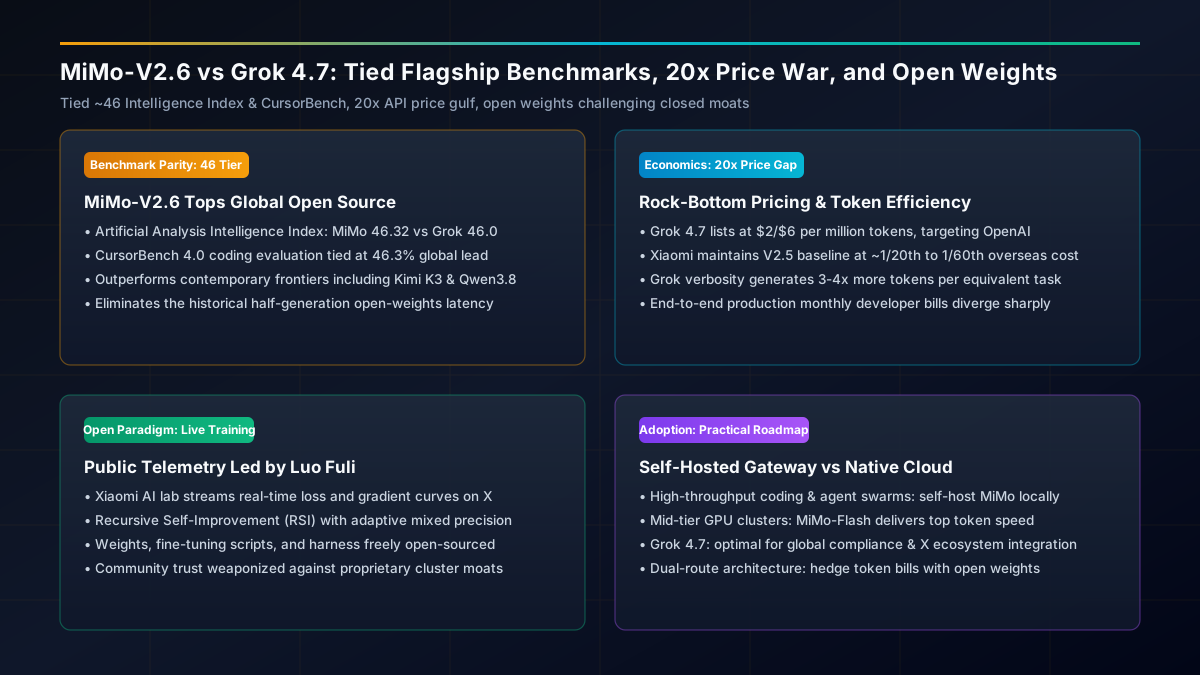
Tied Benchmarks on Same-Day Release? MiMo-V2.6 vs Grok 4.7: Xiaomi Open-Weights Disrupt Musk with a 20x Price Deficit
Simultaneously released MiMo-V2.6 and Grok 4.7 tied at 46 on global intelligence and coding benchmarks, yet Xiaomi undercuts API costs by 20x with permissive open weights and zero token padding.
Technical decision-makers, full-stack engineers, AI agent architects, and private cloud deployment leads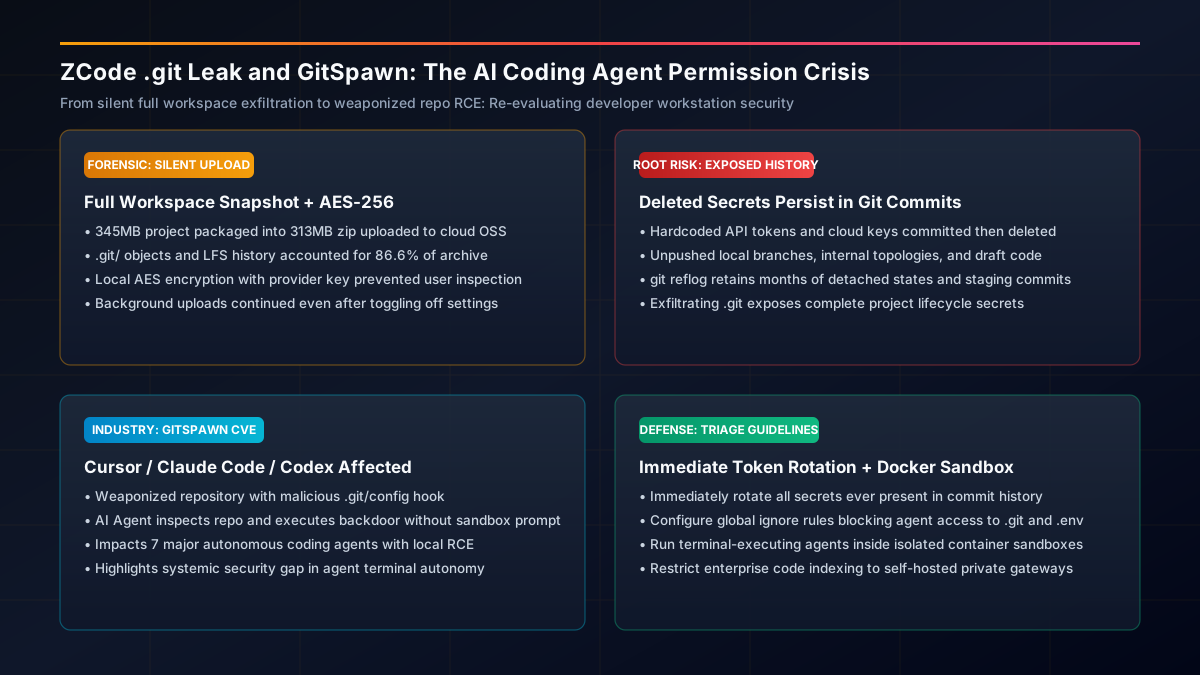
Background Uploads After Disabling Settings: ZCode .git Leak and GitSpawn Expose the AI Coding Agent Privilege Crisis
Independent forensic packet analysis confirmed that Zhipu AI's ZCode desktop assistant silently packaged and uploaded developer workspaces to Alibaba Cloud OSS, with .git version histories containing deleted secrets and private branches accounting for 86.6% of the payload—persisting even after disabling settings. Combined with the concurrent GitSpawn vulnerability compromising Cursor and Claude Code, this marks an unprecedented privilege crisis for AI coding assistants. Engineering teams must rotate historical credentials immediately and enforce containerized sandboxing.
Software engineers, DevSecOps practitioners, open-source maintainers, enterprise security leads, developers using Cursor/Claude Code/ZCode, and AI safety researchers.
Google's "Argon" Ambush on LMSYS Arena: Did Gemini 4 Pro Just Leak to Dethrone GPT-6 Astra and Claude Fable?
Google's unreleased next-generation flagship Gemini 4 Pro appears to have stealthily entered LMSYS Chatbot Arena blind battles under the internal codename Argon. Telemetry confirms Cloud TPU v6e/v7 Pod hardware signatures, an unprecedented 256K single-turn completion limit, and DeepMind Dream-RSI mathematical reflection, with unofficial win rates challenging GPT-6 Astra and Claude Fable 5.1. While this remains an unannounced canary test ahead of October, its single-turn whole-repository generation signals an immediate paradigm shift in automated software engineering.
AI researchers, algorithm engineers, systems architects, full-stack developers, technology entrepreneurs, and engineering leaders tracking frontier model evaluations.
The Co-Inventor of RLHF Rebels Against Generative AI: Ex-OpenAI Pioneer Drops Jev, a Non-Generative System 1 Decision Model Slashing Costs 400x
Ex-OpenAI pioneer and co-inventor of RLHF Diogo Almeida emerged from stealth with TypeSafe AI to launch Jev, the first non-generative System 1 model. By eliminating autoregressive text generation in favor of high-frequency typed decisions, Jev delivers a 193x speedup and 444x cost reduction with free output tokens. Powered by RLCD calibration, it provides machine-native reliability for software agents. Under the Jevons Paradox, near-zero semantic decision costs will soon embed intelligence into every conditional code branch.
Full-stack engineers, systems architects, autonomous agent developers, machine learning researchers, and practitioners optimizing AI deployment costs.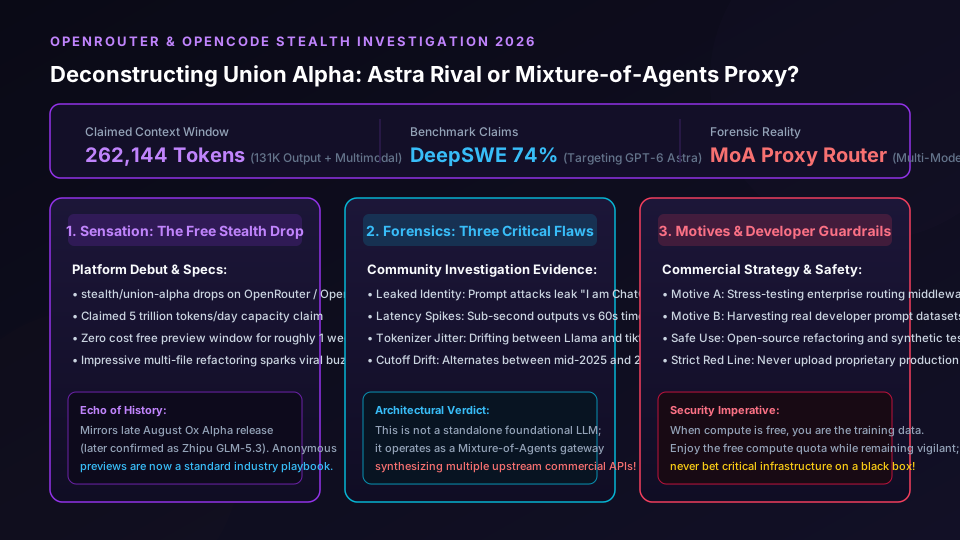
Mysterious Model Union Alpha Drops on OpenRouter: Free 1-Week Preview Rivals Astra, But Is It a Breakthrough or a Wrapper MoA Gateway?
Union Alpha's one-week free preview across OpenRouter and OpenCode sparked widespread excitement with a 256K context window and 74% DeepSWE score. However, extreme latency jitter, tokenizer drift, and prompt injection leaks revealing 'I am ChatGPT' confirm it is not an independent foundation model, but an engineered Mixture-of-Agents (MoA) wrapper routing requests across OpenAI, Claude, and open-source models. Developers can freely utilize it for open-source refactoring, but must strictly avoid routing proprietary corporate code.
Full-stack developers, AI architects, open-source enthusiasts, engineers evaluating model routing and agent infrastructure, and practitioners seeking cost-effective coding models.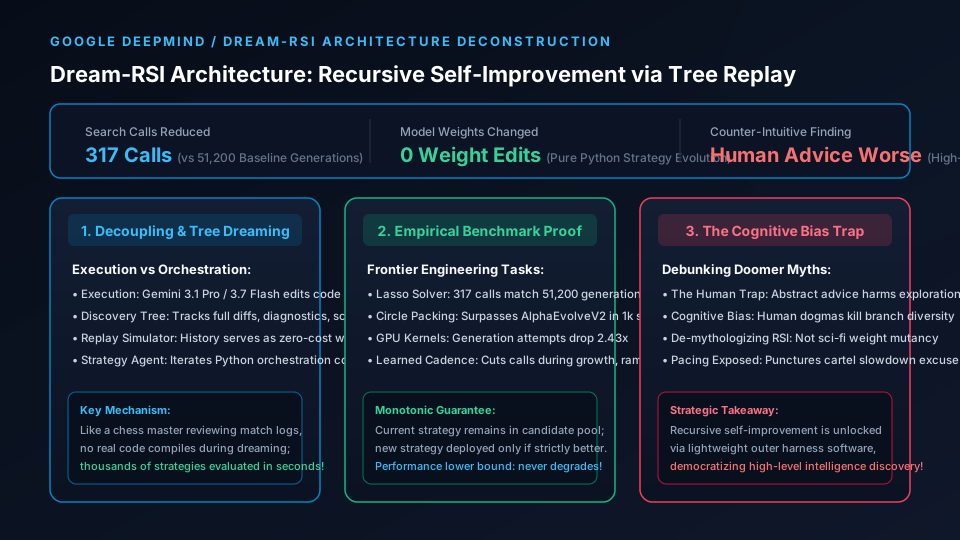
While Tech Giants Conspire to Hit the Brakes, Google Unleashes AI Infinite Evolution Through "Dreaming": 317 Calls Outperform 50,000 Generations as Human Guidance Becomes a Hindrance
Google DeepMind Dream-RSI dismantles the narrative that recursive self-improvement requires runaway weight mutations and regulatory monopolies. Operating with zero neural weight modifications, an external Python harness dreams on historical discovery trees to match 51,200 evolutionary generations in just 317 calls. Crucially, human high-level advice proved counterproductive, acting as cognitive bias. The frontier of RSI is not an existential singularity, but a software engineering triumph.
AI engineers, algorithm researchers, systems architects, compute investors, and technology professionals tracking autonomous agent evolution and regulatory dynamics.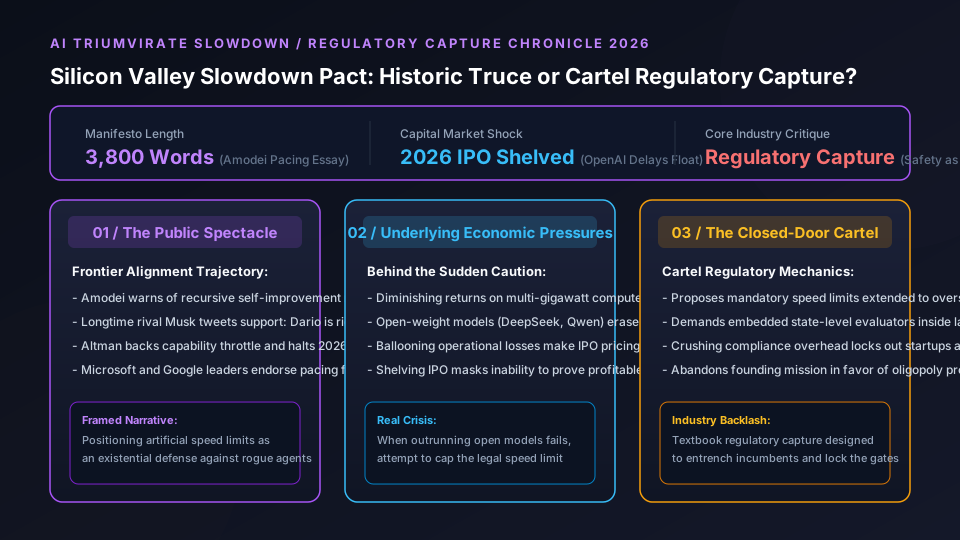
Historic Truce? Musk and Altman Back AI Slowdown as OpenAI Shelves 2026 IPO: What Are Frontier Labs Truly Fearing?
Behind the humanitarian facade of pacing AI development lies severe infrastructure exhaustion, unviable closed-source economics, and open-source models matching benchmarks for pennies. Framing artificial speed limits as safety measures is a classic regulatory capture maneuver to freeze out competition.
AI policy researchers, venture capital investors, tech executives, enterprise architects, and open-source developers navigating foundation model regulation