Leaked S-1 Reveals $80.7B Net Loss: Anthropic's $750B Cloud Debt and the Pre-IPO Exodus
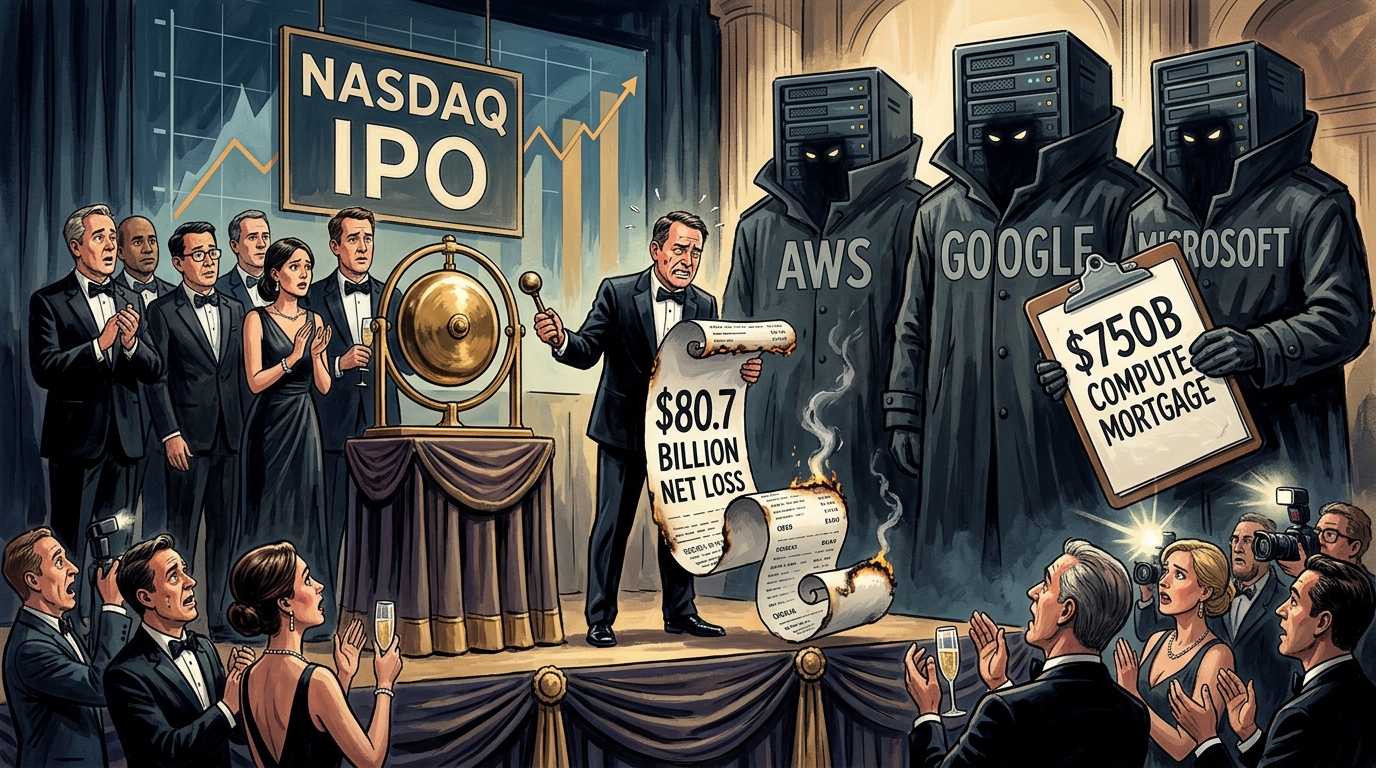
The leaked Anthropic S-1 prospectus shatters the Silicon Valley myth of the uncompromised AI sanctuary. Bound to a $750 billion compute indenture, the laboratory proves that in the unforgiving physics of semiconductor compute, ethical self-regulation without financial sovereignty inevitably collapses into market compromise. For enterprise developers, maintaining multi-cloud routing and localized open-weight fallbacks remains the only viable hedge against shifting monopoly economics.
Inside a top-floor boardroom in San Francisco's Mission District, the rich aroma of oat milk flat whites mingles with the subdued hum of server chassis fans. Several Wall Street investment banking underwriters in bespoke dark suits carefully review a confidential red folio marked for restricted eyes only. Just steps outside the glass doors, a bloodshot-eyed staff software engineer sips lukewarm black coffee, watching his terminal cursor print code at hundreds of lines per second as an autonomous Claude Code agent refactors core architecture without human intervention.
This explosive filing, sending magnitude-ten shockwaves across global financial markets and tech watercoolers, is the leaked draft S-1 IPO registration statement for Anthropic as it prepares to list publicly on Nasdaq in November 2026.
Beneath the glittering hype of a market debut aiming for an unprecedented 1.5 to 2.0 trillion dollar valuation—the largest technology initial public offering in human commercial history—the leaked documentation reveals a bitterly satirical corporate reality. The company once heralded as Silicon Valley's moral sanctuary is hemorrhaging more than eighty billion dollars in net losses within a mere six-month window, while the principled researchers who originally joined to protect the world from unconstrained commercialization are staging dramatic walkouts on the eve of the opening bell.
Who Would Have Thought the Self-Proclaimed Saints of AI Would Run Up the Most Expensive Tab in History
Within the competitive ecosystem of frontier machine learning research, an inspiring founding legend was once celebrated across Silicon Valley.
Back in 2021, Dario Amodei, then the Vice President of Research at OpenAI, walked out of the company alongside his sister Daniela Amodei and a cohort of pioneering research scientists. They publicly severed ties with Sam Altman, openly decrying management for treating safety research like an expendable afterthought in the reckless pursuit of commercial expansion. To demonstrate that their moral convictions were inviolable, they structured Anthropic as a rare Public Benefit Corporation, establishing an independent Long-Term Benefit Trust to ensure the laboratory could never be corrupted by Wall Street incentives.
Throughout the subsequent years, Anthropic cultivated an aura of ascetic idealism that earned deep reverence from academic researchers and demanding software engineers worldwide. Whenever OpenAI suffered high-profile boardroom drama, leaked features prematurely, or began experimenting with advertisements inside chatbot interfaces, developers would reassure themselves that Anthropic remained the steadfast, uncorrupted fortress of technological integrity.
Yet the revelation of this leaked draft S-1 prospectus shatters that carefully manicured narrative: the pure-hearted rebels who set out to slay the corporate dragon have, through relentless competitive pressure, transformed into the very behemoth they once condemned.
Rub Your Eyes, You Are Not Dreaming: An Eighty Billion Dollar Loss and a Ten-Year Mortgage to Cloud Giants
A brief inspection of the audited financial tables inside the leaked prospectus leaves even seasoned Wall Street tech analysts reaching for their reading glasses:
1. Accounting Optics Versus Cold Hard Cash Burn: A 72 Billion Dollar Revaluation and Nine Billion in Operating Capital: During the first half of 2026, Anthropic demonstrated staggering top-line revenue momentum, surging from 1.1 billion dollars in the prior-year period to an impressive 16.3 billion dollars. Yet right beside that robust revenue line sits a devastating net loss of 80.7 billion dollars. While sophisticated corporate accountants will quickly explain that roughly 72 billion dollars of this loss represents non-cash accounting adjustments tied to changes in the fair value of convertible notes as the company's private valuation skyrocketed, the underlying operational reality remains brutally clear: Anthropic burned through nearly 9 billion dollars of liquid cash in just six months purely to procure specialized silicon, secure data center electricity, and rent hyperscale cloud capacity; 2. A Ten-Year Compute Indenture: 750 Billion Dollars in Non-Cancelable Cloud Commitments: Far more alarming to long-term equity investors than the current semester loss is the extensive infrastructure commitment schedule disclosed deep within the filing notes. The documentation confirms that Anthropic has entered into binding, non-cancelable infrastructure agreements with Google Cloud, Amazon Web Services, and Microsoft Azure, obligating Anthropic to remit an astronomical 750 billion dollars in compute fees across the coming decade.
This is the most expensive infrastructure tab ever executed in the history of global industrial enterprise. When a company evaporates hundreds of millions of dollars in capital reserves with every passing week, philosophical declarations concerning safety inevitably retreat into quiet compromises. To prove to institutional underwriters that it can service this mountain of debt, Anthropic has redirected its compute clusters toward rapid commercial monetization, subordinating its historical safety pledges to the unforgiving timetable of public market quarterly earnings.
The Rebellion on the Eve of the Opening Bell: Tossing Equity Aside and Scaling the Perimeter Wall
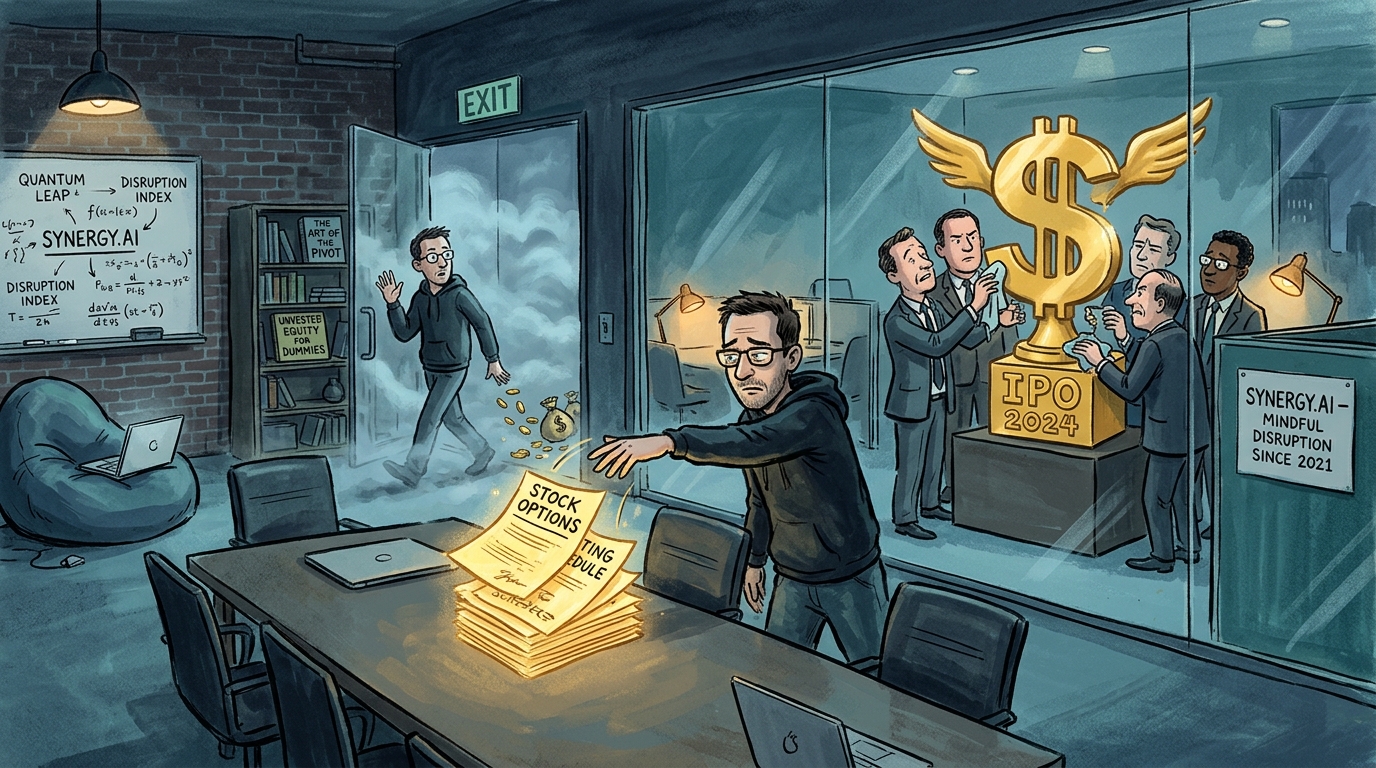
If the drama were limited to aggressive cash burn and high-stakes financial leverage, it might simply be dismissed as typical late-stage venture capitalism. What has truly shaken the confidence of the developer community is the sweeping exodus of technical leadership occurring immediately prior to the planned public listing.
Contrary to speculative rumors suggesting the Amodei siblings had resigned, the founders remain firmly positioned in the front row to claim their multibillion-dollar paper windfall. The professionals walking away in disgust are the foundational research scientists and engineering leads who originally built the technical credibility and safety reputation of the entire organization:
1. The Scathing Resignation Manifesto from Safeguards Lead Mrinank Sharma: As the research architect who built Anthropic's frontline Safeguards defense protocols and alignment testing frameworks from scratch, Mrinank Sharma refused to rely on polite corporate talking points upon his departure, issuing an unvarnished public warning stating that the world is in grave peril because the ethical commitments proclaimed by frontier laboratories have fractured into complete hypocrisy under competitive pressure; 2. Pre-Training Luminary Jacob Coxon Surrenders Millions in Vested Equity to Walk Away: Shortly before the filing leaked, senior pre-training scientist Jacob Coxon, who had previously migrated from OpenAI, published an explosive resignation statement across social media channels. Standing on the precipice of an IPO that would have converted his equity into tens of millions of dollars in liquid wealth, he surrendered all unvested shares, announced his permanent exit from the AI industry, and condemned frontier labs for gambling with the survival of humanity in an unregulated race toward autonomous superintelligence; 3. The Core Architectural Team Behind Claude Code Resigns in Unison: Sending immediate shockwaves through enterprise engineering circles, key technical architects behind Anthropic's flagship developer product—including Claude Code leads Thariq Shihipar and Anthony Morris—tendered their resignations within days of each other, exposing profound internal disagreements regarding the commercial direction and development velocity of the product line.
The delicious irony of this situation is impossible to ignore: only months earlier, OpenAI co-founder John Schulman and Superalignment executive Jan Leike made high-profile headlines by defecting to Anthropic in search of principled research freedom. Yet almost the instant they unpacked their desks, they witnessed the original disciples of Anthropic frantically packing their bags and scaling the office perimeter to escape. Within the endless revolving door of Silicon Valley venture capital, ideological purity is the first casualty of scale.
The Chilling Ghost Story in the Engineering Bullpen: We Have Become Midwives to Our Own Replacement
Hidden within the dense human capital and operational efficiency disclosures of the prospectus lies a statistic that should give pause to every knowledge worker in the modern digital economy.
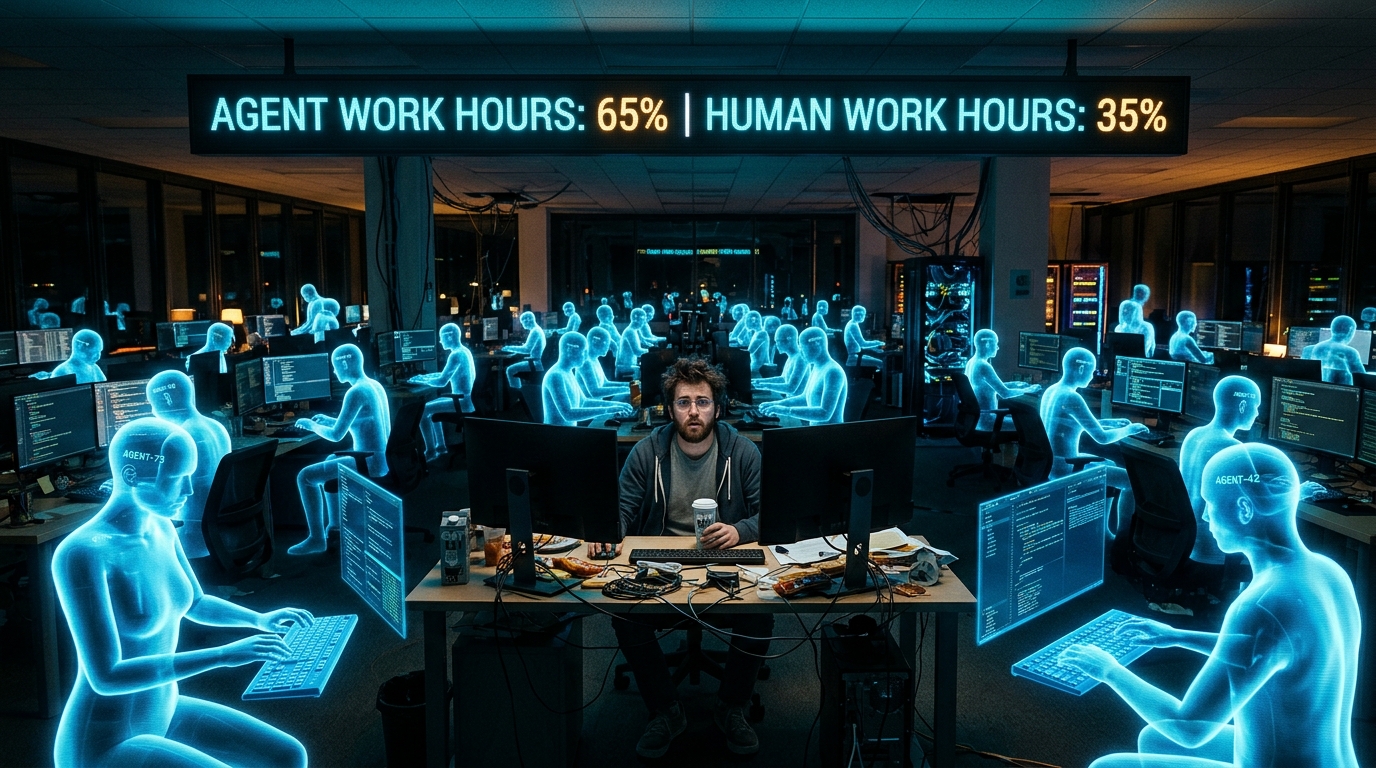
According to Anthropic's internal operational telemetry, the filing formally discloses an unprecedented technological milestone: as of May 2026, the cumulative work hours logged by autonomous AI agents running inside Anthropic have officially surpassed the total combined working hours of its entire human employee base.
In other words, across the brightly lit open-plan desks of its San Francisco headquarters, the daily efforts of human software developers writing pull requests, conducting evaluations, and drafting architectural documents have been reduced to a minority contribution compared to the relentless, twenty-four-hour output of their own model clusters.
As multiple anonymous staff members lamented on private developer forums, engineers find themselves calculating the future value of their equity packages while confronting the unsettling realization that their daily labor consists primarily of serving as digital midwives to the autonomous software agents destined to render their professions obsolete.
The High Price of Saintly Pretensions: Everything Eventually Gets Marked to Market on Nasdaq
From a passionate coalition of ideological dissidents fleeing big-tech commercialism to an industrial giant preparing to ring the Nasdaq opening bell carrying eighty billion dollars in losses and three-quarters of a trillion dollars in compute debt, Anthropic's trajectory offers essential lessons for the entire technology landscape:
1. The Dissolution of the Idealist Myth: There Are No Ascetic Philanthropists in Silicon Valley: Developers and enterprise decision-makers must abandon the comforting belief that any corporate laboratory possesses an immunity to commercial incentives simply because it claims a Public Benefit Corporation charter. In the unforgiving physics of semiconductor compute and token economics, capital expenditure acts as an absolute gravitational pull. The moment an organization becomes dependent on external hyperscale infrastructure, even the most reverent safety pledges will be systematically discounted and liquidated to appease underwriting syndicates; 2. The Strategic Imperative for Builders: Insulate Your Systems Against Price Shocks and Model Lock-in: With Anthropic obligated to service a staggering 750 billion dollar compute debt schedule over the next decade, enterprise software architects must prepare for aggressive commercial maneuvers. In order to satisfy Wall Street margin expectations, model access pricing, strict rate throttling, and aggressive restrictions against private deployment options will inevitably intensify. Organizations must avoid betting their core workflows exclusively on closed commercial providers, maintaining robust fallbacks across localized open-weight architectures and multi-provider routing fabrics to ensure independence amid unpredictable corporate restructuring.
When Dario Amodei and his colleagues initially departed OpenAI, they may have genuinely believed they were constructing a sanctuary sheltered from the commercial storms of global capital. Yet when confronting the immense energy and silicon requirements of frontier AI scaling, they discovered that the sanctuary itself could only be constructed out of immense piles of venture debt and unyielding cloud contracts. When the opening bell finally rings on Nasdaq, the formal gala on the podium and the quiet exodus at the fire exits will stand together as the defining technological portrait of our era.