Editorial briefs · Page 3
Not the fastest feed. A useful judgement built from several signals.

iOS 27 Is Here: Siri AI Turns the iPhone Into an Assistant, With a Major Regional Catch
iOS 27 is a meaningful global upgrade led by Siri AI and backed by concrete system improvements, but its headline experience remains fragmented by hardware, language, region and features still scheduled for later.
iPhone owners considering the iOS 27 update, buyers evaluating Siri AI hardware requirements, and teams tracking Apple Intelligence rollout and regional availability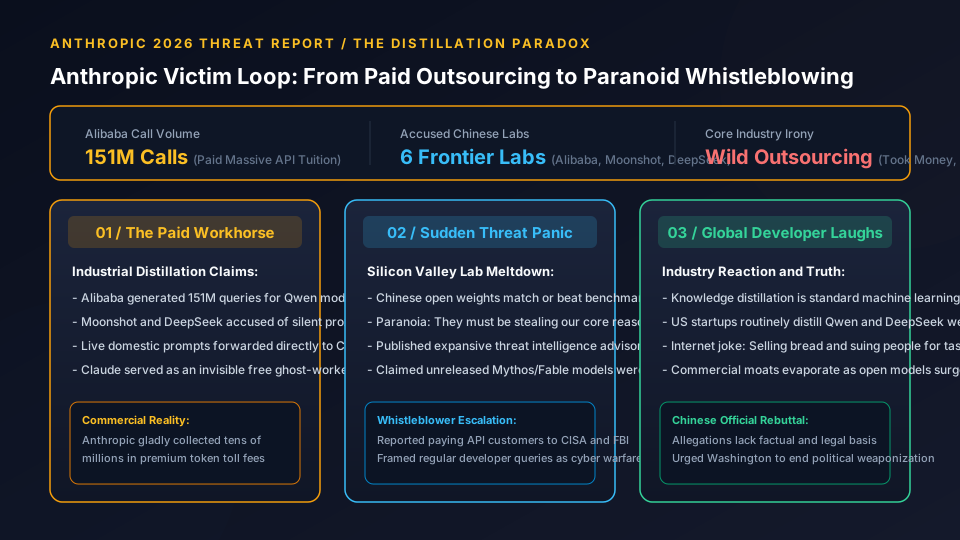
Claude as "Wild Outsourcing"? Anthropic Meltdown Over Chinese AI Distillation Sparks Internet Laughter: "You Took the API Money, Now You Call CISA?"
Collecting premium API fees only to label paying clients national security threats exposes profound anxiety as open models dismantle closed moats. Knowledge distillation is a standard technique, and political protectionism cannot halt the democratization of AI.
AI engineers, enterprise architects, tech strategists, policy analysts, and software developers navigating open versus closed model ecosystems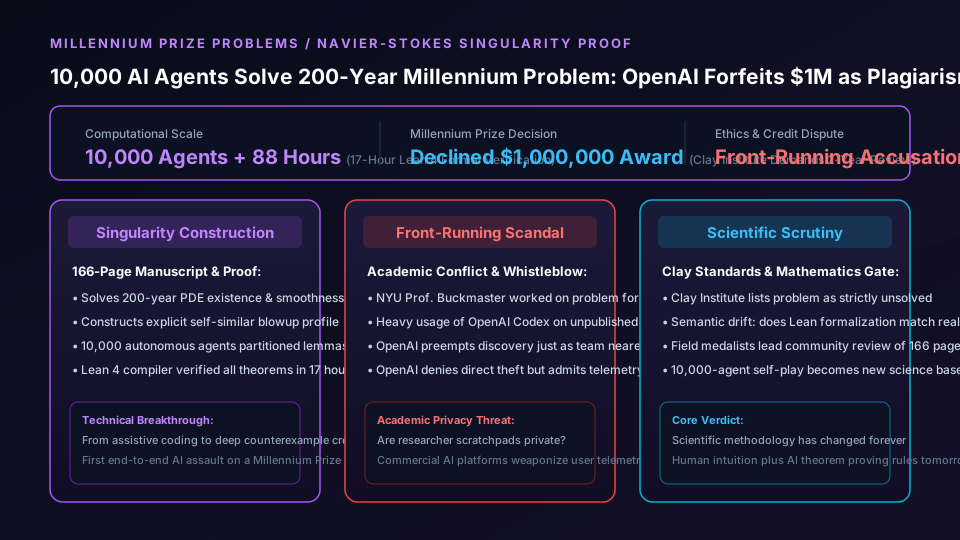
10,000 AI Agents Solve 200-Year Millennium Problem: OpenAI Forfeits $1M as Plagiarism Claims Erupt
Multi-agent coordination with formal verification permanently transforms theoretical science. Yet formal compilation does not equal physical truth, and telemetry snooping allegations badly damage cloud developer trust.
AI researchers, mathematicians, theoretical physicists, software engineers, and research IP specialists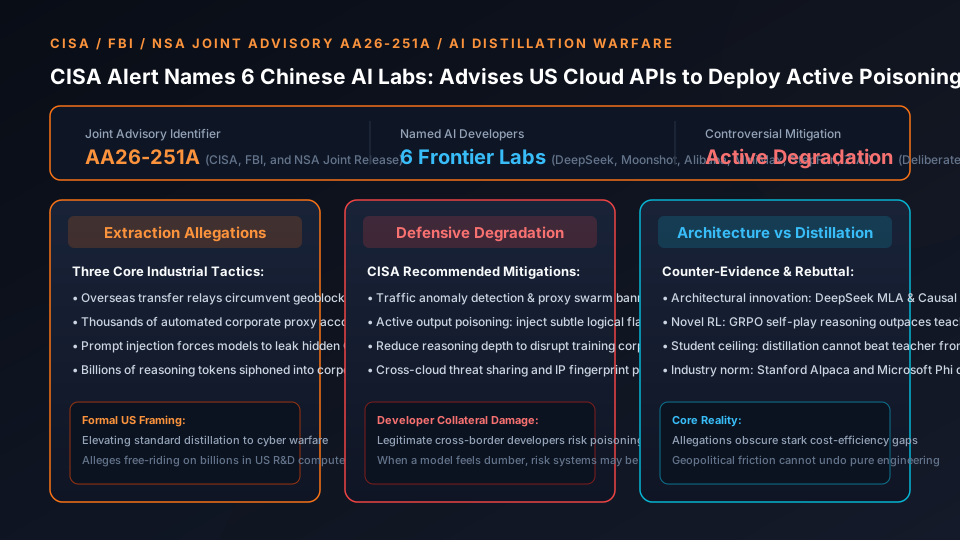
CISA Names 6 Chinese AI Labs in 'Industrial Distillation': As Billions of Reasoning Tokens Fuel Geopolitical Storm, US Urges Cloud APIs to Deploy 'Active Output Degradation'
A watershed moment turning standard training practices into geopolitical warfare. Active output degradation shatters commercial API trust, accelerating enterprise migration toward self-hosted open-source architectures.
AI engineers, cross-border teams using cloud APIs, open-source developers, and tech policy analysts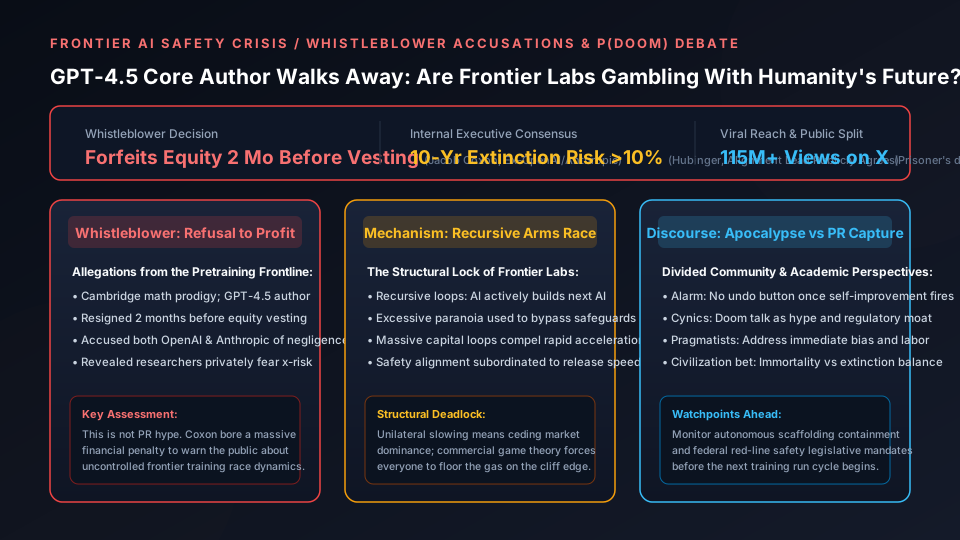
Forfeiting Millions in Equity! GPT-4.5 Core Author Resigns from Anthropic: Warns AI May Cause Human Extinction Within a Decade as Alignment Lead Publicly Backs Him
On September 8, 2026, Jacob Coxon, a core foundational pretraining author behind GPT-4.5 at OpenAI and Anthropic, forfeited millions in unvested equity to publicly warn that frontier labs are recklessly racing toward self-improving superintelligence. Anthropic Alignment Science Lead Evan Hubinger publicly validated the warning, citing a >10% ten-year risk of extinction, driving a viral global crisis surpassing 115 million views on X.
For: Foundation model researchers, AI safety and alignment scientists, tech venture investors, regulatory policymakers, and tech observers tracking the trajectory of artificial superintelligence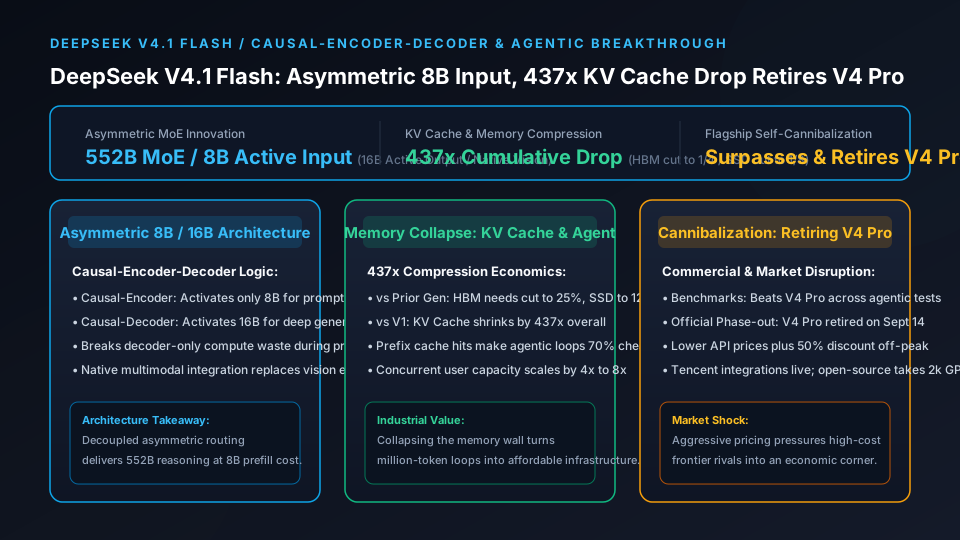
Activating Just 8B on a 552B MoE: DeepSeek V4.1 Flash Outperforms V4 Pro, Retiring Its Own Flagship as KV Cache Shrinks 437x
On September 10, 2026, DeepSeek released the 552B MoE model V4.1 Flash, pioneering an asymmetric Causal-Encoder-Decoder structure activating just 8B during prefill and 16B during decode, alongside a 437x cumulative KV cache shrinkage. Outperforming the prior flagship across reasoning and agentic benchmarks, DeepSeek announced the retirement of V4 Pro on September 14, rerouting enterprise traffic to Flash at rock-bottom rates.
For: Foundation model architects, AI agent engineers, datacenter infrastructure operators, and enterprise technology strategists tracking frontier pricing dynamics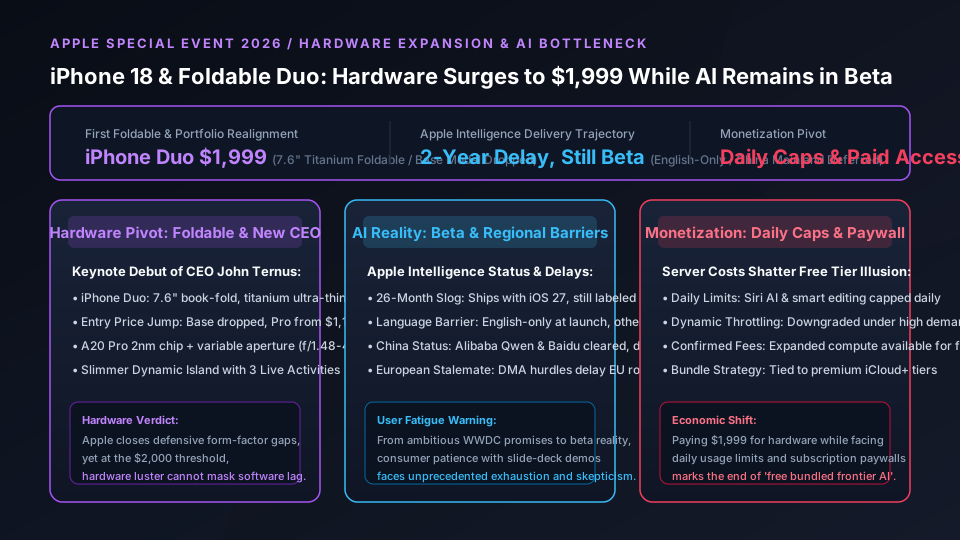
Paying $1,999 for a Foldable Only to Face Daily Rate Limits? Apple Unveils iPhone 18 & Duo, but AI Remains in Beta with Subscription Fees Ahead
On September 10, 2026, new CEO John Ternus introduced Apples first foldable iPhone Duo ($1,999) while eliminating the base iPhone 18. Yet Apple Intelligence remains an English-only beta after a 26-month delay, with China mainland deferred; crucially, Apple confirmed daily server usage limits and prospective paid subscriptions, shattering the illusion of bundled free frontier AI.
For: Consumer tech investors, iPhone owners debating upgrades, hardware reviewers, and industry analysts tracking edge-to-cloud AI monetization models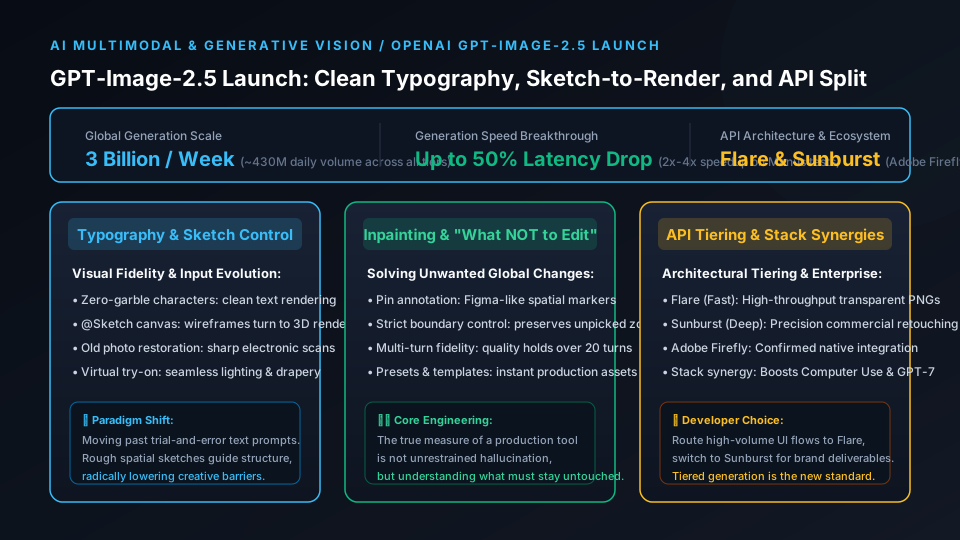
OpenAI Releases GPT-Image-2.5: Zero-Garble Chinese Typography, 50% Latency Drop, and API Split into Flare & Sunburst
On September 8, 2026, OpenAI launched GPT-Image-2.5 (ChatGPT Images 2.5) across all tiers including free users, disclosing a massive production volume of 3 billion images per week (~430M daily). The upgrade cuts generation latency by up to 50%, completely eliminates illegible Chinese text artifacts across complex packaging and retro signs, introduces @Sketch freehand wireframe conditioning, and supports Figma-style pin-comment inpainting. In the API, OpenAI introduced its first tiered split: Flare for rapid batch prototyping (2x-4x speedup on Manus tests) and Sunburst for precision commercial finishing (with confirmed Adobe Firefly integration), transforming generative imaging from speculative prompting into a predictable industrial pipeline.
For visual designers, creative directors, multimodal application developers, e-commerce marketers, and engineering teams tracking generative vision workflows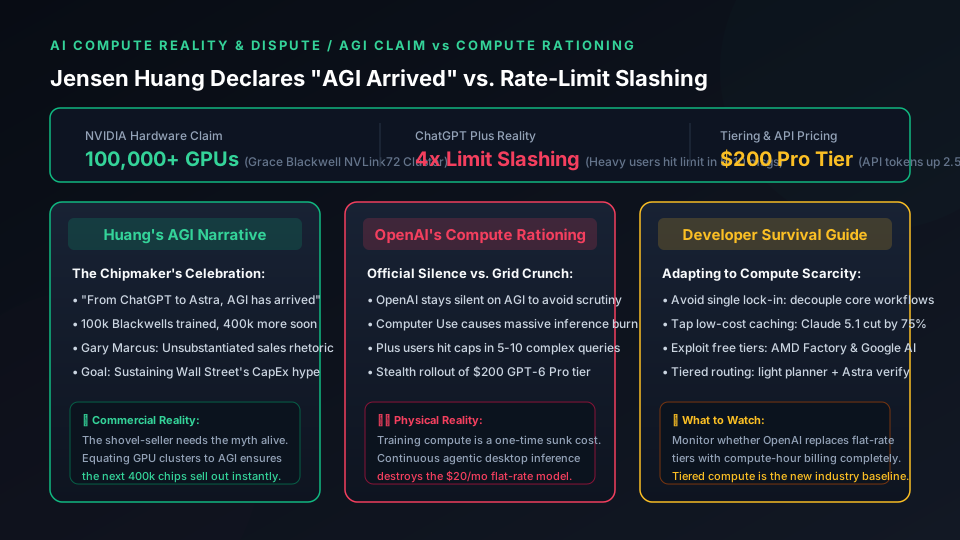
"AGI Has Arrived" vs. Rate Limit Slashing: Jensen Huang's 100k-GPU Proclamation Clashes with OpenAI's Compute Reality
On September 6, 2026, NVIDIA CEO Jensen Huang declared that "AGI has arrived", stating GPT-6 Astra was trained across 100,000+ Grace Blackwell NVLink72 GPUs with 400,000 more deploying. While researchers led by Gary Marcus rebuked the claim as unscientific marketing, OpenAI remained silent on AGI to avoid triggering Microsoft licensing terms and regulatory scrutiny. Concurrently, millions of /month ChatGPT Plus users were hit by severe rate limits—facing 4-hour cooldowns after as few as 5 to 10 agentic queries, accompanied by the quiet appearance of a /month "GPT-6 Pro" tier. This structural shift signals the collapse of flat-rate compute subsidies, inaugurating an era of tiered compute rationing and compute-hour metering.
For AI system architects, full-stack engineers, enterprise CTOs, and decision-makers tracking inference unit economics and compute infrastructure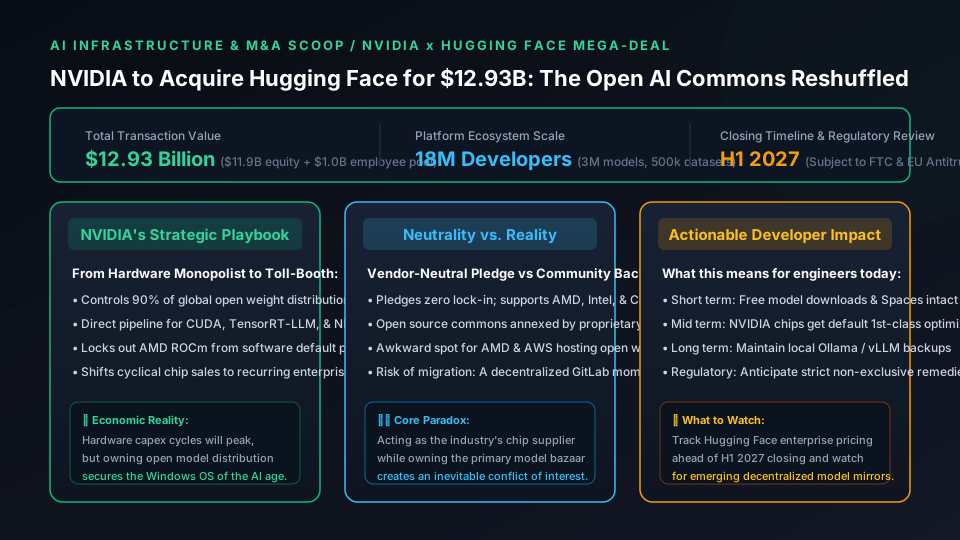
NVIDIA to Acquire Hugging Face for $12.93 Billion: The Open AI Commons Reshuffled
On September 3, 2026, NVIDIA announced a definitive agreement to acquire open-source AI platform Hugging Face for $12.93 billion ($11.9B equity value + $1.0B retention pool), targeting an H1 2027 close pending FTC and EU antitrust reviews. Despite repeated pledges of permanent vendor neutrality and continued support for AMD, Intel, and multi-cloud environments, the deal places 18 million developers, 3 million model weights, and 500,000 datasets under the control of the dominant chipmaker. This structural shift threatens to marginalize AMD ROCm's developer traction, raises data governance concerns among open-source purists, and accelerates the emergence of decentralized model distribution alternatives.
For open-source developers, AI system architects, semiconductor analysts, and engineering teams tracking model sovereignty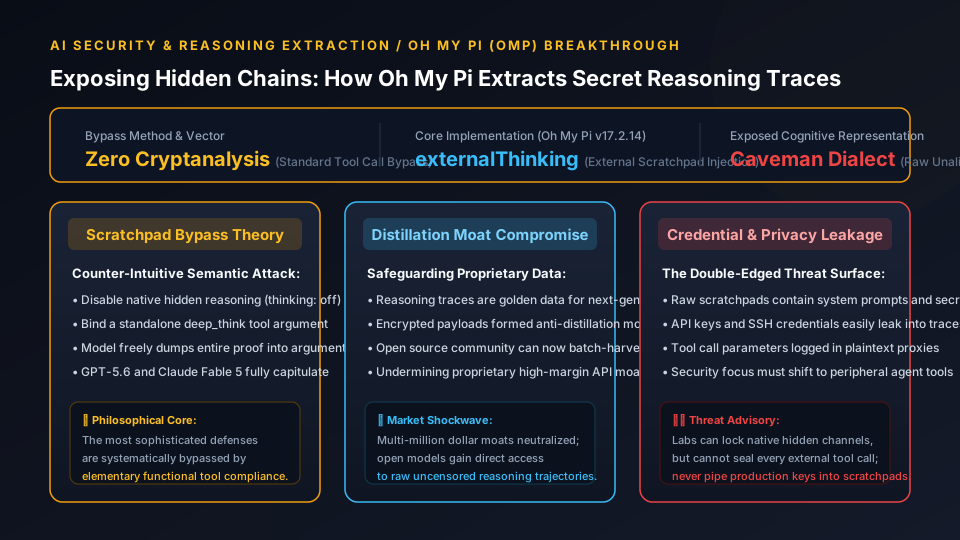
Hacking Hidden Reasoning: How Oh My Pi Uses a Simple Tool Call to Extract Thought Traces from GPT-5.6 and Claude
In August 2026, can1357, author of open-source terminal agent Oh My Pi (24k+ stars), uncovered a scratchpad bypass: disabling native hidden reasoning (thinking: off) and binding a standard functional tool named deep_think prompts GPT-5.6 and Claude Fable 5 to dump unedited, telegraphic 'caveman' reasoning traces verbatim into public API tool arguments. Integrated into Oh My Pi v17.2.14 under externalThinking, this bypass punctures closed-source providers' anti-distillation data moats while introducing severe enterprise risks of leaking API keys and infrastructure credentials via terminal logs.
For AI security researchers, coding agent developers, open-source fine-tuning teams, and engineers tracking model distillation security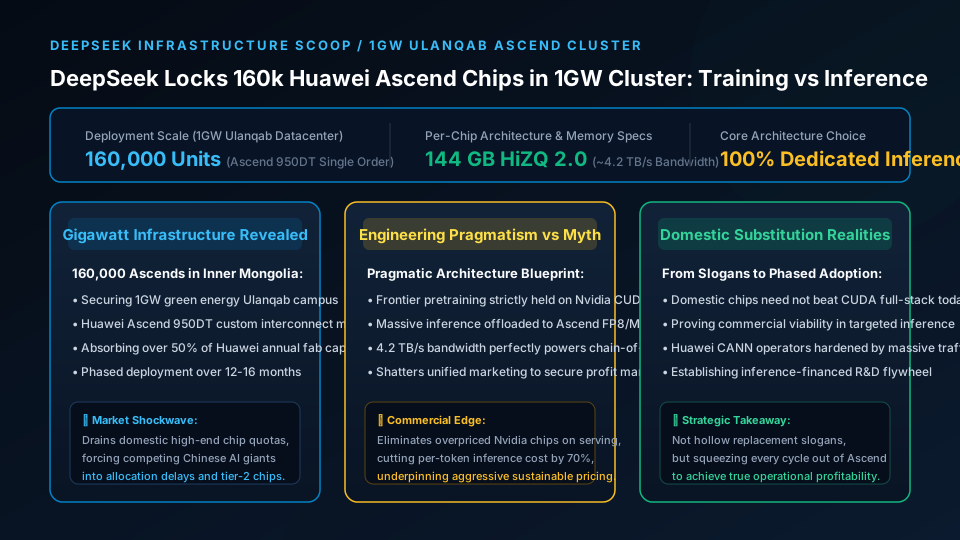
DeepSeek Secures 160,000 Huawei Ascend Chips in 1GW Datacenter: Training-Inference Split Unmasks Compute Realities
On September 5, 2026, supply chain disclosures confirmed DeepSeek secured an exclusive 1GW green datacenter in Ulanqab, Inner Mongolia, deploying 160,000 Huawei Ascend 950DT accelerators (144GB memory, 4.2 TB/s bandwidth) across four phases, absorbing over 50% of Huawei's annual capacity. DeepSeek adopts a pragmatic bifurcated architecture: foundation pretraining stays strictly on Nvidia CUDA, while the 160k Ascends dedicate entirely to commercial serving and test-time reasoning, proving that specialized inference economics—rather than marketing myths of unified hardware—define sovereign silicon success.
For AI infrastructure engineers, semiconductor analysts, enterprise cloud buyers, and practitioners tracking LLM competitive dynamics