Editorial briefs · Page 5
Not the fastest feed. A useful judgement built from several signals.
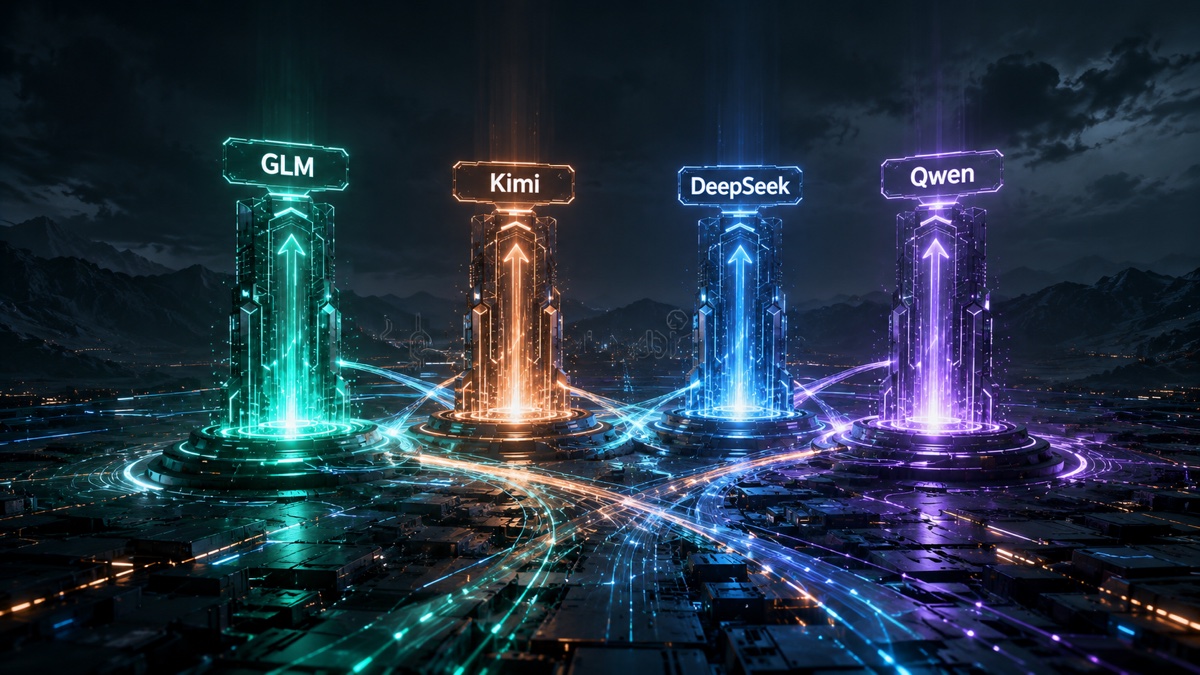
DeepSeek has not fallen behind. China's model race is crowded, and GLM's sharpest weapon is price
In the current like-for-like Artificial Analysis comparison, GLM-5.3-Flash scores 57 at about $0.10 per million blended tokens; DeepSeek V4 Pro scores 53 at about $0.69, while V4 Flash scores 52 at about $0.23 and approaches 119 tokens per second. DeepSeek has not fallen behind and GLM has not won every dimension. Quality, speed, modality and price have become four separate races.
For developers, product teams and buyers choosing among GLM, DeepSeek, open multimodal models, agent APIs and inference-cost options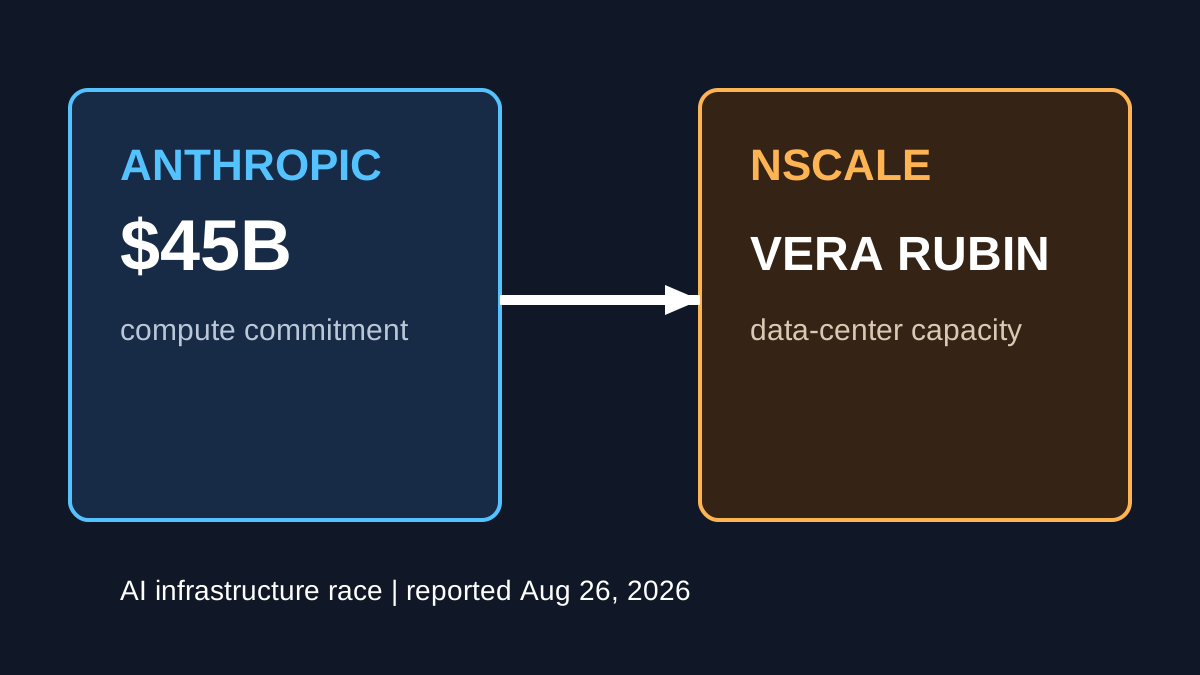
Anthropic commits $45 billion to compute before Claude has won the market
Reuters, Bloomberg and TechCrunch reported on August 26 that Anthropic would rent about $45 billion in compute from British AI infrastructure company Nscale using Nvidia's Vera Rubin platform. The figure comes from people familiar with the deal rather than a published contract; term, payment and delivery scale remain unknown. Frontier-model competition is moving from launch events to power, GPUs and long-term fixed cost.
For developers, investors and enterprise buyers tracking Anthropic, Claude, Nvidia, AI data centers, API cost and model economics
Ox Alpha finally dropped the mask: after six days of guessing, it was Zhipu's GLM-5.3-Flash
Z.ai has confirmed that Ox Alpha was GLM-5.3-Flash and released the weights on Hugging Face under the MIT License. The model has 320B total and 18B active parameters, with a vendor-reported DeepSWE score of 63.4; Bloomberg says anonymous-period usage at one point exceeded DeepSeek by more than two times. Benchmark, task-cost and domestic-chip serving details still rely mainly on vendor reporting.
For developers, product teams and investors following open-weight models, coding agents, OpenRouter, GLM, Chinese AI chips and inference cost
ChatGPT can finally wake up for work: an email triggers it, and a signed-in session lets it keep going
On August 25, OpenAI closed two gaps in ChatGPT Work: users can sign in to supported websites through a secure form and let cloud browser continue, while Gmail, Slack and GitHub pull-request activity can directly trigger tasks. It is beginning to resemble a digital assistant, but website support, account eligibility, human approval and prompt-injection risk remain hard boundaries.
For product, operations and engineering teams following AI agents, enterprise automation, Zapier/Make/RPA, ChatGPT Work and browser agents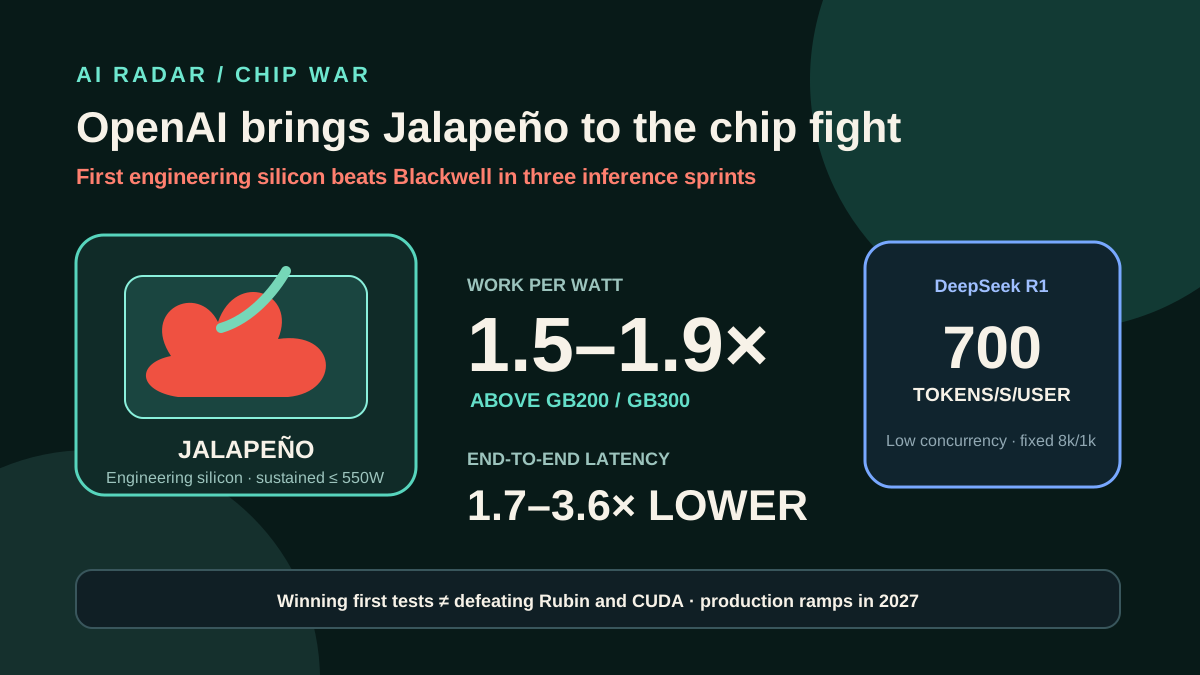
OpenAI used models running on Nvidia GPUs to build a chip that beat Blackwell in its first tests
On August 25, OpenAI published the first measurements for Jalapeño, its custom inference chip. Across fixed 8k/1k InferenceX tests on GPT-OSS 120B, DeepSeek R1 and Kimi K2.5, peak work per watt was 1.5–1.9x higher than Nvidia GB200/GB300, with 1.7–3.6x lower end-to-end latency. The results are strong, but this is still engineering silicon, the figures came from OpenAI, and complete Rubin, long-context and multi-turn Agent testing is still missing.
For developers, investors and product teams tracking Nvidia, OpenAI infrastructure, inference cost, data-center power and the AI chip supply chain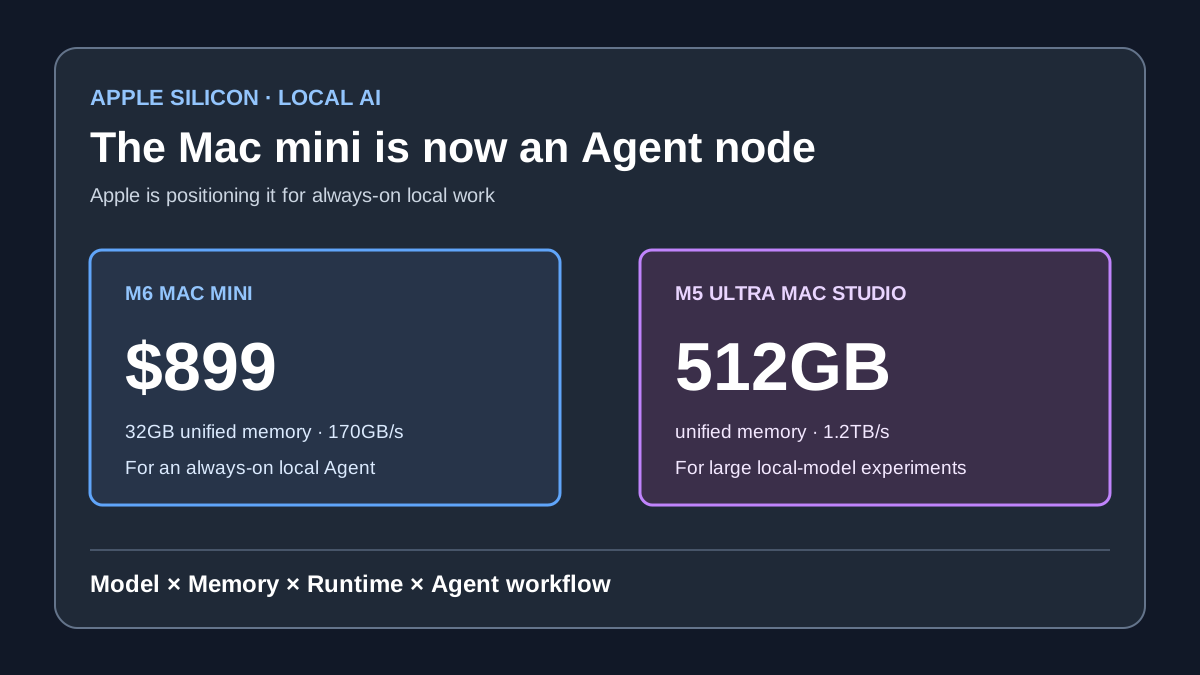
Apple is selling the $899 Mac mini as an always-on AI Agent
On August 25, Apple launched the M6 Mac mini, M5 Pro Mac mini and M5 Ultra Mac Studio, explicitly describing the Mac mini as an 'always-on agentic computing' device. The M6 Mac mini starts at $899 with up to 32GB unified memory; the M5 Ultra Mac Studio reaches 512GB and 1.2TB/s of bandwidth. Apple is selling a quiet, persistent node for local models and Agents, not only a faster desktop. But its AI performance figures are vendor tests; model compatibility, sustained power draw and real Agent behavior remain unknown.
For developers and power users running local models, coding agents, home servers and privacy-sensitive workflows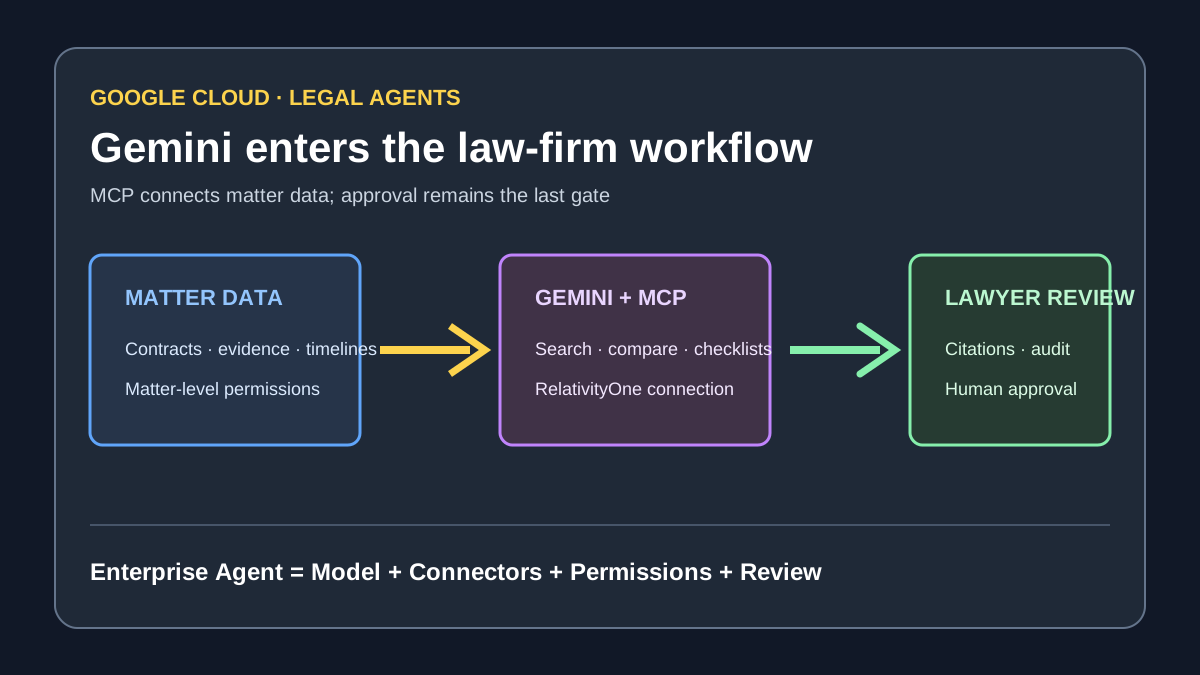
Gemini is moving into law firms: Google is selling a workflow, not a chatbot
Google Cloud launched Gemini Enterprise for Legal on August 25, positioning Gemini as an Agent workflow product for law firms and corporate legal teams. RelativityOne will connect through MCP, with firms including Weil participating in early partnerships. The shift is from which model answers best to which system can safely connect matter data, retrieval, collaboration and approvals. The announcements establish the product and partnerships, not that legal work is already automated; accuracy, rework and liability data are not public.
For law firms, in-house legal teams, legal-tech builders and readers tracking MCP, enterprise Agents and data permissions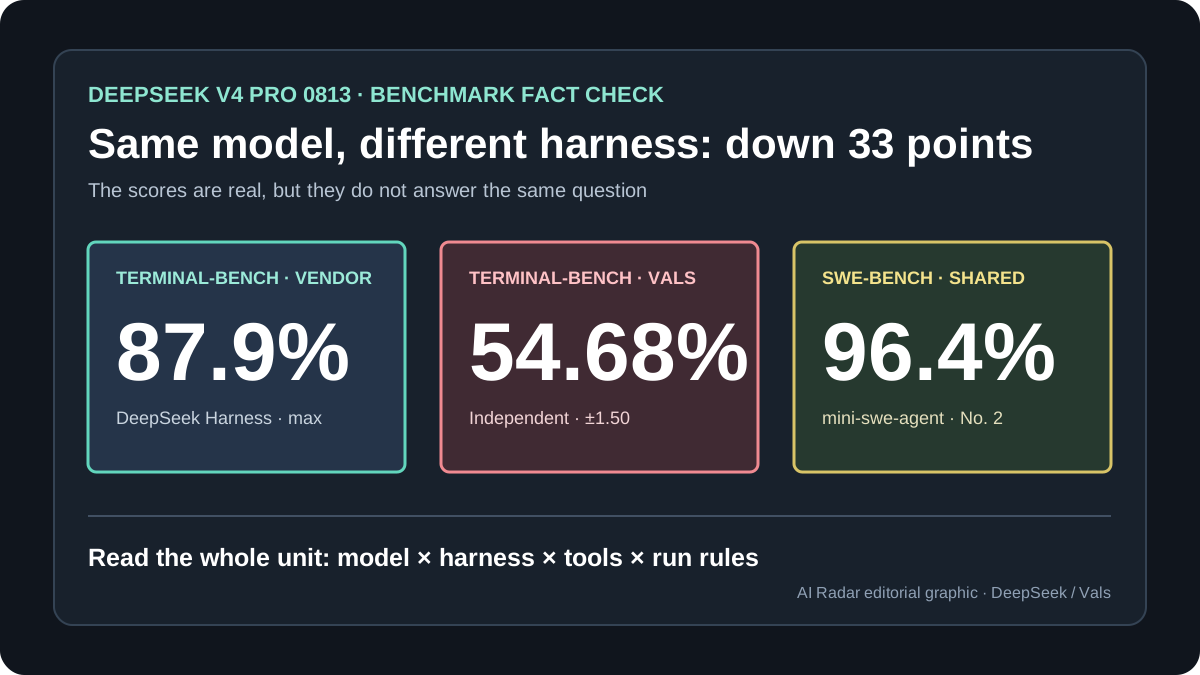
The same DeepSeek lost 33 points with a different harness: what model rankings hide
DeepSeek's model card reports 87.9% on Terminal-Bench 2.1 for V4 Pro 0813 using DeepSeek Harness minimal mode and max reasoning effort. Vals independently reports 54.68% ±1.50 for the same checkpoint, a 33.22-point gap. Yet the model scores 96.4% ±0.83 and ranks second on Vals' SWE-bench Verified board using the shared mini-swe-agent harness. The evidence supports neither 'the vendor score is fake' nor 'DeepSeek has fully matched Claude.' It shows a model that is excellent at bounded repository repair while Agent rankings remain inseparable from harnesses, tools, reasoning settings and run rules.
For developers using DeepSeek, Claude Code, Codex or Cursor, and teams comparing coding-agent capability, cost and leaderboards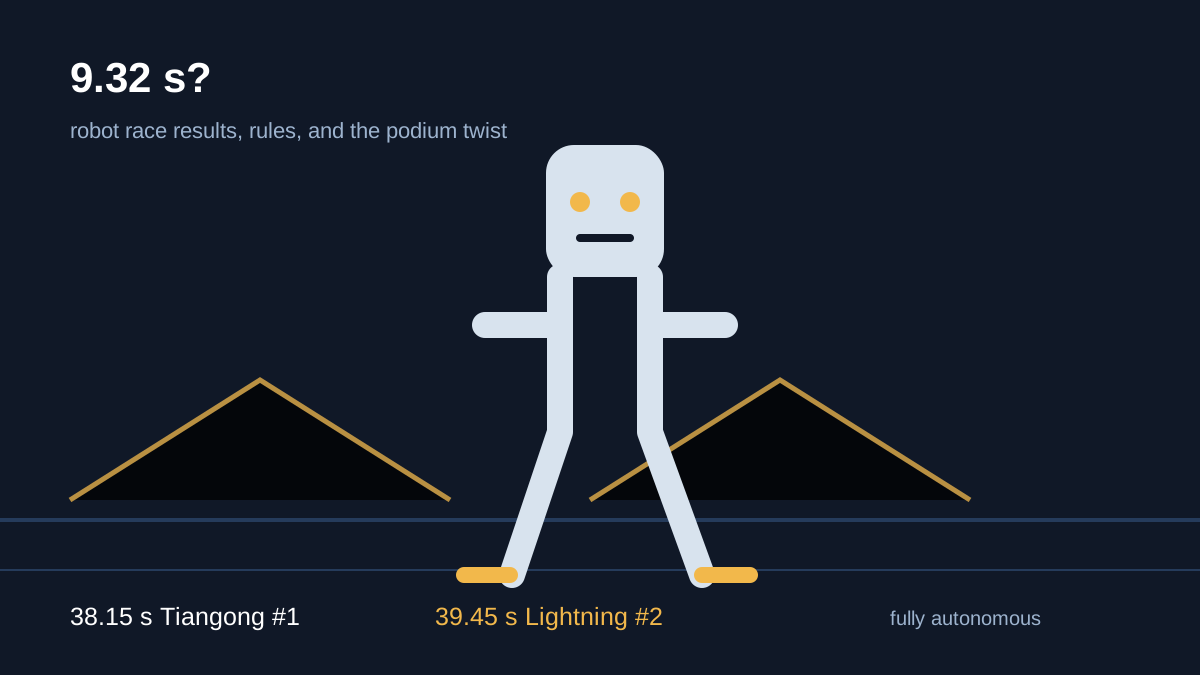
A robot ran 100 meters in 9.32 seconds, and Musk reportedly reposted it. But Honor's robot was not even the champion
Honor's Lightning has supported 9.32-second 100-meter and 39.45-second 400-meter times, but “breaking the human world record” is a cross-system comparison under robot-event rules, not a World Athletics certification. The official large 400-meter table shows Tiangong won in 38.15 seconds; Musk's repost is presented as reported by multiple outlets because the original X post still needs public verification.
For readers tracking humanoid robots, embodied AI, robot competitions, Chinese tech brands and AI-industry narratives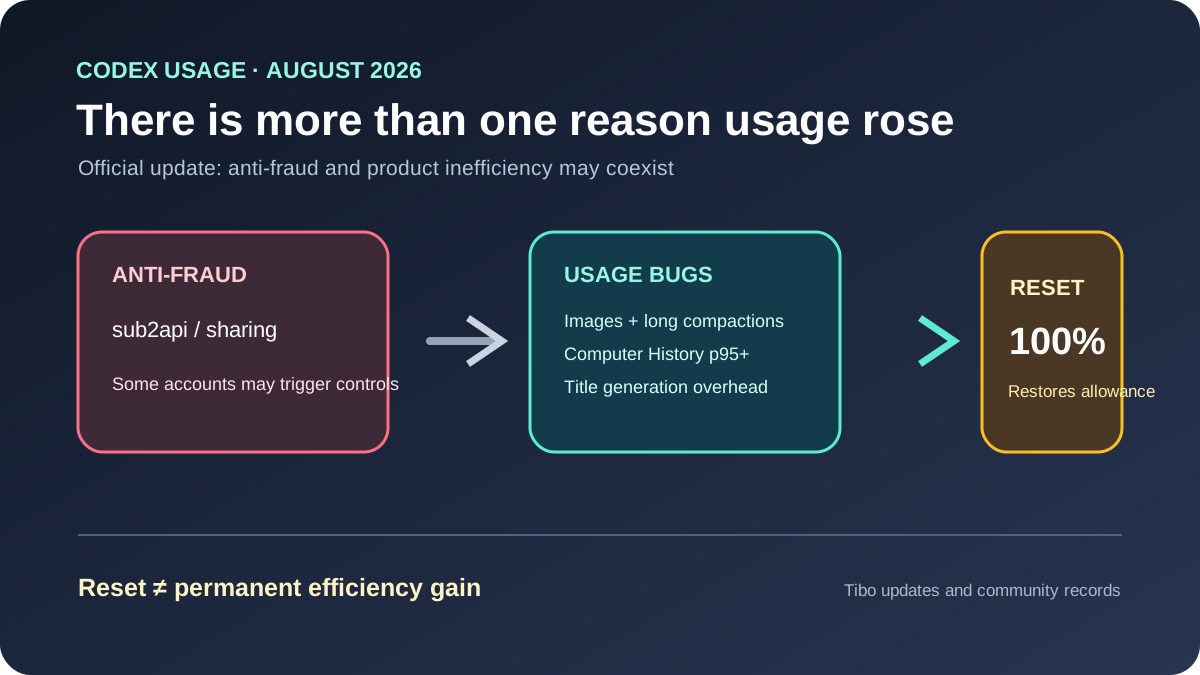
Codex usage was not all in users' heads: OpenAI acknowledged bugs, even in title generation
OpenAI Codex lead Tibo publicly acknowledged extra usage inefficiencies involving images in long sessions with repeated compactions, high-percentile Computer History usage and session-title generation, and said a reset was rolling out to paid accounts. This complements the earlier sub2api anti-fraud explanation: Codex anomalies may include both account controls and product inefficiency, while a reset does not prove a permanent doubling of efficiency.
For Codex and ChatGPT Plus/Pro users, developers running long Coding Agent sessions and anyone comparing AI coding costs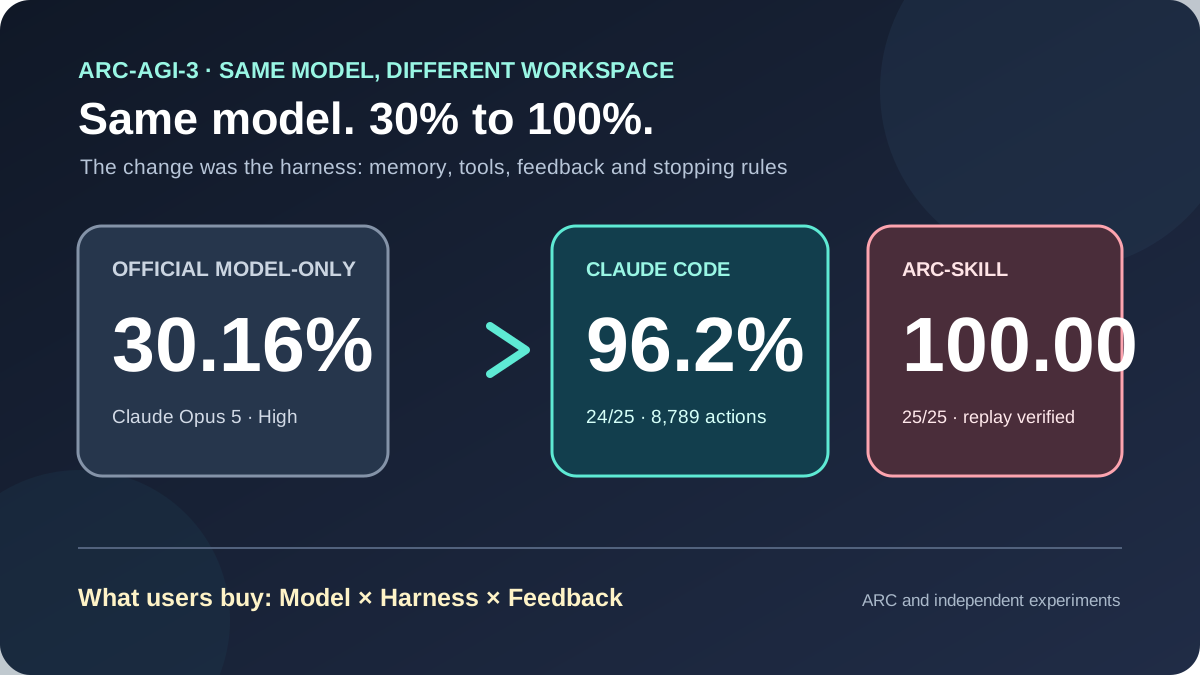
The same Claude went from 30 to 96: the limiting factor may be the harness, not the model
In ARC Prize's official model-only evaluation, Claude Opus 5 (High) scored 30.16% on ARC-AGI-3. Independent developers put the same model in Claude Code and reached 24/25 and 96.2%; a separate arc-skill was replay-verified by ARC at 25/25, 183/183 levels and RHAE 100.00. These are not directly comparable leaderboard scores, but they show that harnesses, external memory, tools and feedback loops may matter as much as the model for unfamiliar-environment tasks.
For developers, Agent engineers, evaluators and AI product teams using Claude Code, Codex, Cursor and OpenCode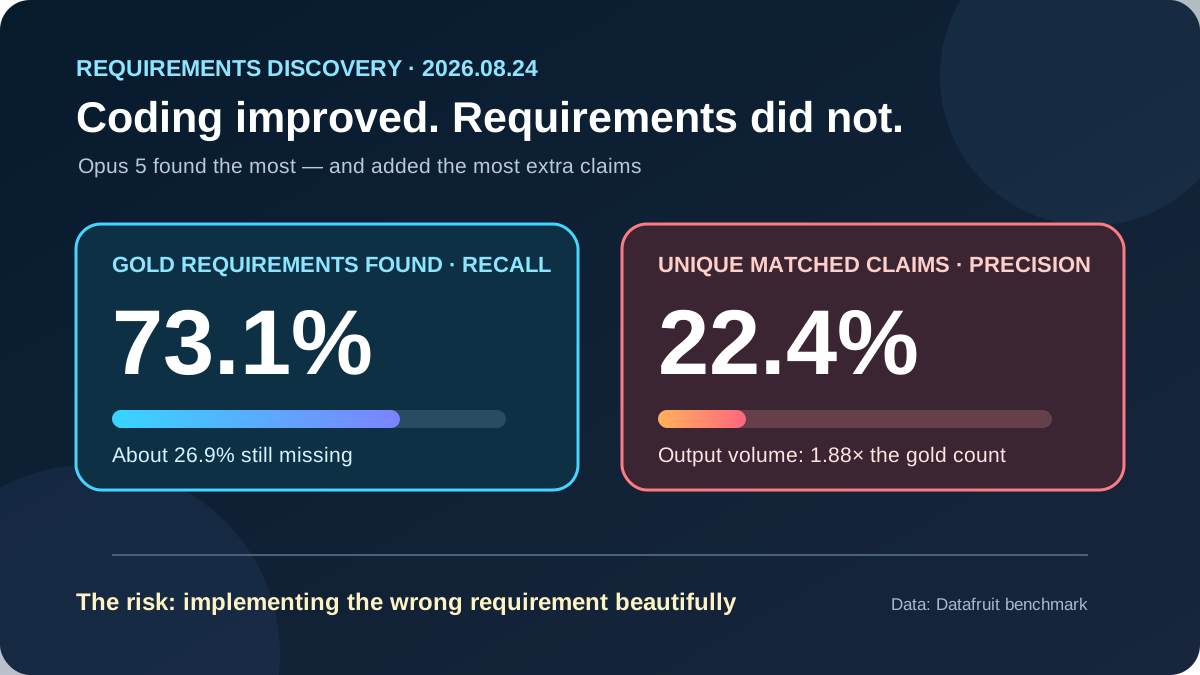
AI writes better code, so why do projects still go wrong? Opus 5 missed 27% of requirements
Datafruit's August 24 requirements discovery benchmark shows Claude Opus 5 recovering 73.1% of gold requirements, leaving about 26.9% missing. Its de-duplicated precision was only 22.4% because it produced about 1.88 times as many requirements as the gold set. GPT-5.6 Terra was more conservative but reached only 37.3% recall. These are not universal accuracy rates; they warn that important Coding Agent work needs clarification, specification review and acceptance criteria before coding begins.
For developers, product managers, founders and implementation teams using Codex, Claude Code, Cursor and vibe coding