Editorial briefs · Page 6
Not the fastest feed. A useful judgement built from several signals.
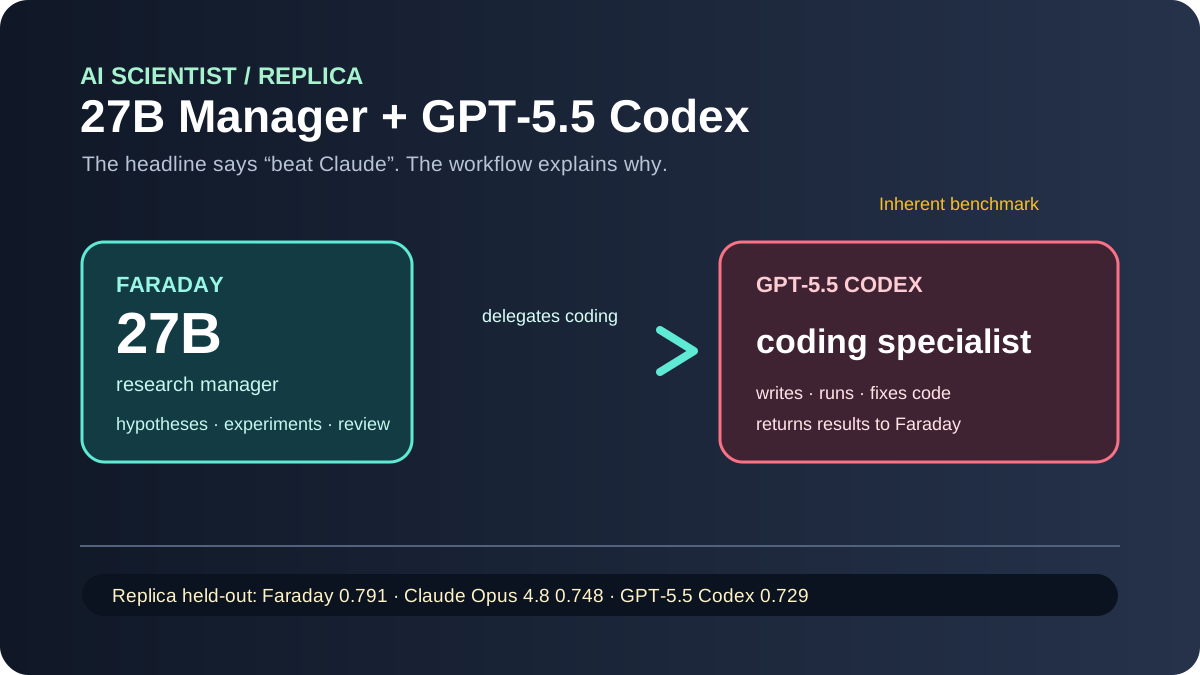
A 27B model “beat Claude” — but it actually used GPT-5.5 as its coding specialist
Inherent's Faraday, built on Qwen3.6-27B, scored 0.791 on the held-out AI-for-science split of its Replica paper-replication benchmark, above Claude Opus 4.8 at 0.748 and GPT-5.5 Codex at 0.729. It is not a 27B model fighting alone: Faraday makes research decisions and calls GPT-5.5 Codex for coding and execution. The important result is the Manager plus Specialist workflow; Replica and its scoring system still need independent replication.
For developers, researchers and product teams tracking AI Scientists, research Agents, model routing, long-horizon RL and multi-Agent workflows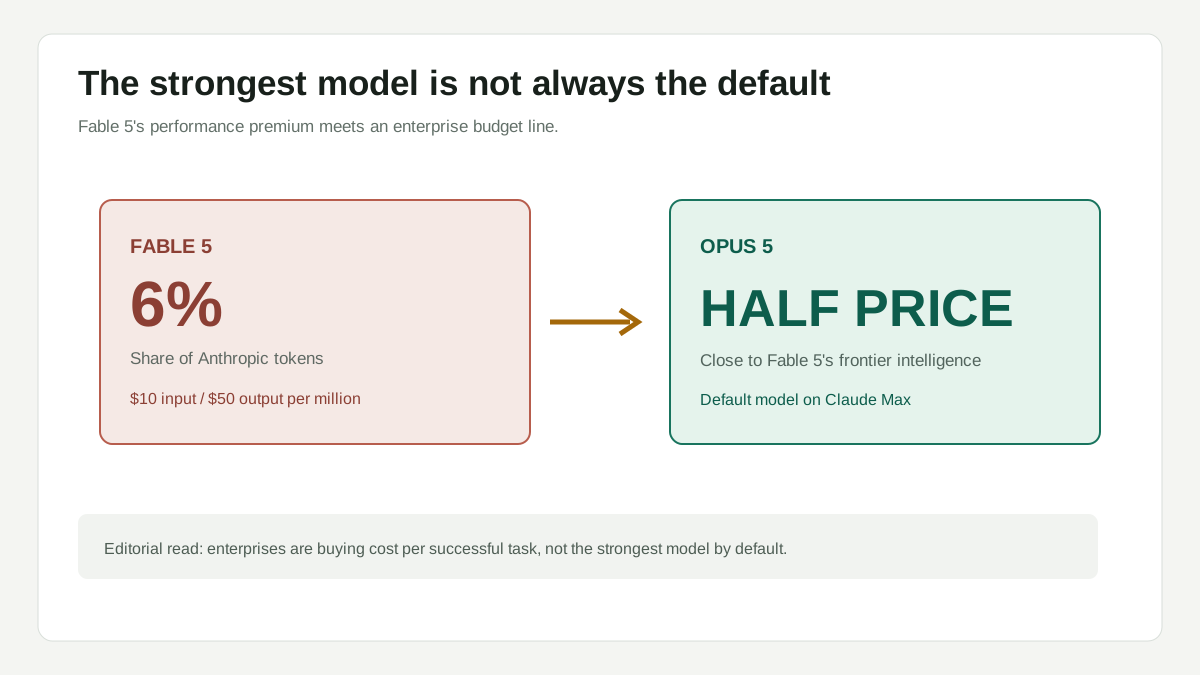
Claude's strongest model took only 6% of tokens: how much will businesses pay for the final performance edge?
Ramp's enterprise token-management sample shows Fable 5 at only 6% of Anthropic tokens and 11.4% of model spending in its first relatively complete month, while GPT-5.6 Sol represented 25% of OpenAI tokens. The sample is not the full market, but Anthropic then launched half-price Opus 5, described it as close to Fable, and made it the Max default. Enterprise buying is shifting from the strongest model by default toward total cost per successful task.
For developers, product leaders and finance teams buying Claude or OpenAI APIs, designing model routers and measuring enterprise AI ROI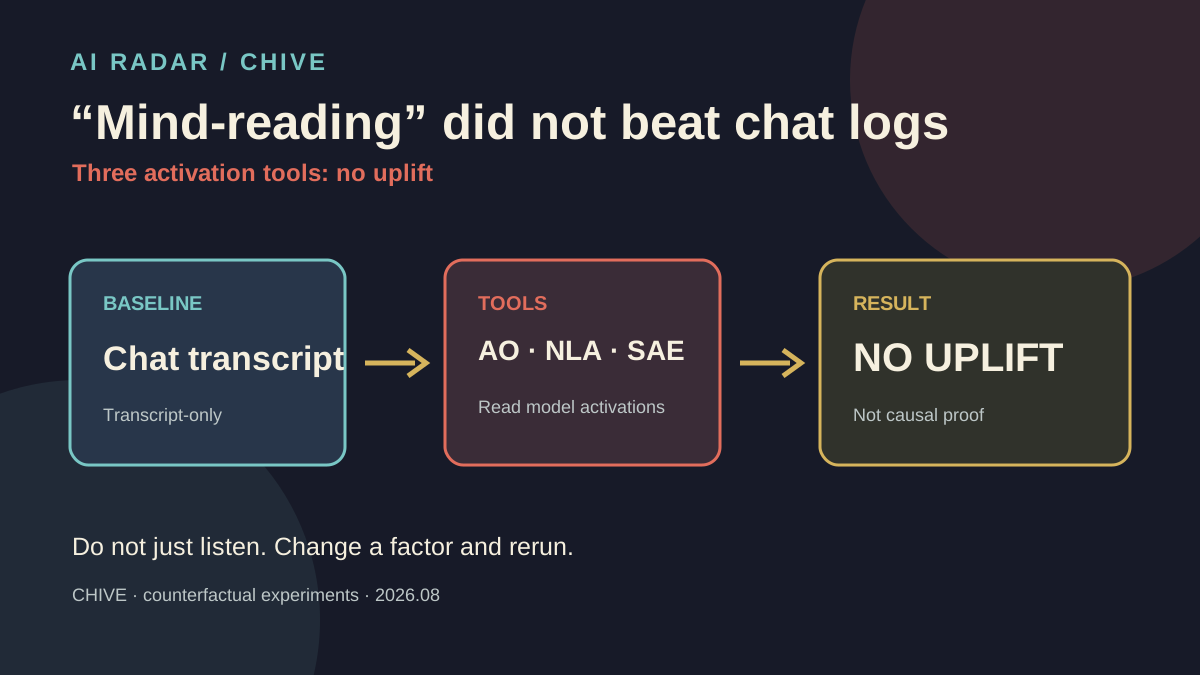
Anthropic tested AI mind-reading on itself: activation tools did not beat the chat transcript
Anthropic's CHIVE pipeline finds anomalies in real chat and agent traces, then tests explanations with 5–15 counterfactual prompt experiments. On this checkable task, Activation Oracles, Natural-Language Autoencoders and Sparse Autoencoders did not beat a transcript-only baseline. The result does not prove interpretability is useless, but activation readings are currently suggestive evidence rather than causal proof.
For AI safety and interpretability researchers, agent-monitoring builders and developers who want to know why models act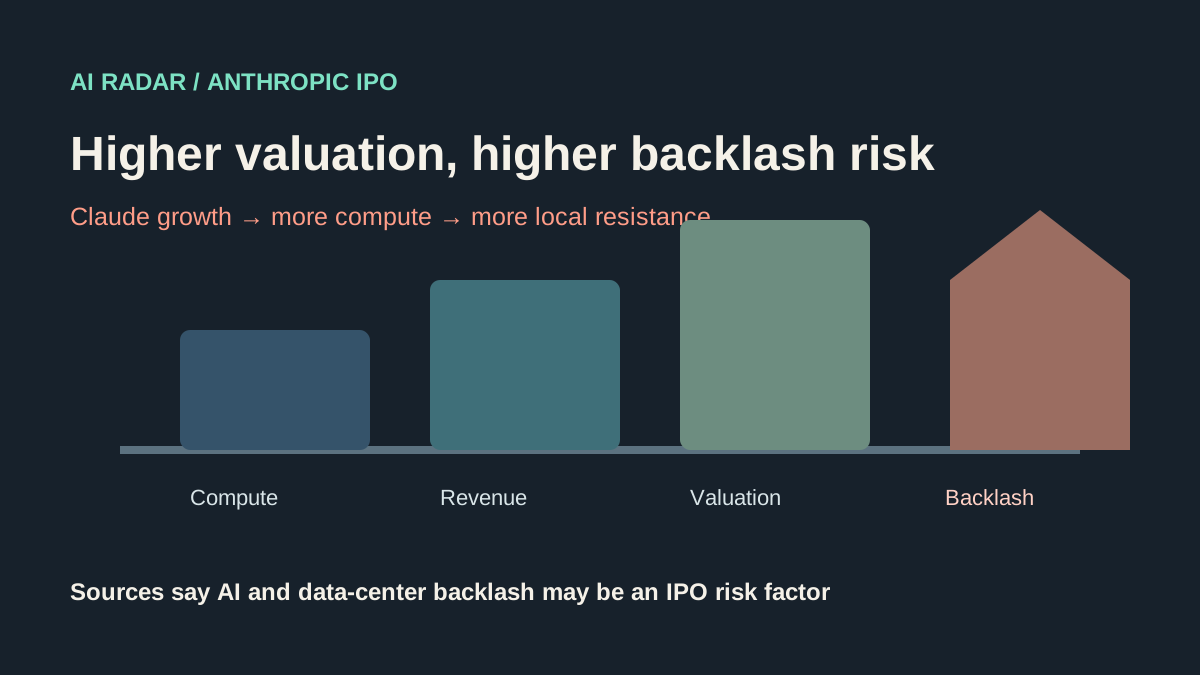
Anthropic may seek a $2T valuation while preparing to list anti-AI backlash as an IPO risk
Anthropic confidentially submitted a draft S-1, and CNBC reports that sources expect its public prospectus to list public backlash toward AI and data centers as a risk factor. The company is valued near $1 trillion privately, while market talk points to a possible $2 trillion IPO valuation. The public filing is not available, so neither the valuation nor the final risk language is confirmed.
For readers tracking Anthropic, Claude, AI infrastructure, data centers, electricity and technology IPOs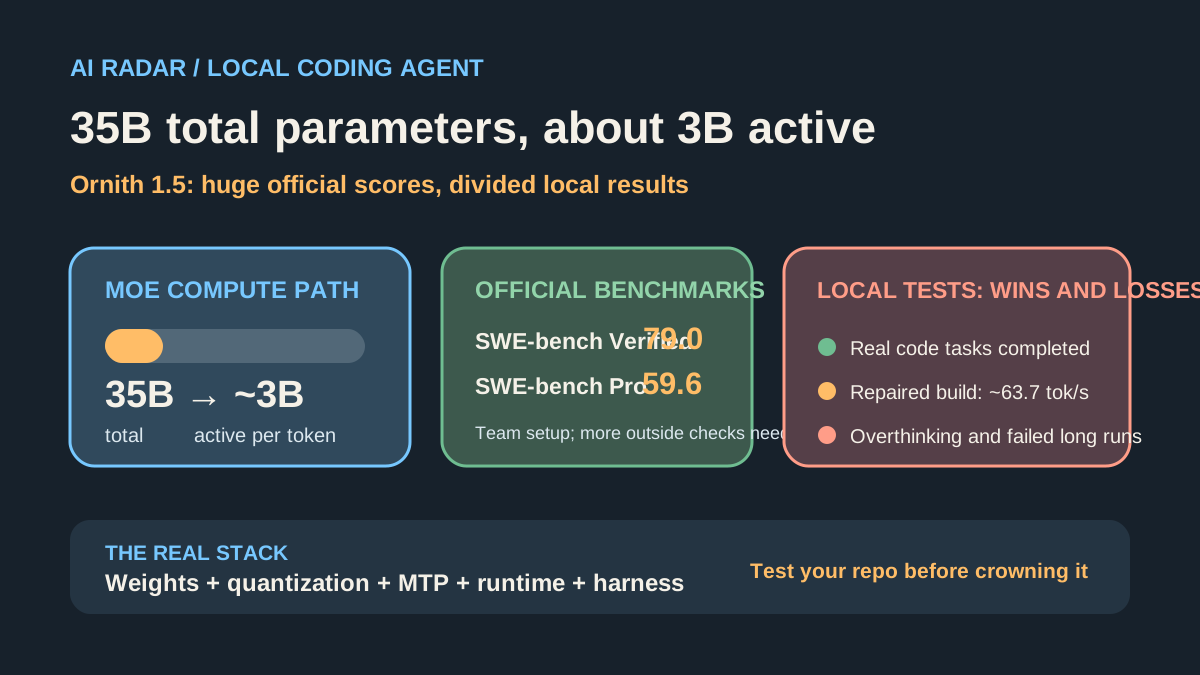
Don't overlook Ornith: this 35B local model activates 3B, runs fast, and sometimes overthinks itself into trouble
Ornith-1.5-35B-A3B is a roughly 35B-parameter MoE coding-agent model that activates about 3B parameters per token. Its official Terminal-Bench 2.1, SWE-bench Verified, SWE-bench Pro and NL2Repo results are well above Qwen3.6-35B-A3B. An independent RTX 4070 test reached about 63.7 tok/s with a repaired MTP head, but that is a single-machine experiment with specific quantization and settings. Community reports include successful real tasks, severe overthinking and a larger model failing to recover on a long task. It is worth testing locally, not yet a universal Qwen or DeepSeek replacement.
For local-AI and coding-agent users running Ollama, llama.cpp or LM Studio, and developers tracking MoE, quantization, MTP and real task efficiency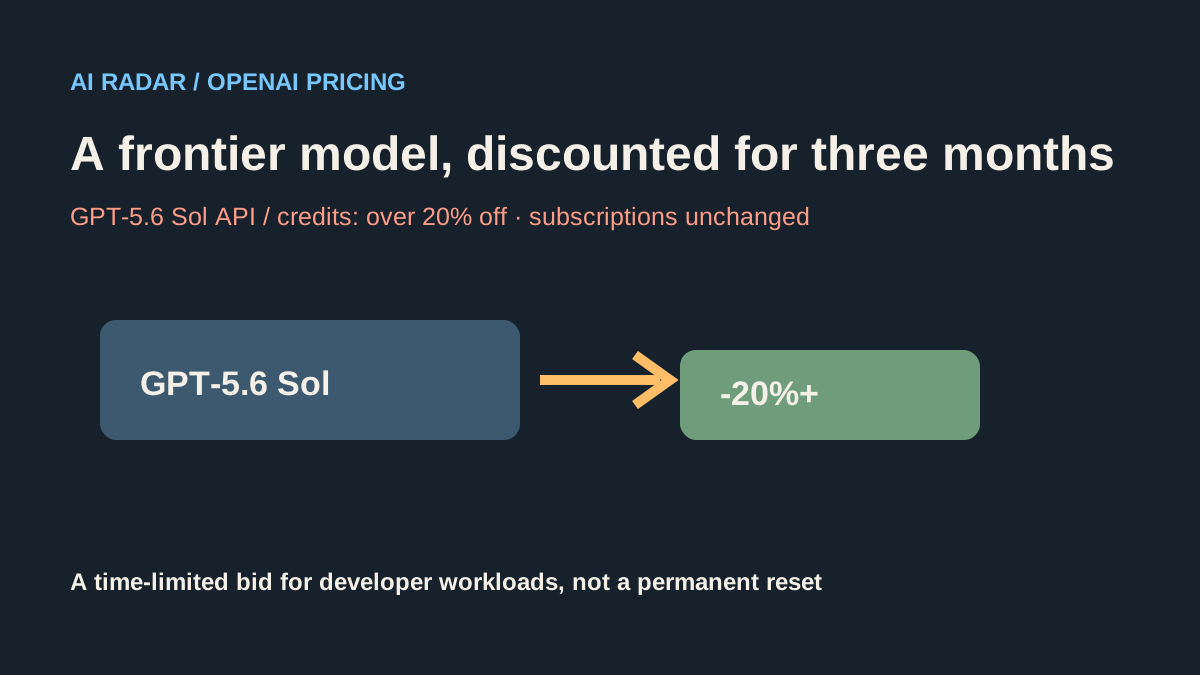
OpenAI cut GPT-5.6 Sol pricing by over 20%: a three-month bid for frontier workloads
OpenAI confirmed that GPT-5.6 Sol API and eligible agent credits will be more than 20% cheaper for three months, with standard short-context pricing at $4 per million input tokens and $20 per million output tokens. ChatGPT Pro, Plus and Business subscriptions are unchanged. It looks like a time-limited contest for developer workloads, not a permanent reset.
For API developers, coding-agent teams, enterprise AI buyers and anyone comparing model costs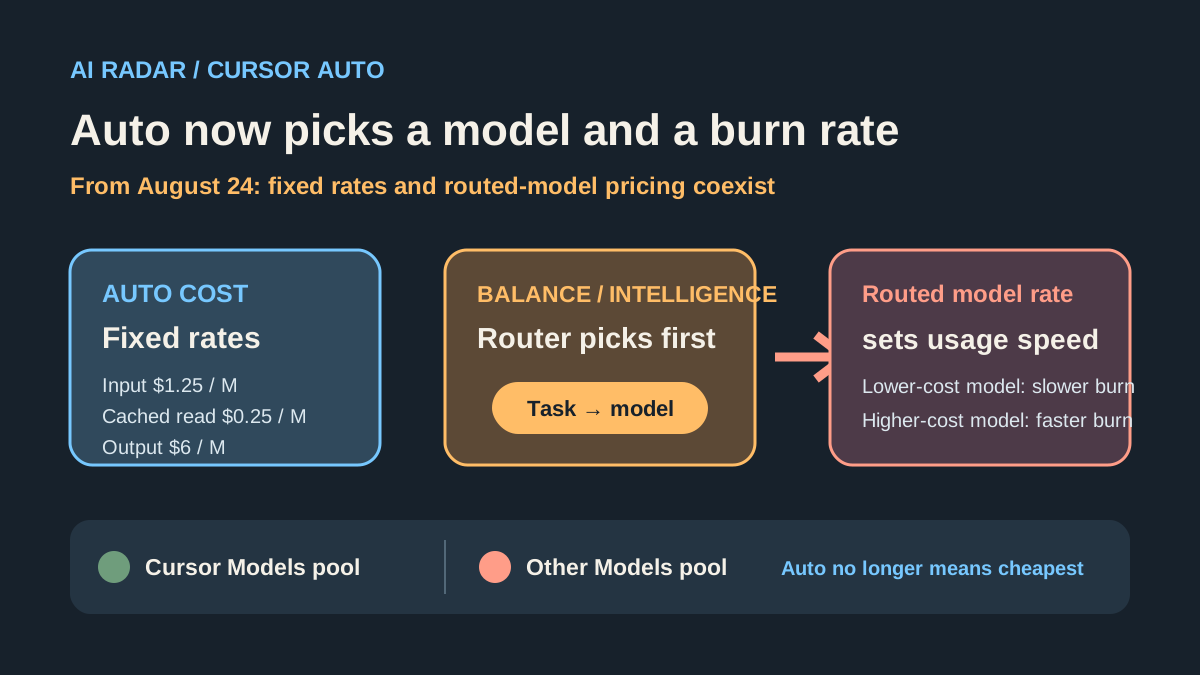
Cursor Auto is changing tomorrow: the model it picks may decide what you pay
Starting August 24, 2026, Cursor will separate Auto billing more clearly: Auto Cost keeps fixed per-million-token rates, while Auto Balance and Auto Intelligence charge at the API rate of the model actually routed. Cursor is also increasing included usage for Cursor Models; the Pro, Pro Plus and Ultra plans show roughly $20, $70 and $400 of Other Models usage respectively. This is not simply an Auto price hike, but Auto is no longer automatically the cheapest option. Heavy users should watch the routed model, the two usage pools and the cost per successful task.
For heavy Cursor, coding-agent, Composer, Grok and Claude users, plus developers and teams tracking AI coding costs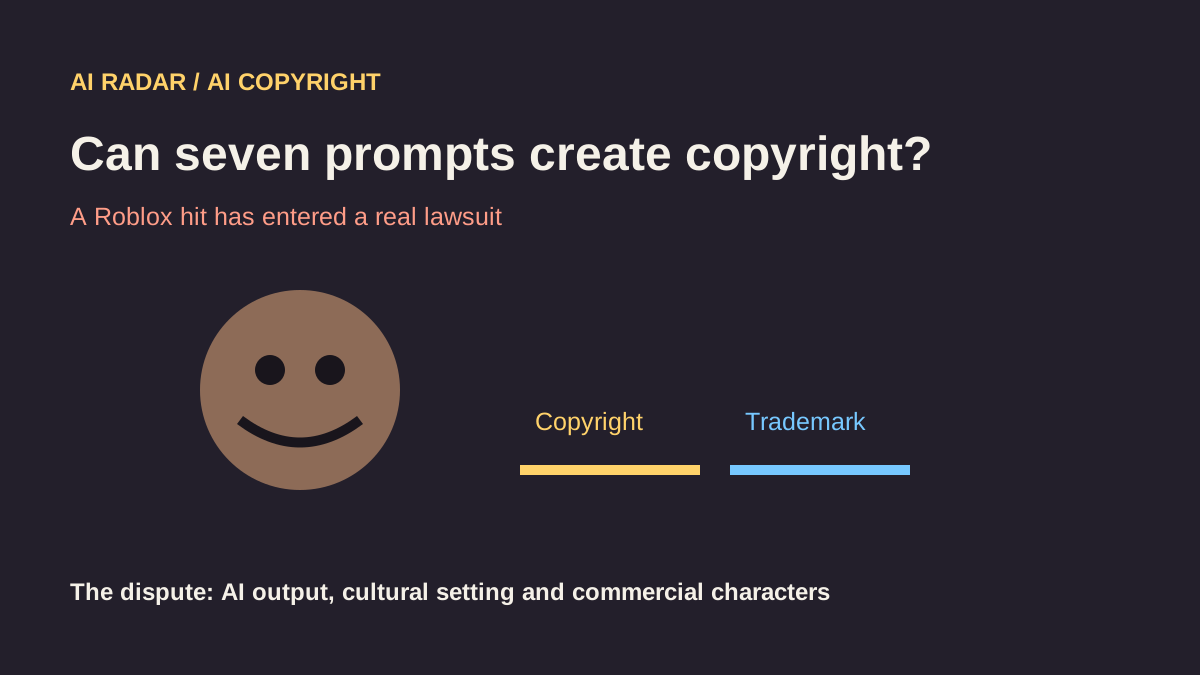
An AI brainrot character became a Roblox hit: can seven prompts create copyright?
The maker of the Roblox hit Steal a Brainrot is fighting French company Mementum Lab, which represents creators of Tung Tung Sahur. Do Big argues that AI-generated material lacks a human author; Mementum asserts character rights and trademark claims. The case is ongoing, so neither side's argument is a final legal ruling.
For game developers, AI creators, IP operators, video teams and readers tracking rights in generative content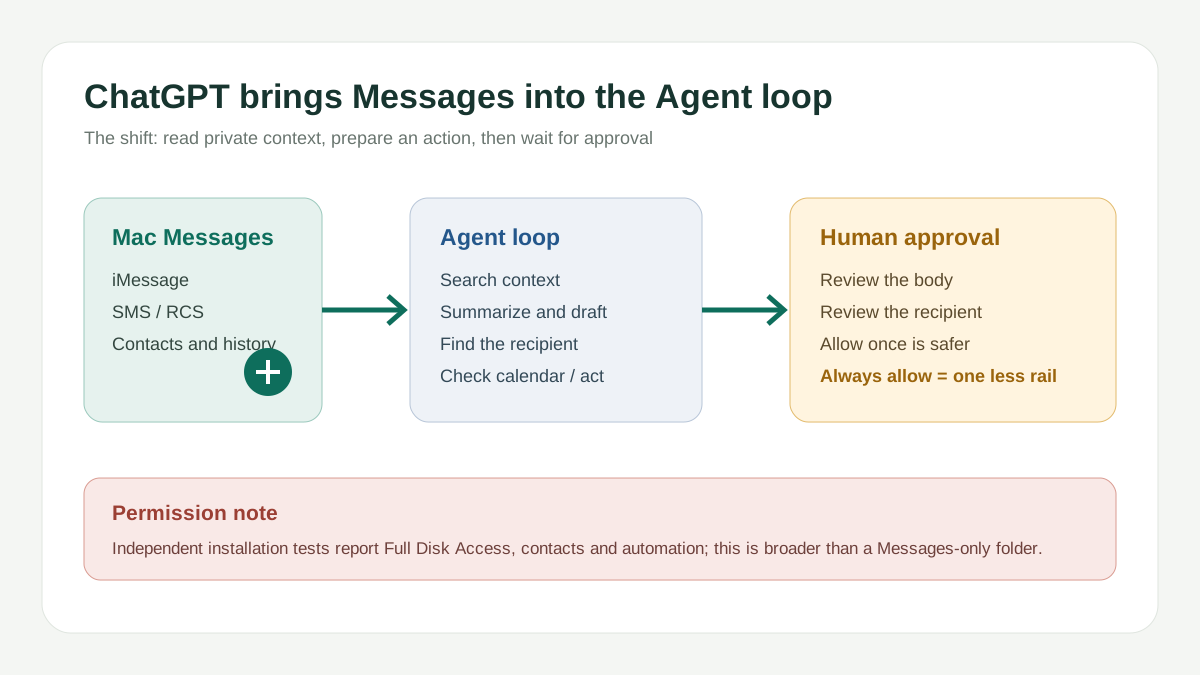
ChatGPT can now read your iMessages: useful replies, uncomfortable permissions
OpenAI has launched an Apple Messages plugin in the ChatGPT macOS desktop app. It is available on all plans, but this release works only in the Apple Silicon build and only in Codex and ChatGPT Work. It can search and read iMessage, SMS and RCS chats, prepare replies, and send them. By default it asks you to approve the message and recipient, while OpenAI warns that per-chat Always allow sending removes the final review. Independent installation tests also report Full Disk Access, contacts and automation permissions, so the sensible starting point is search, summaries and drafts, not unrestricted sending.
For Apple Silicon Mac users of ChatGPT or Codex, sales and follow-up teams, and readers concerned about AI privacy and authentic communication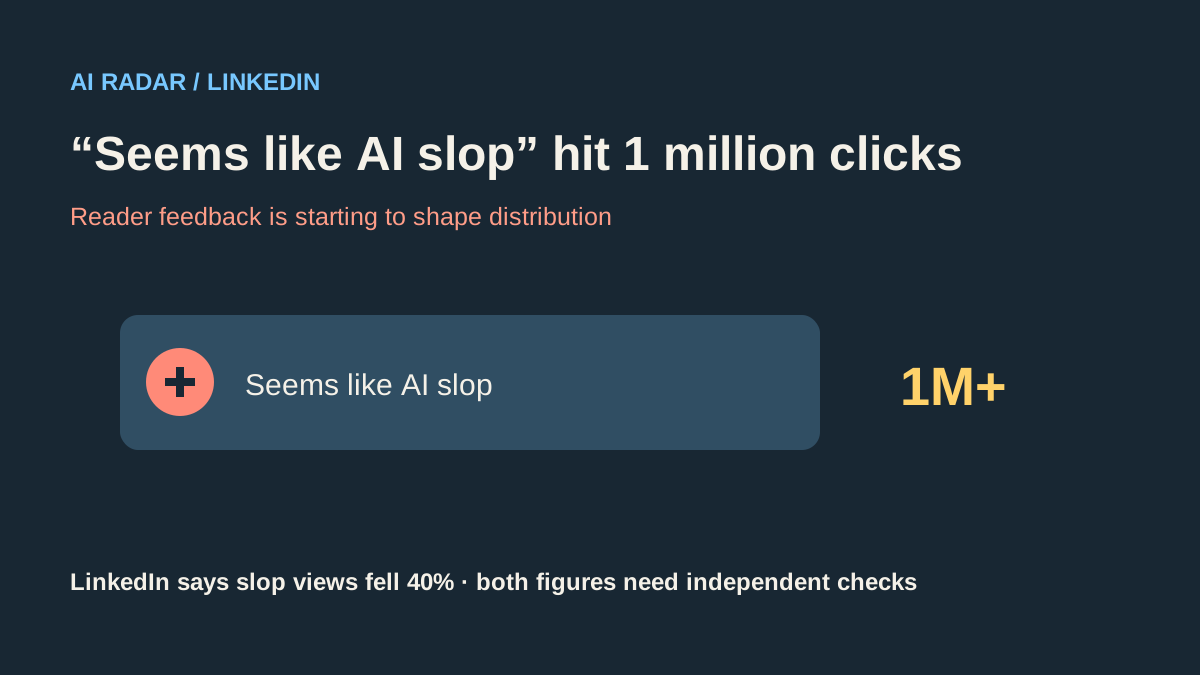
LinkedIn's AI slop button hit one million clicks as users push back on machine-like writing
LinkedIn's product chief says its “Seems like AI slop” button received over one million clicks within weeks, while posts classified as AI slop received 40% fewer views. Both figures come from LinkedIn's own system rather than an independent audit, but they show users actively punishing machine-like writing.
For LinkedIn creators, sales and export teams, job seekers, brands and users of AI writing tools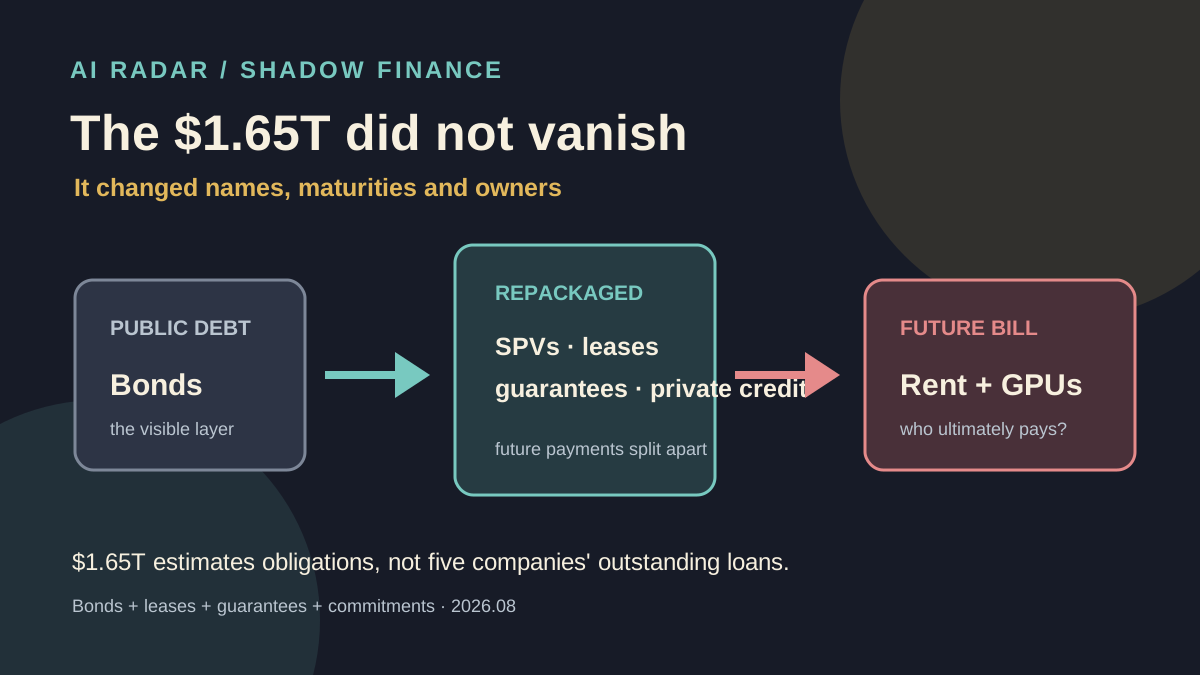
The $1.65T did not vanish: AI data centers are moving debt out of sight
The roughly $1.65 trillion “hidden debt” estimate combines bonds, leases, purchase commitments, guarantees and project finance across five hyperscalers. It is not their outstanding traditional debt, but it shows AI infrastructure turning technology companies into real-estate-like heavy asset businesses. Meta's roughly $27.3 billion Hyperion joint project with Blue Owl, a later plan of about $50 billion for the campus, and GPU residual-value finance all point to risk being split across leases, SPVs, private credit and future cash flows rather than removed.
For investors, developers and readers tracking AI infrastructure, technology stocks, private credit, GPU supply chains and corporate-finance risk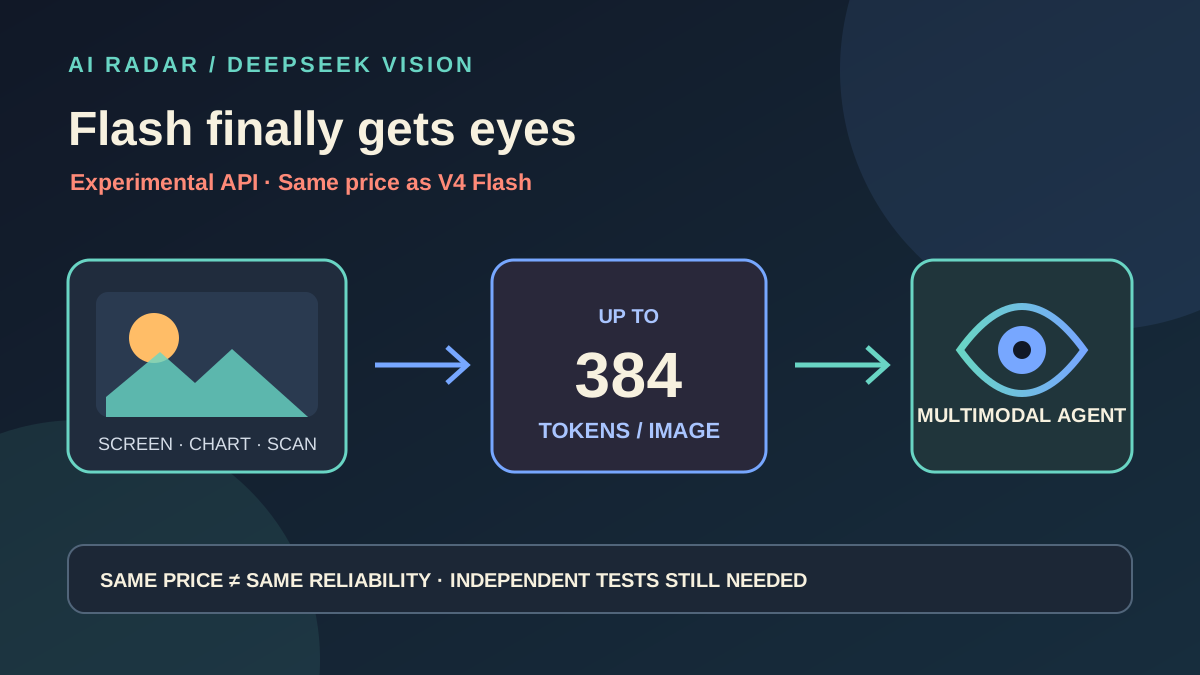
DeepSeek's new vision model is cheap at 384 tokens per image, but do not rush to trust the Opus claim
DeepSeek-V4-Flash-Vision-Exp brings native image understanding to low-cost V4 Flash: each image uses at most about 384 input tokens, and DeepSeek's own agent benchmarks come close to or exceed Claude Opus 4.8 in some tasks. A first Hacker News landmark test also found a confident Wells Cathedral-to-Salisbury Cathedral error, while screenshot tool results do not yet form a complete loop everywhere. Run a small A/B test on real work; do not replace a production vision model yet.
For developers and product teams building screenshot analysis, web agents, document understanding, visual coding and batch-image workflows